
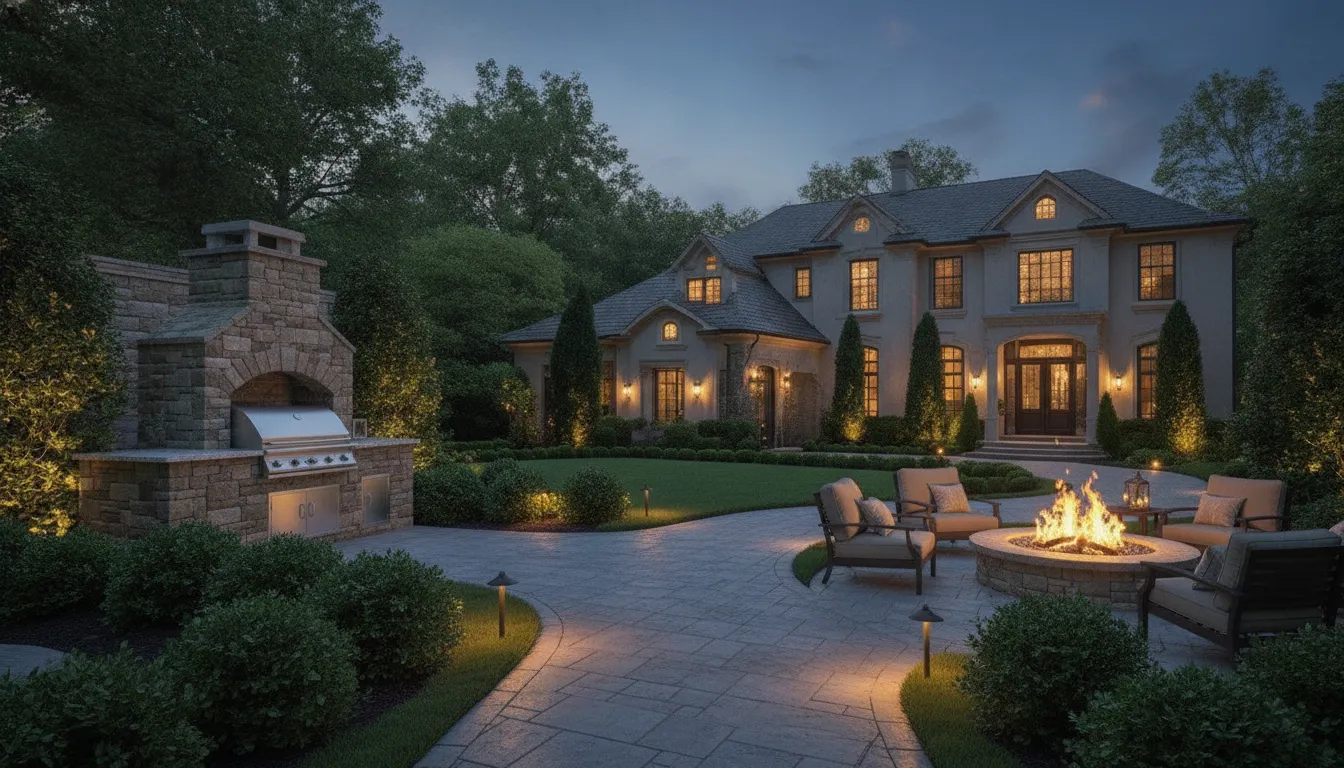
Outdoor lighting is most successful when it feels inseparable from the architecture, planting, and way people move through the property. On a luxury landscape, the goal is not simply to make every feature brighter. It is to establish a calm visual hierarchy, guide arrival, support outdoor living, and reveal craftsmanship after sunset.
Explore professional outdoor lighting design with Illuminations by DiSabatino or call (302) 764-0408.
A well-planned low voltage landscape lighting installation uses a transformer, carefully routed wiring, and purposefully selected fixtures to create safe, balanced illumination. Path lights can clarify circulation, while uplights, downlights, and accents bring depth to trees, walls, entries, and gathering spaces without overwhelming the scene.
The best results begin with a design plan that considers sightlines, focal points, existing vegetation, and future changes to the landscape. Fixture placement, system capacity, and layered effects should work together from the start, which is why professional lighting design is as important as the installation itself. The first step is understanding how a low-voltage system works and what makes it well suited to a considered outdoor environment.
What Is Low Voltage Landscape Lighting Installation?
Low-voltage landscape lighting uses a transformer to reduce standard 120-volt household electricity to a lower voltage, commonly 12 volts, for outdoor fixtures. That system supports a broad range of applications, from guiding guests along a walkway to revealing the character of mature trees, masonry, and architectural details. The lower operating voltage is generally safer to handle than a high-voltage system, but the design and installation still require careful electrical planning.
In a typical low-voltage landscape lighting installation, the transformer is the control point between the home's electrical supply and the lighting network. It must be selected with the planned fixture load in mind so the system is not overloaded. The wiring route, connection points, fixture locations, and control method also affect how consistently the system performs. Long wire runs may require voltage adjustments, and outdoor connections must be properly waterproofed and rated for direct burial. Burial requirements should be confirmed for the specific property, site conditions, and applicable code rather than treated as one universal measurement.
The transformer supports the system, but it does not create the design
A transformer can supply power, but it cannot determine where light should fall or how the property should feel after dark. On a luxury landscape, the most successful plan begins with the architecture, circulation patterns, plant material, entertaining areas, and views from inside the home. Designers can then determine which elements deserve emphasis and where lower levels of illumination will provide enough guidance without competing with the architecture.
That design-first process helps prevent the common mistake of adding brightness everywhere. Strategic placement and layered techniques, such as pathway lighting, up-lighting, accent lighting, and wall washing, can support both function and atmosphere. For example, an uplight at the base of a tree or architectural element may draw attention to texture and form. While a carefully aimed path fixture helps define movement without creating uncomfortable glare. The goal is not to make every surface equally bright. It is to establish a coherent nighttime composition.
DiSabatino's specialized lighting division combines low-voltage technology with high-quality fixtures and a visual plan developed before installation begins. That approach allows the system to complement the broader landscape and outdoor living design. While leaving room to evaluate how vegetation, sightlines, and use of the property may change over time. A considered plan makes the transformer and wiring invisible parts of a more important result: an exterior environment that feels intentional, comfortable, and connected to the home.
Which Fixtures Shape the Design?
A refined outdoor lighting plan is not defined by how many fixtures are installed. It is defined by what each fixture contributes to the experience of the property. Path lighting supports movement, uplighting gives trees and architecture presence, and patio lighting helps outdoor rooms feel connected after sunset. Together, these functions create a composed view rather than a collection of bright points.
Path and patio lighting for movement and gathering
Path lighting should guide guests along walkways, steps, and transitions without producing distracting glare. Fixtures are selected and positioned to make changes in grade and direction easy to read while preserving the character of the surrounding planting. On a luxury property, that often means integrating the lighting into the landscape instead of allowing it to become the most noticeable element.
Patio lighting serves a related but distinct purpose. It supports conversation, dining, and movement through outdoor living areas while helping those spaces relate visually to the home. The right approach may combine discreet fixture placement with illumination of nearby walls, trees, or architectural details. This creates depth around a patio rather than an overly bright pool of light.
Uplighting, downlighting, and accent fixtures
Uplighting directs light upward from the base of a tree, column, wall, or other architectural feature. It can reveal bark, stone, masonry, and branching structure, creating shadows and depth that are not visible during the day. Downlighting takes the opposite approach, casting light from above to suggest natural moonlight across a path, terrace, lawn, or planting bed. Its success depends on careful concealment and aiming so the source does not distract from the scene.
Accent lighting is more selective. Directional fixtures can draw attention to a sculpture, mature specimen, water feature, or distinctive material while keeping surrounding areas quieter. These focal points should support the property's hierarchy, not compete with one another. Strategic placement and restraint are especially important when several architectural and landscape elements are visible from the same room or terrace.
LED landscape lighting as a flexible design layer
LED landscape lighting is well suited to a considered installation because it can support consistent, efficient illumination across varied outdoor settings. The fixture choice still matters: color quality, beam direction, finish, concealment, and placement all influence whether the result feels warm and integrated or harsh and exposed. A professional plan treats the fixtures as part of the architecture and planting design, not as interchangeable hardware.
DiSabatino's Illuminations by DiSabatino service brings these functions into one coordinated plan. During low voltage landscape lighting installation, the objective is to balance arrival, entertaining, architecture, and garden views so each layer earns its place.
How Should Fixtures Be Placed?
Effective placement begins with the property, not a catalog of fixtures. The goal is to guide the eye, support safe movement, and reveal the character of the home and landscape after dark. A thoughtful outdoor lighting design strategy considers architecture, mature trees, planting beds, walls, steps, entertaining areas, and the views from inside the house.
Scale is the first consideration. A fixture that feels appropriate beside a small planting bed may disappear beside a tall stone facade. While several bright fixtures clustered around one specimen tree can make the rest of the property feel flat. Designers select fixture locations and intensity in relation to the size, material, and distance of the feature being illuminated. This creates definition without turning every surface into a competing focal point.
Start with sightlines and focal hierarchy
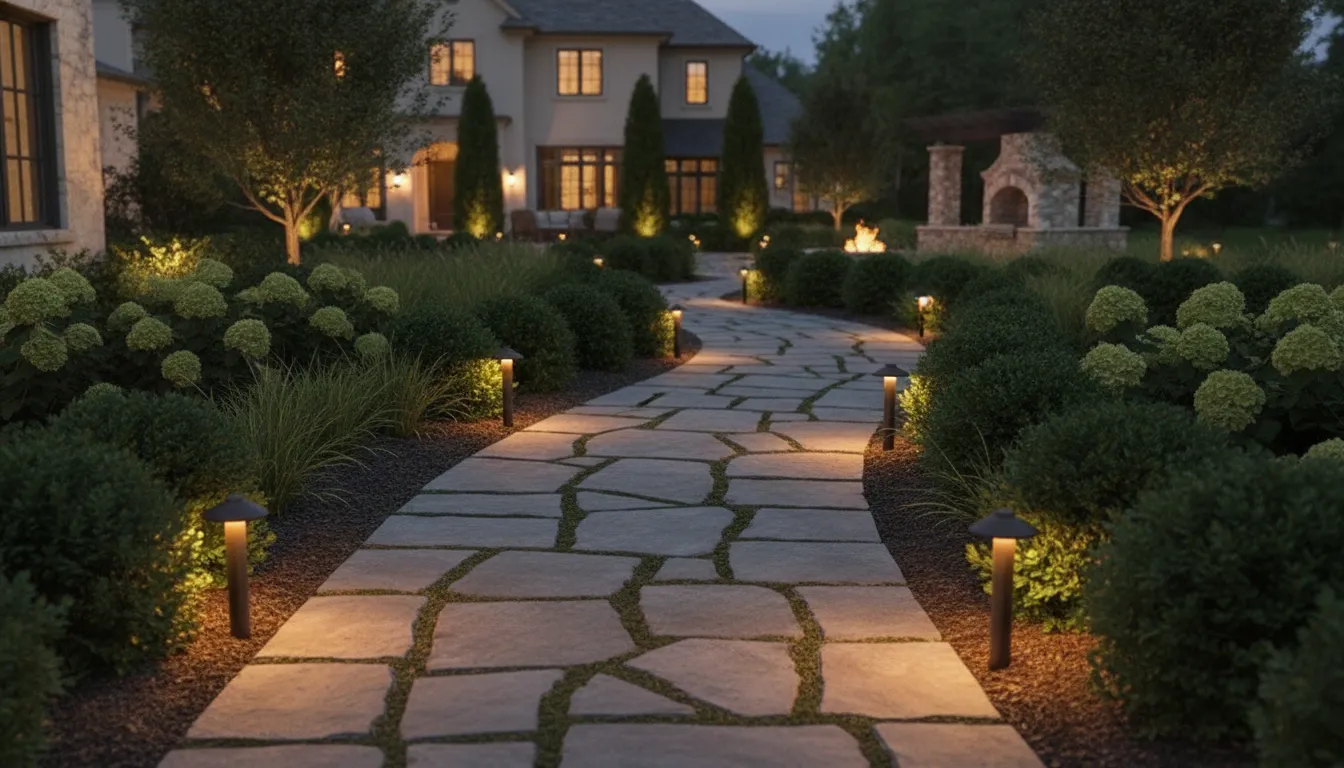
Walkways, entries, terraces, and gathering spaces should read clearly from the approaches people actually use. Path lighting can mark a route, but fixtures should be positioned to illuminate the walking surface without shining directly into guests' eyes. The same principle applies to steps and changes in grade. Light should help people understand the space while remaining visually quiet.
Architectural elements and specimen trees generally deserve a more deliberate treatment. Up-lighting placed at the base of a tree or architectural feature can reveal texture and create depth. While a carefully aimed accent fixture can draw attention to a sculpture, masonry detail, or distinctive canopy. Directional fixtures allow the beam to be controlled around the intended subject, helping limit spill light and preserve the surrounding darkness. These techniques are part of a layered approach that can include path lighting, accent lighting, up-lighting, and wall washing. Landscape lighting guidance from Oklahoma State University Extension also emphasizes using these techniques for both functional and visual value.
Control glare and respect the landscape
Glare often comes from fixture visibility rather than inadequate illumination. Positioning, shielding, aiming, and planting can hide the light source while allowing the intended surface to glow. Fixtures should also account for seasonal growth. A location that works when a tree is newly planted may be blocked by foliage later. And a fixture placed too close to a growing shrub can become difficult to service.
Professional placement avoids the temptation to light everything equally. DiSabatino's lighting team focuses on strategic placement and restraint, so the plan supports the architecture and landscape instead of overwhelming them. Spacing is therefore site-specific. It depends on beam spread, viewing angle, plant maturity, surface reflectivity, and the relationship between adjacent layers. The finished result should feel cohesive from the driveway to the garden and patio, with a clear visual hierarchy and comfortable transitions between brighter and quieter areas.
How Do Transformers and Wiring Support a Reliable System?
The visible result of a landscape lighting plan depends on an infrastructure that remains discreet, accessible, and dependable. A low-voltage transformer steps household 120-volt power down to the 12-volt current used by many landscape fixtures. But selecting and placing that transformer requires more than choosing a box with enough capacity. The wiring plan must support the intended lighting layers, the property's architecture, and the realities of maintenance over time.
For a premium property, installation should be treated as part of the design-build process rather than an isolated electrical task. The sequence typically looks like this:
- Plan the load and transformer location. The lighting team inventories the proposed fixtures, their functions, and the expected operating load before selecting transformer capacity. The location should provide an appropriate power source, remain accessible for service, and avoid becoming a visual distraction. A well-planned system also considers controls, future adjustments, and the length of each wire run. Transformer capacity must be matched to the system so it is not overloaded, and suitable voltage adjustment may help account for voltage drop on longer runs. These decisions should be confirmed by a qualified professional for the specific property.
- Map cable routes before placing fixtures. Cable paths are coordinated with planting beds, paving, drainage, roots, irrigation, and other site conditions. Wiring should be protected from mechanical damage and installed at an appropriate depth for the location. But there is no universal burial depth that replaces applicable local code, manufacturer instructions, and site-specific judgment. On an estate property, thoughtful routing also keeps future landscape work from unnecessarily disturbing the lighting system.
- Connect fixtures with serviceability in mind. Each fixture is positioned for its intended beam, sightline, and architectural effect, then connected using outdoor-rated components. Connections need to be properly waterproofed and rated for direct burial where applicable, because moisture intrusion is a common path to electrical failure. A small amount of planned slack at fixture connections allows for seasonal planting changes, settling, and careful repositioning without putting strain on the cable. The goal is a clean installation that stays adaptable without leaving visible wiring or excess hardware.
- Test the system at night and review the site. Testing is not limited to confirming that every fixture turns on. The completed installation should be evaluated for even illumination, glare, hot spots, voltage performance, control timing, and the relationship between light and surrounding architecture. Outdoor electrical components should be checked against relevant safety requirements, including appropriate protection for outdoor circuits. Final review should also confirm that cables, connections, and fixtures are secure, concealed where intended, and accessible for future maintenance.
This technical discipline protects the design intent. DiSabatino's specialized Illuminations by DiSabatino division combines low-voltage technology with strategic placement, quality fixtures, and professional workmanship. The result is lighting that supports arrival, entertaining, and architectural character without making the equipment the focus.
Because code requirements and site conditions vary, transformer sizing, power connections, cable protection. And final testing should be reviewed by qualified professionals who understand the property as a whole.
How Does Layered Lighting Make a Property Feel Finished?
A finished outdoor lighting plan does more than make individual fixtures visible. It gives the property a clear visual rhythm, guiding the eye from the arrival path to the architecture, planting, patio, and entertaining areas. The effect should feel composed rather than theatrical, with each layer supporting the next.
Ambient, task, and accent lighting serve different purposes. Ambient light establishes a comfortable level of visibility across a terrace, walkway, or gathering area. Task lighting supports specific activities, such as moving safely along steps or preparing food outdoors. Accent lighting adds emphasis, drawing attention to a tree, textured wall, specimen planting, or architectural detail. Together, these layers can connect the home and landscape into one evening environment.
Start with arrival and orientation
Pathway lighting is part of the functional layer, but it also sets the tone as guests approach the home. Fixtures should reveal the route without producing distracting glare or a repetitive runway effect. At the entry, carefully directed light can clarify steps, changes in grade, and the front door while preserving the surrounding darkness.
From there, the lighting composition should continue naturally. A path might lead visually toward a lit architectural feature or a softly illuminated planting bed. This continuity helps the property feel intentional from the first view rather than treating the entrance, garden, and patio as unrelated zones.
Build hierarchy around architecture and planting
Accent layers create depth by giving the eye a few places to rest. Up-lighting at the base of a tree or architectural element can reveal texture and create shadow. While a carefully aimed beam can emphasize a wall, column, or sculptural feature. Downlighting and discreet ambient sources can provide a softer counterpoint across nearby planting and circulation areas.
Restraint is essential. Over-lighting every tree, edge, and surface flattens the landscape and can create hot spots that wash out the features the design is meant to showcase. Strategic placement, controlled beam direction, and varied intensity create contrast without allowing one fixture to dominate the composition. Seasonal growth should also be considered, since foliage and planting forms change throughout the year.
Carry the composition into outdoor living areas
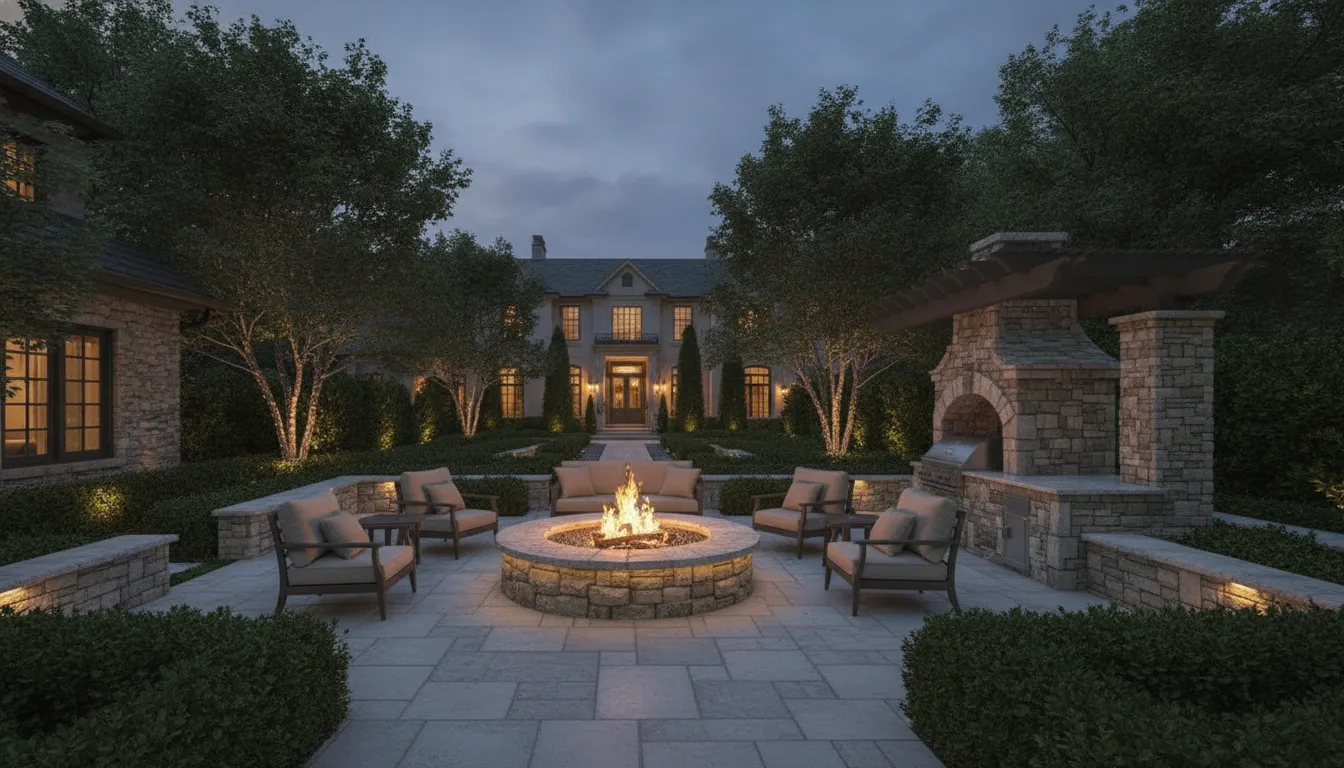
Patio and entertaining spaces need enough ambient and task illumination to remain comfortable, but they should not become brighter than the architecture or landscape beyond them. A balanced plan can keep seating areas welcoming while allowing guests to see the garden and the route back to the house. Warm, consistent light sources help the transition from dusk into evening feel gradual and cohesive.
For more inspiration on coordinating pathways, planting, architecture, and gathering areas, explore these landscape lighting ideas. A professional low voltage landscape lighting installation should be evaluated as part of the full property design, not as a collection of isolated fixtures. When the layers are planned together, the result is subtle by day, expressive after dark, and connected to the way the property is actually used.
When Should a Professional Handle Installation?
Homeowners can often describe the effect they want: a safer-feeling walk, a softly illuminated entry, or trees and stonework that remain visible after sunset. Turning that vision into a reliable system is a different responsibility. Low-voltage landscape lighting installation involves more than placing fixtures where they look attractive. Transformer capacity, cable routing, waterproof connections, site drainage, mature plant growth, and the relationship between light and architecture all affect the finished result.
A professional design-build team should handle the work when lighting is part of a larger landscape or outdoor living project. When wiring must cross established planting beds or hardscape, or when the property includes several zones and sightlines. The goal is not simply brighter grounds. It is a controlled, comfortable composition that supports arrival, entertaining, and the character of the home.
| Consideration | Homeowner input | Professional design-build execution |
|---|---|---|
| Design intent | Identify favorite features, arrival areas, and how the property is used at night. | Translate those priorities into layered placement, controlled intensity, and clear sightlines. |
| Site conditions | Share known drainage, planting, hardscape, and access concerns. | Coordinate fixture locations and cable routes with the existing site and its future growth. |
| System reliability | Describe desired controls and areas that may expand later. | Plan transformer capacity, protect connections, verify performance, and review applicable site and electrical requirements. |
Safety is one reason to leave installation to qualified professionals. Low-voltage systems commonly use a transformer to step household 120-volt power down to approximately 12 volts, but the system still depends on sound electrical practices. Outdoor connections must be properly waterproofed and rated for their location, while wiring needs protection from mechanical damage during future landscape work. Exact routing and installation requirements should be confirmed for the property and applicable code rather than treated as universal rules.
Visual quality is the other major distinction. Strategic placement helps prevent glare, hot spots, and the over-lighting that can flatten a carefully designed garden. DiSabatino's design-first process uses plans and visualizations before work begins, then coordinates the installation with the surrounding landscape and architecture. Explore Illuminations by DiSabatino for professional outdoor lighting design and installation, and review what to expect from the process before planning a property-wide improvement.
Talk with DiSabatino about a custom low-voltage lighting plan or call (302) 764-0408 before the FAQ below.
Frequently Asked Questions
What is low voltage landscape lighting?
Low voltage landscape lighting uses a transformer to reduce household line voltage to the lower voltage used by outdoor fixtures. The system supports a carefully planned combination of pathway, accent, uplighting, downlighting, and patio fixtures while making installation and maintenance safer than high-voltage alternatives.
Do I need a transformer for low voltage landscape lighting?
Yes. A transformer is the central component that converts household power for the lighting system and should be selected based on the planned fixture load. The design should also account for wire-run length, voltage drop, controls, and future changes so the system performs consistently rather than operating at the edge of its capacity.
How deep should landscape lighting wire be buried?
There is no single depth that applies to every property. Burial should protect the cable from routine landscape work, foot traffic, and mechanical damage while complying with the fixture manufacturer's instructions and applicable local requirements. A professional installer will review soil, hardscape, irrigation, drainage, and future planting before routing and securing the cable.
How do you plan a layout for landscape lighting installation?
Begin with the experience of arriving, moving through, and using the property after dark. Identify paths, entries, architectural details, trees, planting beds, and entertaining areas, then assign each area an appropriate lighting function. The final plan balances illumination, shadow, sightlines, and glare control, using restraint so the home and landscape remain the focus.
Can landscape lighting be adjusted as the property changes?
Yes. A well-documented low-voltage system can be serviced, refined, or expanded as planting matures, hardscapes change, or outdoor rooms evolve. Periodic cleaning of lenses, inspection of connections, and review of fixture aiming help preserve the intended effect through changing seasons and landscape growth.
Schedule a More Considered Lighting Plan
A thoughtful low-voltage landscape lighting plan can bring clearer arrival paths, balanced outdoor rooms, and a more composed view of the property after dark. Schedule a conversation with DiSabatino to discuss a custom design and installation approach shaped around your home's architecture, landscape, and entertaining spaces. Contact Illuminations by DiSabatino or call (302) 764-0408 to begin the conversation.