
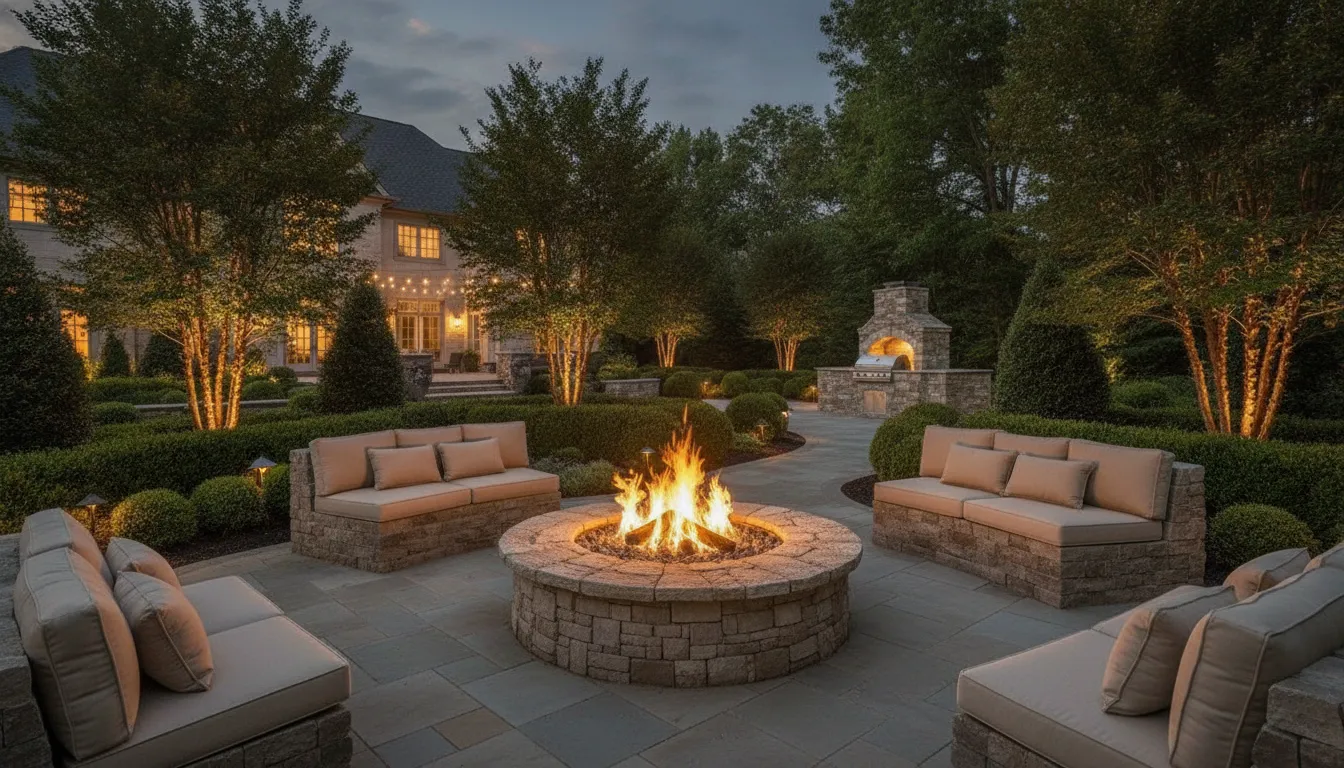
A permanent fire feature should feel like a natural part of your outdoor room, not an object placed wherever there is leftover space. For Delaware Valley homeowners, the strongest designs begin with how the area will be used. How people will move around it, and how the fire pit will relate to the patio, seating, planting, lighting, and views.
Talk with DiSabatino about your fire pit installation plans or call (302) 764-0408.
A thoughtful fire pit installation starts with site fit, fuel selection, seating capacity, material coordination, and local verification. DiSabatino offers custom wood-burning, natural gas, and propane options, along with natural stone and integrated outdoor-living design. So the finished feature can reflect both your property and your routine.
That planning matters whether you picture quiet evenings around a low, intimate flame or larger gatherings arranged around a substantial stone centerpiece. Before choosing a shape or finish, consider the practical conditions that will influence comfort, circulation, smoke, approvals, and long-term use.
What Should You Plan Before Fire Pit Installation?
A successful fire pit installation begins with the setting, not the fire feature itself. Before choosing a finish or flame style, consider how the space will be used. How people will move through it, and how the installation will relate to the home, patio, planting, and surrounding views. A permanent feature should feel intentional from every angle, whether it is the center of an entertaining area or a quieter destination at the edge of the landscape.
Start by documenting the proposed location and the fire pit's overall size, including its diameter and height. Those dimensions affect seating distance, sightlines, circulation, and the amount of surrounding hardscape required. A fire pit that looks appropriately scaled in a drawing may feel crowded once chairs, side tables, pathways, and access to the rest of the property are considered. Think through the experience in both directions: where guests will sit to enjoy the fire and how they will reach the seating without crossing the primary gathering zone.
How will the site handle the installation?
Examine the existing patio, grade, drainage, utilities, and condition of the base. A published fire pit installation plan notes that an existing patio or suitable base may be used after confirming that it is level. The same plan specifies a compacted, level base material for a new installation. These details are not universal specifications for every project, but they illustrate why the existing surface should be assessed before design decisions are finalized. A site that needs new grading, excavation, drainage work, or coordinated utility planning may require a broader scope than a fire pit placed on an established, suitable patio.
Wind direction also deserves attention. The EPA advises people burning outdoors to consider their neighbors and wind direction, and it recommends avoiding wood burning on air quality alert days. That guidance can influence whether a wood-burning feature is appropriate for a particular location and how seating is oriented. It is also worth considering nearby windows, doors, outdoor kitchens, planting beds, and areas where smoke could collect or interrupt normal circulation.
Which local requirements apply?
Do not assume that one municipality's fire pit rules apply throughout the Delaware Valley. The EPA notes that some local governments restrict backyard recreational fires and recommends checking with local authorities. Confirm applicable requirements, approvals, utility questions, and property restrictions before construction. Your project team can help identify questions to verify, but jurisdiction-specific requirements should come from the relevant authority.
- Define the fire pit's purpose, capacity, and preferred view.
- Measure the proposed diameter, height, seating zone, and circulation paths.
- Review the patio or base for levelness, drainage, and access.
- Consider wind, neighbors, windows, doors, and nearby combustible materials.
- Verify local requirements before finalizing the design.
For homeowners ready to coordinate these decisions with the surrounding landscape, explore custom fire pit installation as part of a considered outdoor living plan.
Choosing a Fire Pit Fuel and Form That Fits Your Routine
Fuel selection influences more than the appearance of the flame. It affects how you begin an evening, how much preparation the fire requires, and how naturally the feature fits into the rest of your outdoor living space. DiSabatino offers wood-burning, natural gas, and propane fire pit options. Allowing the design to respond to the way you expect to use the space rather than forcing every project into the same format.
Wood-burning fire pits for a traditional experience
Wood-burning pits create the familiar crackle, scent, and changing character many homeowners associate with an outdoor fire. They also require a more active routine: selecting and storing appropriate firewood, building the fire, monitoring smoke, and extinguishing it responsibly. The EPA advises burning only seasoned, dry wood, which burns hotter and cleaner, and notes that firewood moisture content is best at about 20 percent. Those details matter for comfort as well as air quality. Wood smoke contains fine particles, and people with asthma, COPD, or other heart and lung conditions may be particularly sensitive to them. Consider prevailing wind and nearby neighbors when deciding whether this fuel suits the site.
Local rules also deserve attention before a wood-burning installation is designed. Some governments restrict backyard recreational fires, so confirm requirements with the appropriate local authorities rather than assuming that a practice permitted in one municipality is permitted in another. The EPA also recommends not burning wood during air quality alert days.
Natural gas and propane for a more controlled flame
Natural gas and propane can suit homeowners who prefer a flame that is ready when the gathering begins, without the same wood-storage and smoke considerations. The choice between them depends on the property, utility access, tank strategy, design goals, and local requirements. It should be resolved during site assessment and design development, not treated as an afterthought once the stonework is complete. The EPA states that switching to natural gas or propane reduces harmful air pollutants compared with burning wood. But that does not remove the need for careful installation and responsible operation.
The form of the fire pit should support the fuel and the setting. A round pit can encourage conversation, while a linear or built-in form may relate more naturally to a defined seating wall or outdoor room. In either case, the burner, enclosure, controls, paving, and seating should be considered together. DiSabatino approaches fire pits as part of a custom outdoor living environment, not as an isolated product. That coordinated perspective helps align the flame with circulation, views, materials, and the rest of the property. Explore custom fire pit installation when you are ready to evaluate the right combination of fuel and form.
How Do Materials and Seating Shape the Experience?
A fire pit becomes more useful when the surrounding setting feels intentional. Materials establish the visual relationship between the fire feature, the home, and the landscape, while seating and circulation determine whether people can comfortably gather, move, and stay engaged. Treating these elements as one design conversation helps avoid the disconnected look of a fire bowl placed on an otherwise unrelated patio.
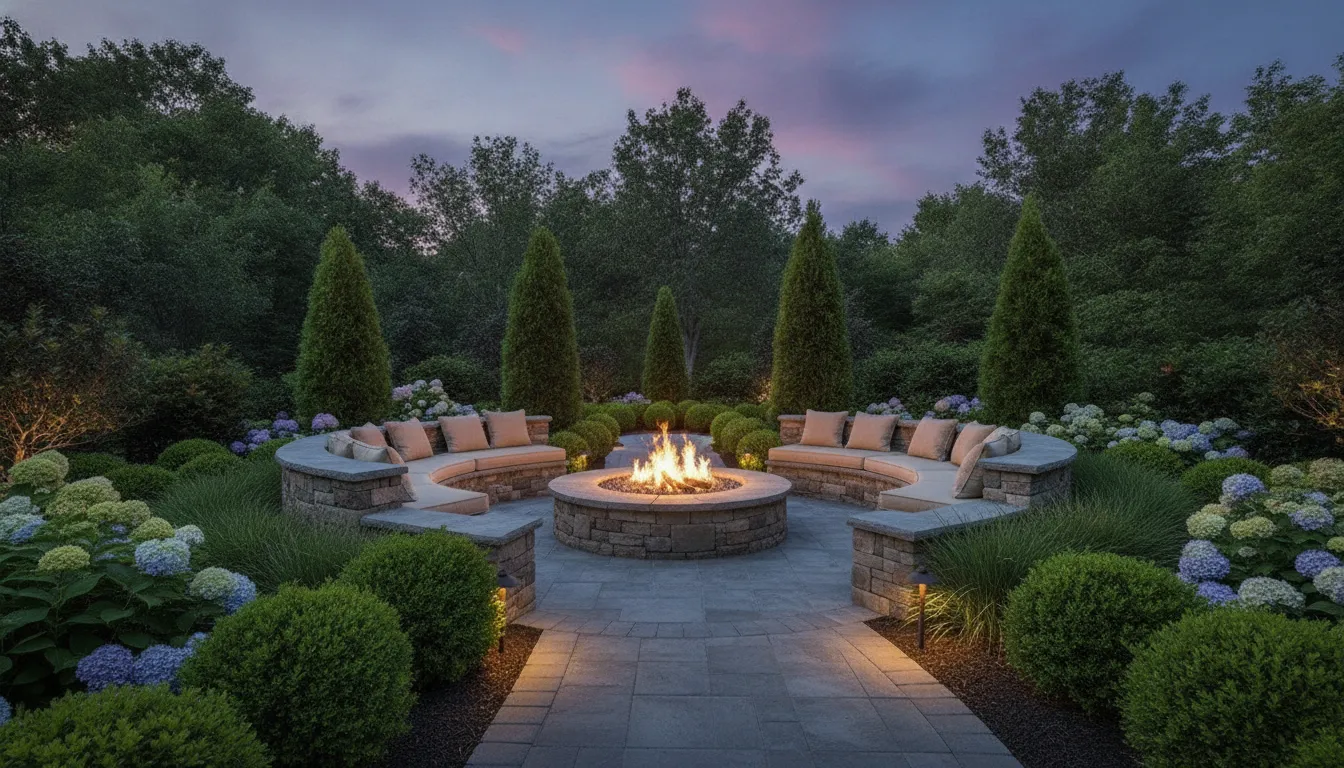
Begin with the character of the property and the materials already used nearby. Natural stone can connect the fire pit to existing walls, steps, or architectural details. Pavers may provide a more structured field for the seating area and can define a transition between the house and the gathering space. The goal is not to use the greatest number of materials. It is to select finishes with compatible color, texture, scale, and maintenance expectations.
| Element | Planning focus |
|---|---|
| Stone | Texture, color, masonry connection |
| Pavers | Pattern, scale, circulation |
| Built-in seating | Orientation, comfort, planting |
| Movable seating | Flexibility, storage, sightlines |
Scale matters as much as finish. Seating that is too close can make the fire feel crowded, while a layout that spreads guests too far apart can weaken conversation. Account for the shape of the fire pit, the depth of the seating, and a comfortable path around the gathering area. Circulation should connect naturally to the house, patio, kitchen, garden, or other destinations without cutting through the primary conversation zone.
A thoughtful design may use a low wall, change in paving pattern, or shift in grade to define the fire pit area without making it feel closed in. Planting and lighting can reinforce the room-like quality, but they should support the fire feature rather than compete with it. DiSabatino's handcrafted hardscaping work includes natural stone patios, walkways, walls, and paver applications that can inform a coordinated setting.
For homeowners reviewing a fire pit installation, the most useful question is not simply which surface looks best in isolation. It is how the materials, seating, and paths will work together after the first gathering, through changing seasons, and alongside the rest of the outdoor living plan.
Designing for Responsible, Comfortable Use
A well-designed fire feature should feel inviting without making guests think about smoke, fuel handling, or where children can safely move. Responsible use begins with the operating habits the design needs to support. Guidance from agencies such as the EPA, along with any applicable local requirements, is general information rather than a substitute for project-specific review. Before finalizing a fire pit installation, homeowners should verify current rules with the relevant local authorities and qualified professionals.
Wood-burning and gas features create different comfort considerations. The EPA explains that wood smoke contains fine particles and that outdoor recreational fires can contribute to air pollution, particularly in some metropolitan areas. Children, older adults, and people with heart or lung conditions, including asthma and COPD, can be especially sensitive. A thoughtful plan accounts for who will use the space, where smoke may travel, and whether a different fuel choice better suits the household.
- Plan for children and supervision. Keep young guests closely supervised around any active fire. Arrange seating and circulation so adults can maintain a clear view, and avoid treating the edge of the fire feature as a casual play boundary.
- Control sparks and finish every fire. For a wood fire, use a properly fitted metal screen when appropriate. Extinguish the fire completely before leaving the area, and keep a hose or suitable extinguisher accessible. Never use gasoline or add liquid fuel to accelerate a fire.
- Choose and store fuel carefully. If wood burning is part of the plan, use only seasoned, dry wood. The EPA notes that dry wood burns hotter and cleaner, with moisture around 20 percent as a useful target. Keep fuel storage orderly and away from locations where it could interfere with circulation.
- Design around smoke and wind. Consider prevailing wind direction and neighboring properties before selecting the fire pit location. Seating that works beautifully in still conditions may become uncomfortable if smoke regularly crosses the gathering area or drifts toward a neighbor.
- Respect air-quality alerts. Do not burn wood during an air-quality alert, when pollution is already elevated. Natural gas or propane can reduce harmful air pollutants compared with burning wood, but the selected fuel system still needs to follow applicable installation and operating requirements.
- Verify local requirements. Local governments may restrict backyard recreational fires, and rules can change by municipality. Confirm current requirements, approvals, and any fuel-related conditions before construction rather than assuming a neighboring property's setup is permitted for your home.
These decisions belong in the design conversation, not as an afterthought. A coordinated outdoor living plan can place the fire feature, seating, paving, and circulation where they support comfortable gatherings while respecting the property's context. The goal is not simply to add flame, but to create a setting people can use thoughtfully throughout the season.
What Does a Professional Fire Pit Installation Process Include?
A well-planned fire pit installation is more than selecting a bowl or burner and setting it in place. The process should account for how the feature fits the property, how people will use it, which materials belong together, and what approvals may be required. DiSabatino's design-build approach moves from early conversation to a coordinated finished space, so important decisions are addressed before construction begins.
For a closer look at how the company works, review the design-build process. The ten steps below show how a custom project can progress from an initial idea to a final walkthrough.
- Consultation. The conversation begins with your goals, the way you want to gather, and the role the fire feature should play in the larger outdoor setting. This is where priorities, preferences, and the overall scope come into focus.
- Site assessment. The team evaluates the property, existing conditions, access, grade, views, circulation, and the relationship to the home. Site conditions help determine what is practical and where additional coordination may be needed.
- Conceptual design. Early concepts explore the fire pit's location, form, scale, seating relationship, and connection to adjacent hardscape. The goal is to establish a clear direction before details are developed.
- Design development. The selected concept is refined through decisions about materials, finishes, fuel type, surrounding paving, walls, and other integrated outdoor living elements. These choices are considered as a composition rather than as isolated products.
- Detailed planning. Plans become more specific, with dimensions, construction details, material selections, and site coordination clarified. This stage helps identify conflicts before crews arrive and provides a more reliable basis for the work.
- Proposal and contract. Instead of presenting a generic price for a feature whose site conditions and scope are unknown, DiSabatino prepares a custom proposal. The company's published process and fire pit service information describe custom quotes and premium materials, not a one-size-fits-all price. A project-specific proposal is more responsible because it reflects the actual design, preparation, materials, and installation requirements.
- Permits and approvals. Required permits, reviews, and other approvals are addressed as a planning phase, not left as an afterthought. Requirements vary by municipality and property, so local authorities and applicable regulations should be verified for the specific site.
- Scheduling. Once the scope and approvals are in place, the work is organized around site access, material coordination, and the sequence of construction activities.
- Installation. The approved design is brought to the property, including the fire feature and its related hardscape or outdoor living elements within the agreed scope. Coordination at this stage helps the finished installation feel intentional and integrated.
- Final walkthrough. The project concludes with a review of the completed work. This provides an opportunity to discuss the finished installation, confirm that the agreed scope has been addressed, and clarify relevant care or use considerations.
This sequence gives homeowners a practical framework for making decisions without reducing a custom installation to a catalog item. It also creates clear points for questions, revisions, and local verification before the work is built.
When Should a Fire Pit Be Part of a Larger Outdoor Living Plan?
A fire pit works best when it is treated as one element of an outdoor room, rather than placed on an otherwise finished patio as an afterthought. If you are already considering new paving, built-in seating, a masonry wall, landscape lighting, or updated planting, coordinating those decisions can produce a more comfortable and cohesive setting. DiSabatino positions fire pits within custom outdoor living environments alongside patios and seating areas, not as isolated products.
That broader view is especially useful when the fire feature will anchor regular gatherings. The plan should account for how people arrive, where they sit. How they move between the house and the seating area, and what they will see from nearby rooms. A circular fire pit may encourage conversation, while a linear feature can support a longer seating wall or define the edge of a patio. The right form depends on the architecture, available space, and the way your household expects to use the area.
Coordinate the hardscape before choosing the final feature
Patio dimensions, paving patterns, steps, retaining walls, and masonry details all influence the fire pit's scale and position. A natural stone surround may relate to an existing terrace or wall, while carefully selected pavers can create a distinct but connected zone. DiSabatino's hardscaping work includes natural stone patios, walkways, retaining walls, outdoor fireplaces, and paver work. Giving homeowners a foundation for discussing how the materials should relate across the property. Explore handcrafted hardscaping when the setting requires more than a standalone burner or prefabricated unit.
Circulation deserves equal attention. Seating should not narrow the main path to the house, and the fire feature should not interrupt access to an outdoor kitchen or dining area. Planning these relationships at the same time can also make future phases easier. Utilities, grading, drainage, wall locations, and paving transitions are simpler to evaluate before construction is complete than after a finished patio has to be opened or redesigned.
Use lighting and planting to complete the outdoor room
Landscape and architectural lighting can guide movement, reveal masonry texture, and provide a restrained layer of illumination beyond the fire itself. It should support the feature without competing with its glow. Planting can soften hard edges, frame views, and define the boundary of the gathering space, but its placement should be considered alongside access, maintenance, and the intended sightlines.
For inspiration, review finished fire pit projects and consider how the feature relates to its surrounding surfaces and seating. A coordinated outdoor living plan does not require every phase to be built at once. It does require the larger goals to be understood early, so the initial integrated outdoor living design can leave room for thoughtful future work.
Discuss your fire pit installation goals with DiSabatino or call (302) 764-0408 before the design is finalized.
Frequently Asked Questions
How do I plan a fire pit installation in my backyard?
Start with how you want to use the space, then evaluate the proposed location, pit size, seating, circulation, views, wind direction, and relationship to the home. Confirm the base and drainage are appropriate, and check local requirements before construction. Rules can vary by municipality. The EPA notes that some local governments restrict backyard recreational fires and recommends checking with local authorities: EPA backyard recreational fire guidance.
Can a fire pit be installed directly on pavers?
It may be possible when the existing patio is structurally suitable, level, and compatible with the selected fire pit system. The answer depends on the paver material, base, drainage, heat exposure, and whether the installation is wood-burning or gas. A professional site assessment can determine whether the current surface should remain, be reinforced, or be rebuilt as part of the design.
Which fire pit fuel is best for a Delaware Valley home?
That depends on your routine and priorities. Wood-burning pits create a traditional fire experience but require appropriate firewood storage and thoughtful smoke management. Natural gas and propane offer different installation and operating considerations and may reduce harmful air pollutants compared with burning wood, according to the EPA: EPA recreational fire guidance. Local utility and code requirements should be verified for any gas connection.
What should go beneath a fire pit?
A fire pit needs a properly prepared, stable base suited to the finished design and site conditions. The assembly may include compacted base material, a compatible surface, and drainage provisions, but the exact build-up depends on the soil, patio, materials, and fire pit system. Avoid assuming that a decorative layer alone is sufficient. A site-specific design should establish the base, dimensions, clearances, and installation details before work begins.
Ready to Plan Your Fire Pit Installation?
A thoughtful conversation can help connect your fire pit goals with your property's layout, preferred fuel, seating needs, and broader outdoor-living plans. DiSabatino Landscaping can help you consider the right direction before the details are finalized. To discuss your project, call (302) 764-0408 and share what you are envisioning for your Delaware Valley home.