
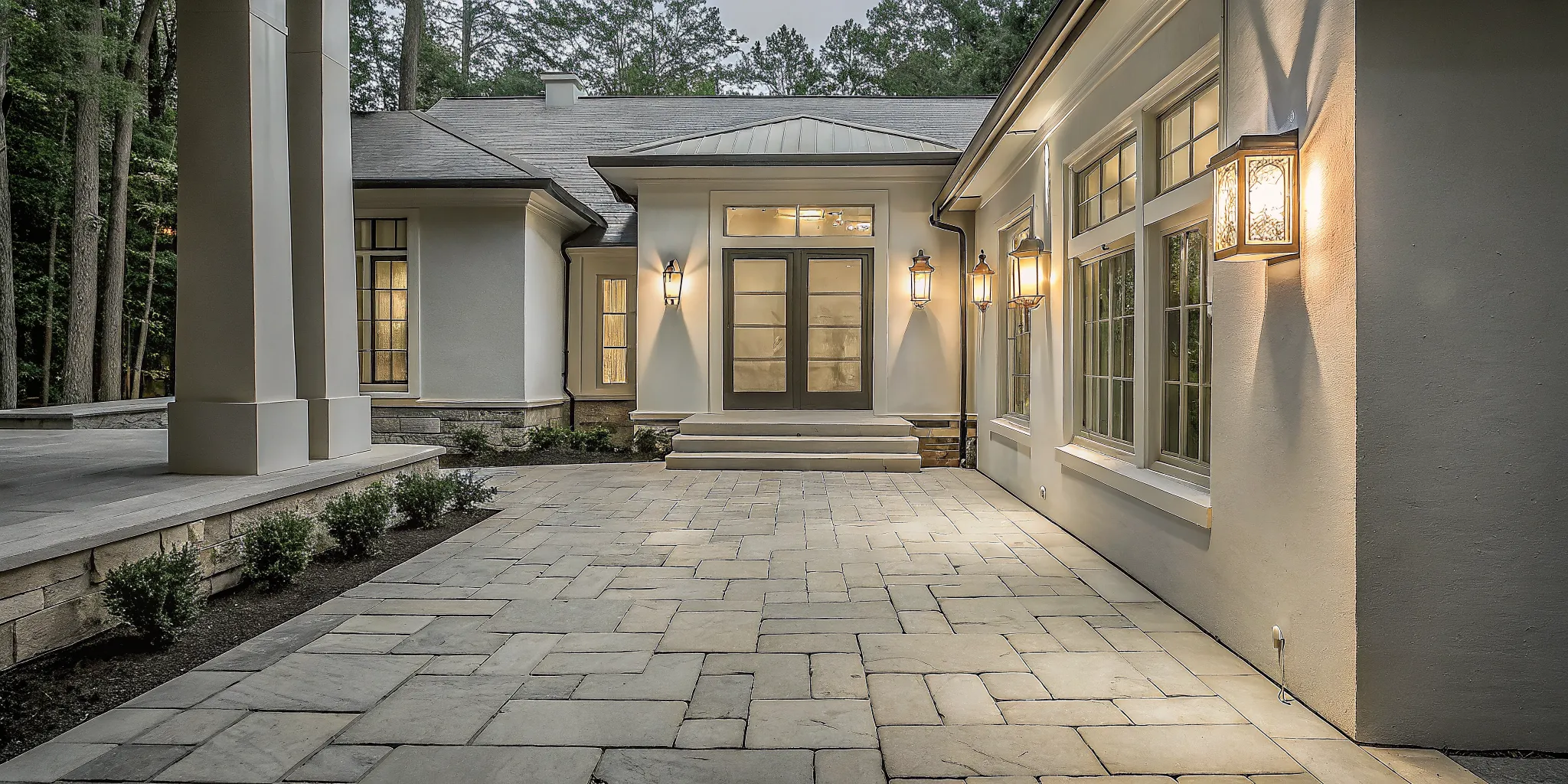
Outdoor spaces in Delaware and Pennsylvania should feel inviting after sunset, not simply remain visible. Thoughtful illumination can extend time outdoors, clarify pathways, highlight craftsmanship, and add a greater sense of security without overwhelming the architecture or landscape.
Effective outdoor lighting design balances three goals: beauty, safety, and security. A layered plan combines landscape, architectural, pathway, and patio lighting to create a comfortable evening setting while supporting how your family actually uses the property.
For homeowners creating a resort-style backyard or refining an established estate, the strongest results come from treating lighting as part of the larger design-build vision. Fixtures, beam direction, color, and controls should work together across patios, plantings, masonry, and gathering areas. A professional plan can also coordinate low-voltage systems and durable fixtures with the broader project, rather than adding lighting as an afterthought. The right starting point is to understand how each layer contributes to the experience and how those layers should overlap.
Understanding the Layers of Outdoor Lighting Design
A thoughtful lighting plan balances beauty with function instead of treating every fixture as a separate decision. The U.S. Department of Energy identifies three primary purposes for outdoor lighting: aesthetics, security, and utility. In practice, those purposes become three complementary layers that shape how a patio, garden, walkway, or home's architecture feels after sunset.
| Layer | Purpose | Typical fixtures | Placement | Best use |
|---|---|---|---|---|
| Ambient lighting | Provides general illumination and establishes the overall mood. | Soft wall lights, downlights, ceiling fixtures, and carefully diffused landscape fixtures | Across patios, terraces, covered outdoor rooms, and broad circulation areas | Creating a comfortable, resort-style atmosphere for gathering and relaxing |
| Task lighting | Directs useful light where specific activities require visibility. | Path lights, step lights, under-counter lights, and focused area fixtures | Along walkways, stairs, entrances, cooking areas, and seating transitions | Supporting safe movement, cooking, serving, and everyday use after dark |
| Accent lighting | Highlights architectural details, trees, planting, masonry, or focal features. | Uplights, spotlights, grazing fixtures, and narrow-beam accent lights | At the base of feature trees, walls, columns, sculptures, and garden focal points | Adding depth, drama, curb appeal, and visual connection between the home and landscape |
Ambient Lighting: The Foundation of the Experience
Ambient light should feel even and inviting, never harsh or overly bright. It gives an outdoor room a sense of place while allowing architectural finishes and planting to remain visible. Layering soft sources at different heights can prevent the flat, overlit appearance created by relying on one powerful fixture.
Task Lighting: Making Movement and Activities Easier
Task lighting belongs wherever people walk, climb, cook, or gather around a working surface. Fixtures should guide movement without creating glare. A well-planned arrangement supports evening usability and contributes to safety, one reason landscape lighting can extend outdoor living well beyond daylight hours.
Accent Lighting: Directing Attention
Accent fixtures are most effective when they reveal something worth noticing. A subtle wash across stonework or a controlled beam through a mature tree can add dimension without competing with the architecture. For more application-specific guidance, explore these professional landscape lighting design techniques.
Why Low-Voltage Systems Are Common
Many residential installations use low-voltage systems operating at 12 volts. They are generally safer to install and more energy-efficient than traditional 120-volt line-voltage systems. The right system, transformer, fixture placement, and controls should be planned together so the finished design remains refined, reliable, and easy to use.
Types of Landscape and Architectural Lighting Fixtures
A well-composed lighting plan uses different fixtures for different visual and practical roles. The goal is not to make every surface equally bright. It is to guide movement, reveal texture, support evening activities, and create depth across the property. These are the fixture categories most often combined in a thoughtful outdoor lighting design.
Pathway Lights
Pathway fixtures provide a soft, downward glow along walkways, garden edges, and transitions between outdoor rooms. Their placement should define the route without creating a runway effect. Alternating fixtures from side to side often produces a more natural appearance, while careful spacing reduces dark gaps and glare.
Spotlights and Uplights
Spotlights and uplights direct focused beams toward trees, columns, architectural details, sculpture, or other focal points. Uplighting a specimen tree can bring out its branching structure, while a narrower spotlight can draw attention to a stone wall or mature planting. Beam spread, fixture distance, and aiming angle all influence whether the result feels layered or overexposed.
Wall Wash Lights
Wall wash fixtures cast a broad, even field of light across masonry, siding, retaining walls, or other vertical surfaces. They are especially effective when the surface has texture that becomes visible after sunset. Installed at an intentional distance, they can make an architectural elevation feel more inviting without highlighting every imperfection.
Deck and Step Lights
Recessed or surface-mounted deck and step lights support safe movement around stairs, raised patios, terraces, and seat walls. They can also emphasize the geometry of a deck or define the edge of an outdoor room. The best installations remain visually quiet during the day and provide comfortable guidance at night, rather than shining directly into a guest's eyes.
Floodlights and Security Lights
Floodlights cover larger areas such as driveways, side yards, and service zones. They are useful where broad visibility matters, but high output should be used selectively. Pairing the fixture with thoughtful controls can provide security coverage while preserving the softer atmosphere of entertaining areas. A layered plan separates functional security lighting from the accent lighting that gives the property character.
Pond and Water Feature Lights
Submersible or carefully concealed water-feature fixtures add movement and reflection to ponds, fountains, and pool-adjacent features. Aiming light across moving water or toward a waterfall can create a restrained resort-style effect. Fixtures should be selected and positioned with attention to viewing angles, maintenance access, and reflections that could distract from the surrounding landscape.
These fixture types become most effective when coordinated with the spaces they serve. For example, an outdoor kitchen lighting plan may combine task lighting near preparation areas with softer illumination around seating, pathways, and adjacent plantings. That coordination helps the entire backyard feel like one connected experience.
Architectural Lighting: Highlighting Your Home's Best Features
Thoughtful lighting should reveal the character of a home after sunset, not flatten it into a uniformly bright facade. A well-developed plan considers the home's architecture, materials, landscape, and the way the property is experienced from the street, driveway, patio, and interior rooms. The result is an exterior that feels intentional from every angle.
Use light to reveal shape and texture
Uplighting places a controlled beam at the base of a feature and directs attention upward. It can emphasize columns, mature trees, rooflines, and the proportions of an entry facade. Grazing positions light close to a textured surface, allowing shadows to bring out the irregularities in natural stone, brick, or masonry. Wall washing uses a broader, softer spread to create an even layer of illumination across a larger surface, such as a stucco wall or architectural elevation.
These techniques are most effective when they are balanced rather than applied everywhere. A column may benefit from a narrow beam, while a stone facade may call for grazing and a recessed entryway may need a quieter layer of ambient light. Fixture placement, beam spread, color temperature, and shielding all influence whether a feature feels refined or overexposed.
Coordinate the architecture and landscape
Architectural lighting should also connect the home to the spaces around it. A lit entry can lead naturally toward a walkway, terrace, retaining wall, or planted bed. Lighting a specimen tree or sculptural planting near the facade can soften hard architectural lines. While carefully placed fixtures can draw attention to crafted masonry without competing with the home's windows.
This coordination is where a design-build approach offers a meaningful advantage. When one team understands the architectural plan, hardscape elevations, planting design, and outdoor living goals. Lighting can be integrated before construction is complete instead of added as an afterthought. DiSabatino's architectural design services and luxury landscape and hardscaping services can be developed together, so stonework, grade changes, circulation, and illumination support the same overall vision. That single-source coordination helps create a polished evening setting that feels like a natural extension of the home.
Smart and Energy-Efficient Outdoor Lighting Solutions
Today's outdoor lighting can be both beautifully atmospheric and remarkably precise. Timers, photo sensors, smartphone controls, and smart transformers give homeowners the ability to shape how a property looks and functions from dusk through the evening. The goal is not to add technology for its own sake. It is to make the lighting responsive to the way your family uses the property while preserving the calm, finished character of the design.
Automation that follows your home's rhythm
A timer can establish a dependable schedule for pathways, entries, patios, and architectural accents. Photo sensors adjust activation based on available daylight, which is useful as sunset changes throughout the year. Smartphone controls can provide convenient adjustments for entertaining, travel, or seasonal preferences. With a properly specified smart transformer, these elements can work together without leaving a collection of disconnected controls around the house.
Professional outdoor lighting design considers control zones as part of the original plan. Entry lighting may need to remain consistent, while landscape accents, entertaining areas, and security lighting can respond differently. That approach creates flexibility without sacrificing visual balance.
Efficiency through better equipment and placement
LED fixtures are a natural fit for a premium low-voltage system. They use less energy than many traditional alternatives, offer long-lasting performance. And can provide the controlled color and beam quality needed to highlight stonework, trees, planting beds, and gathering spaces. Low-voltage landscape systems typically operate at 12 volts, a lower operating level than traditional 120-volt systems, and are commonly selected for their safety and efficiency advantages.
Efficiency also depends on where light goes. The U.S. Department of Energy recommends fixtures with reflectors, deflectors, or covers to make more effective use of the light source and help reduce light pollution. In practice, that means directing illumination toward a path, facade, or planting feature instead of allowing glare or unnecessary spill into neighboring properties and the night sky.
Illuminations by DiSabatino brings these decisions into a coordinated design-build process. Led by AOLP member Alex Hambleton, the dedicated lighting division can integrate smart controls, efficient fixtures, and carefully aimed illumination with the larger landscape and outdoor living plan. The result feels effortless: light appears where it is useful, beautiful, and appropriate, with the technology working quietly in the background.
Designing for Security Without Sacrificing Style
Security lighting should make a property feel considered, not overexposed. The goal is to improve visibility at the places where it matters most, including entries, walkways, driveways, side yards, and transitions between the home and landscape. A thoughtful outdoor lighting design uses light as one layer of the experience rather than turning the entire property into a brightly lit parking lot.
Use motion and placement to make light purposeful
Motion sensors are especially useful near service gates, side entrances, garages, and less frequently used paths. They provide illumination when activity is detected without keeping every fixture at full output throughout the night. Strategic floodlights can support broader coverage at driveways and open lawn areas, while smaller, shielded fixtures can guide movement near doors and steps.
The U.S. Department of Energy recommends considering LED floodlights combined with photosensors and motion sensors as an energy-efficient security lighting option. This combination allows the system to respond both to darkness and to movement, which is more deliberate than relying on a single always-on fixture.
Balance visibility with comfort
Research published through the National Library of Medicine found that brighter ambient lighting is associated with increased perceptions of safety. That does not mean brighter is always better for a private residence. Excessive glare can make it harder to see beyond the immediate pool of light, disturb neighbors, and flatten the shadows that give a landscape depth.
Fixture direction, mounting height, color temperature, and shielding all influence how secure a space feels. Downlighting can illuminate a path while preserving the character of surrounding planting. A carefully aimed wall wash can reveal an entry without shining into a bedroom window. Layering low-level path lights with selective accent or floodlighting often creates better visual coverage than using one powerful source.
Choose dark-sky-friendly details
Fixtures with covers, reflectors, or deflectors direct light toward the ground and the features that need it, helping reduce wasted light and light pollution. The result can be both more comfortable and more attractive: warm pools of light. Defined architectural edges, and visible circulation routes without a harsh glow over the entire property.
Security does not need to look industrial. When sensors, floodlights, and dark-sky-conscious fixtures are integrated into the planting, architecture, and outdoor living areas, protection becomes part of the design rather than an afterthought.
The Professional Advantage: Custom Outdoor Lighting Design
Thoughtful outdoor lighting design is more than selecting attractive fixtures and placing them around a property. It requires an understanding of how light interacts with architecture, planting, hardscape, circulation, and the way your family uses the outdoors after sunset. A dedicated lighting professional can shape those elements into a cohesive nighttime experience, with illumination that feels intentional rather than added after the fact.
That specialized perspective is the distinction behind professional outdoor lighting design from Illuminations by DiSabatino. The dedicated lighting division is led by Alex Hambleton, an Association of Outdoor Lighting Professionals (AOLP) member. Lighting is treated as a specialty service with its own design expertise, not as an optional add-on at the end of a landscaping or construction project.
A lighting plan shaped around the whole property
A professional begins by studying the property as a complete composition. Architectural details may call for carefully controlled accent light, while steps, walkways, terraces, and planting beds need different levels and beam directions. The goal is to create visual hierarchy, preserve the character of the home, and support comfortable movement without over-lighting every surface.
This approach also gives the design team room to consider how the lighting will mature with the landscape. Fixture locations, wiring routes, tree growth, sightlines, and maintenance access can be addressed before installation, rather than corrected after the surrounding work is complete.
One team coordinating every design layer
DiSabatino's design-build model adds another advantage. Lighting can be coordinated directly with the teams shaping patios, walls, gardens, outdoor kitchens, architectural features, and other elements of the property. That communication helps conceal infrastructure, protect finished surfaces, and place illumination where it reinforces the original design intent.
The result is a more seamless backyard oasis, whether the priority is highlighting masonry, extending entertaining into the evening, or creating a welcoming arrival. For homeowners investing in a complete exterior environment, a dedicated lighting division helps ensure the finished property looks considered from every angle and at every hour.
Frequently Asked Questions
What are the essential elements of a professional outdoor lighting design?
A professional plan balances three goals: aesthetics, security, and utility. It considers how light will reveal planting, architecture, paths, steps, entertaining areas, and entry points after dark. Fixture placement, beam direction, color, intensity, controls, and wiring should work together so the property feels layered and comfortable rather than overly bright.
How do you approach modern outdoor lighting design?
Modern design typically favors restraint, clean sightlines, and carefully controlled light. Rather than placing fixtures everywhere, a designer selects focal points, conceals equipment where possible, and uses shadow and contrast to give the home and landscape dimension. The plan should also account for how the lighting looks from inside the house and from neighboring properties.
How do you plan effective lighting for a landscape?
Begin with how you use the property in the evening, then map circulation, gathering areas, architectural features, planting, and locations that need added visibility. Layer ambient, accent, and task lighting, and test sightlines before finalizing fixture locations. Reflectors and deflectors can help direct light where it is needed while reducing unnecessary glare and light pollution.
What are the benefits of smart outdoor lighting?
Smart controls can make an outdoor lighting system easier to manage by coordinating schedules, scenes, and selected zones. They can support everyday entertaining, arrival and departure, and seasonal adjustments without requiring manual changes at every fixture. A well-designed system still begins with sound lighting placement and appropriate controls, not technology alone.
Ready to Plan Your Outdoor Lighting Design?
A thoughtful lighting plan can help your outdoor spaces feel more inviting, functional, and connected to the architecture and landscape around them. DiSabatino can help you explore options that suit your property's character and the way you want to enjoy it after sunset. To take the next step, schedule a design consultation with DiSabatino and begin discussing your outdoor lighting vision.