
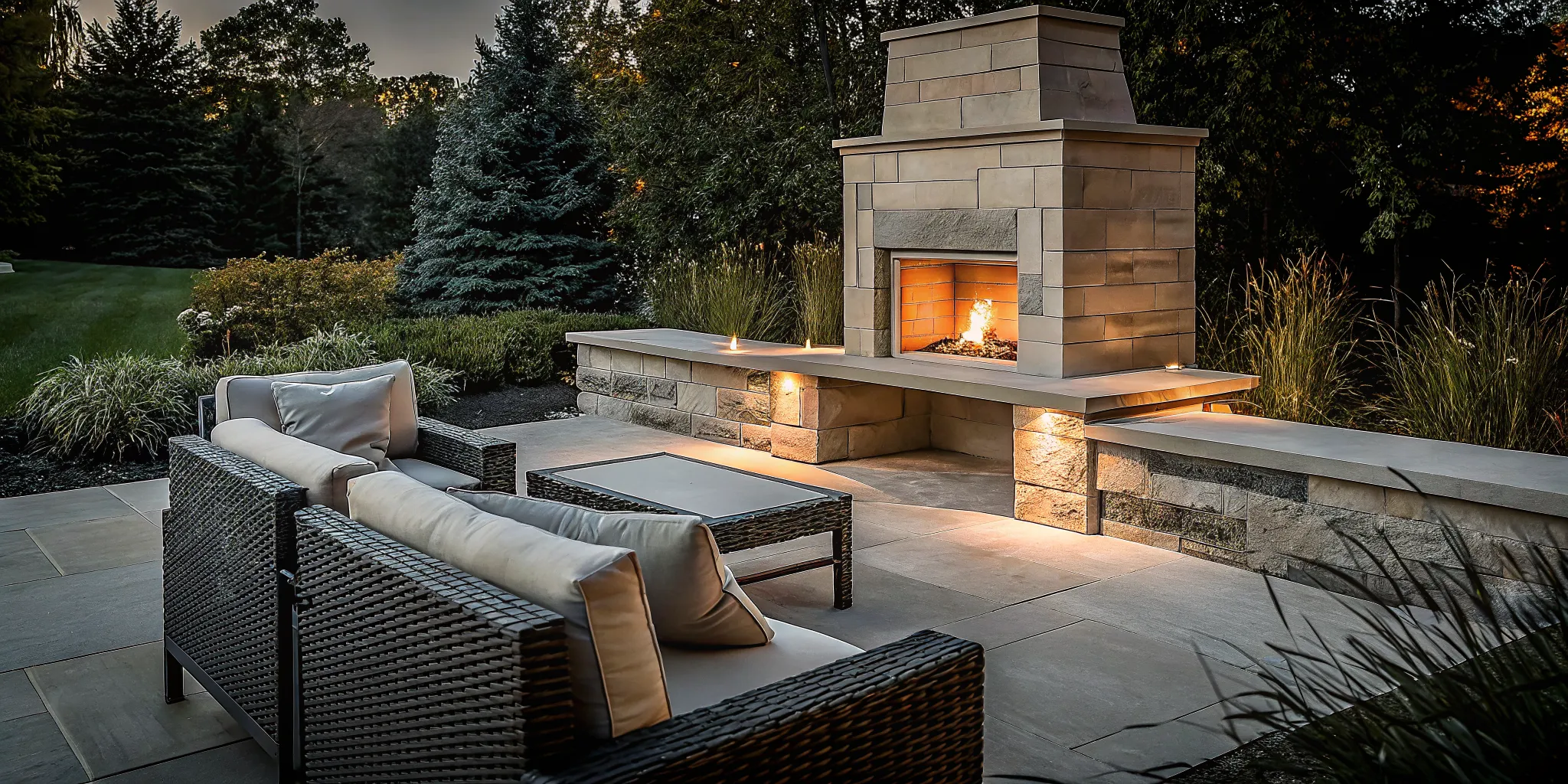
Mid-Atlantic autumn evenings turn chilly long before most families are ready to retreat inside. A custom stone fireplace extends your patio usability by an average of ten to twelve weeks each year, turning a seasonal space into a three-season gathering hub. Whether you prefer the crackle of a wood-burning hearth or the instant warmth of natural gas, the right fire feature anchors your outdoor living area and adds measurable resale value to your home.
Ready to create your dream outdoor living space? Contact DiSabatino Landscaping today to schedule a design consultation with our hardscape team.
Outdoor fireplace ideas range from classic wood-burning stone hearths to modern gas fire tables that deliver instant flames at the push of a button. These custom outdoor fireplaces serve as the architectural anchor of your backyard, bridging the indoor-outdoor connection that luxury homeowners in the Delaware Valley and Brandywine Valley increasingly demand. The right choice depends on how you entertain: wood-burning options deliver the sensory experience of crackling logs and wood smoke that defines traditional outdoor gatherings, while natural gas fireplaces offer push-button convenience and clean combustion ideal for frequent use throughout the shoulder seasons.
Both fuel types extend your patio investment, but the optimal choice varies by lifestyle, budget, and site conditions. We built this guide around the most important factors to consider, starting with the fundamental fuel decision.
Outdoor Fireplace Ideas: Wood-Burning vs. Gas Comparison
When evaluating outdoor fireplace ideas, the fuel decision shapes every downstream choice. Wood-burning fireplaces rely on a masonry chimney and firebox built to withstand sustained high temperatures, while gas units require a professionally installed gas line and can be built into virtually any structure or freestanding location. Here is how the two options compare across the factors that matter most to Mid-Atlantic homeowners.
The Character of a Wood-Burning Hearth
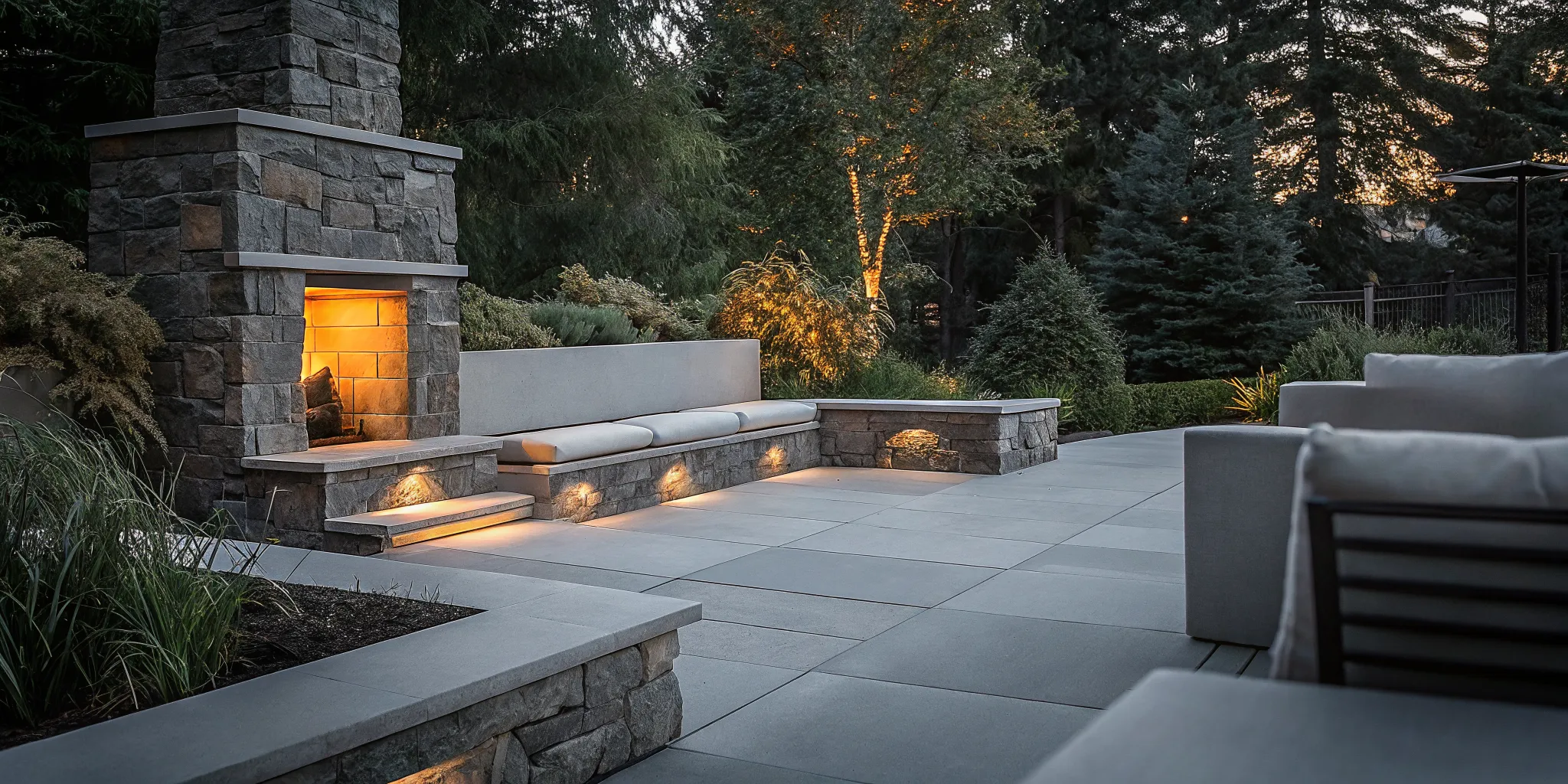
A wood-burning fireplace delivers the authentic campfire experience: the sound of splitting logs, the aroma of oak or hickory smoke, and the visual dance of flames that have defined outdoor gatherings for millennia. These structures require a full masonry chimney system that vents smoke above the roofline, creating the towering stone landmark that signals a premium outdoor room. The firebox must be constructed with heat-rated fire brick to withstand temperatures exceeding 1,000 degrees Fahrenheit, and the chimney requires annual inspection to prevent creosote buildup.
Operating costs for wood-burning units depend on fuel sourcing. A cord of seasoned oak, ash, or maple runs approximately $250 to $400 in the Mid-Atlantic region and provides roughly 80 to 100 burn hours depending on fire size. Homeowners who split and season their own wood can reduce that cost significantly. The EPA recommends burning wood with moisture content below 20 percent to maximize heat output and minimize particulate emissions.
The Convenience of Natural Gas
Natural gas fireplaces ignite at the flip of a switch, produce no smoke or ash, and offer adjustable flame height via remote control. The initial installation cost is higher due to the required gas line trenching and connection by a licensed plumber, but the ongoing fuel cost is generally lower and more predictable. A 40,000 BTU gas burner operating four hours per evening costs roughly $1.50 to $2.50 per night at current Delaware Valley utility rates. There is no wood to store, no ash to dispose of, and no chimney sweep to schedule.
Gas fireplaces also offer greater design flexibility. Because they do not require a chimney draft, they can be built into seating walls, raised planters, or freestanding fire tables positioned anywhere within gas-line reach. This flexibility is ideal for custom outdoor fireplaces and fire pits that integrate with existing patio layouts without the structural constraints of a traditional chimney.
Not sure which fuel type fits your home? Speak with a DiSabatino hardscape expert who can evaluate your site and recommend the ideal solution.
Comparison Table: Wood-Burning vs. Gas Fireplaces
| Decision Factor | Wood-Burning | Natural Gas |
|---|---|---|
| Installation Cost | $5,000 to $15,000 (masonry chimney, firebox, stone veneer) | $8,000 to $20,000 (includes gas line, burner system, surround) |
| Operating Cost | $250 to $400 per cord for seasoned hardwood (80-100 burn hours) | $1.50 to $2.50 per 4-hour evening at current utility rates |
| Annual Maintenance | Chimney inspection and cleaning recommended ($150-$300) | Annual burner inspection ($100-$200) |
| Heat Output | 40,000 to 80,000 BTU depending on firebox size | 30,000 to 60,000 BTU depending on burner configuration |
| Warm-Up Time | 15-20 minutes to establish steady burn | Instant, full heat within 30 seconds |
| Design Flexibility | Limited by chimney placement and draft requirements | High; can be placed in seating walls, tables, or standalone units |
| Best For | Homeowners who value the sensory fire experience and do not mind tending the fire | Frequent users who want instant heat with zero prep or cleanup |
Extend Your Outdoor Season Through the Shoulder Months
One of the most compelling arguments for investing in a custom fireplace is the measurable extension of your outdoor living season. In the Mid-Atlantic region, where average October nighttime temperatures hover between 40 and 50 degrees Fahrenheit, an unheated patio is essentially unusable from mid-October through April. A well-designed fireplace changes that calculation dramatically.
Twelve More Weeks of Backyard Living
DiSabatino clients consistently report gaining 10 to 12 additional weeks of backyard use after installing a custom fireplace. The radiant heat from a stone fireplace warms the immediate seating area by 15 to 25 degrees compared to the ambient air temperature, making a 45-degree October evening feel like a comfortable 65-degree setting when seated within eight feet of the flames. This effectively extends the fall season from leaf-peeping through Thanksgiving and pushes spring activation into mid-March instead of late April.
In the Delaware Valley, where historic stone farmhouses and estates are common, a fireplace also serves as a natural windbreak. Positioning the fire feature between the prevailing northwest wind and the seating area blocks the chill that otherwise makes autumn evenings uncomfortable. A well-placed fireplace with integrated stone seating creates a microclimate that keeps guests warm even when temperatures dip into the thirties. The outdoor living spaces DiSabatino designs are engineered with these site-specific wind and sun patterns in mind.
Spring Evenings and Early Entertaining
March and April evenings along the Brandywine Valley routinely fall below 50 degrees. Without a heat source, homeowners postpone their first outdoor dinner party until May or June. A gas fireplace eliminates that wait entirely: guests can gather around the fire in light jackets while enjoying an early-season meal prepared in a nearby outdoor kitchen. The combination of a fireplace and an outdoor kitchen creates the most sought-after configuration in luxury hardscaping: a fully functional outdoor room that serves three full seasons without interruption.
Fireplace Design Styles for the Mid-Atlantic Home
The aesthetic of your fireplace should complement both your home architecture and the surrounding landscape. The Mid-Atlantic region offers an unusually broad range of home styles, from colonial and farmhouse to contemporary and transitional, which means the right outdoor fireplace ideas vary significantly from one property to the next.
Classic Stone Masonry for Estate Properties
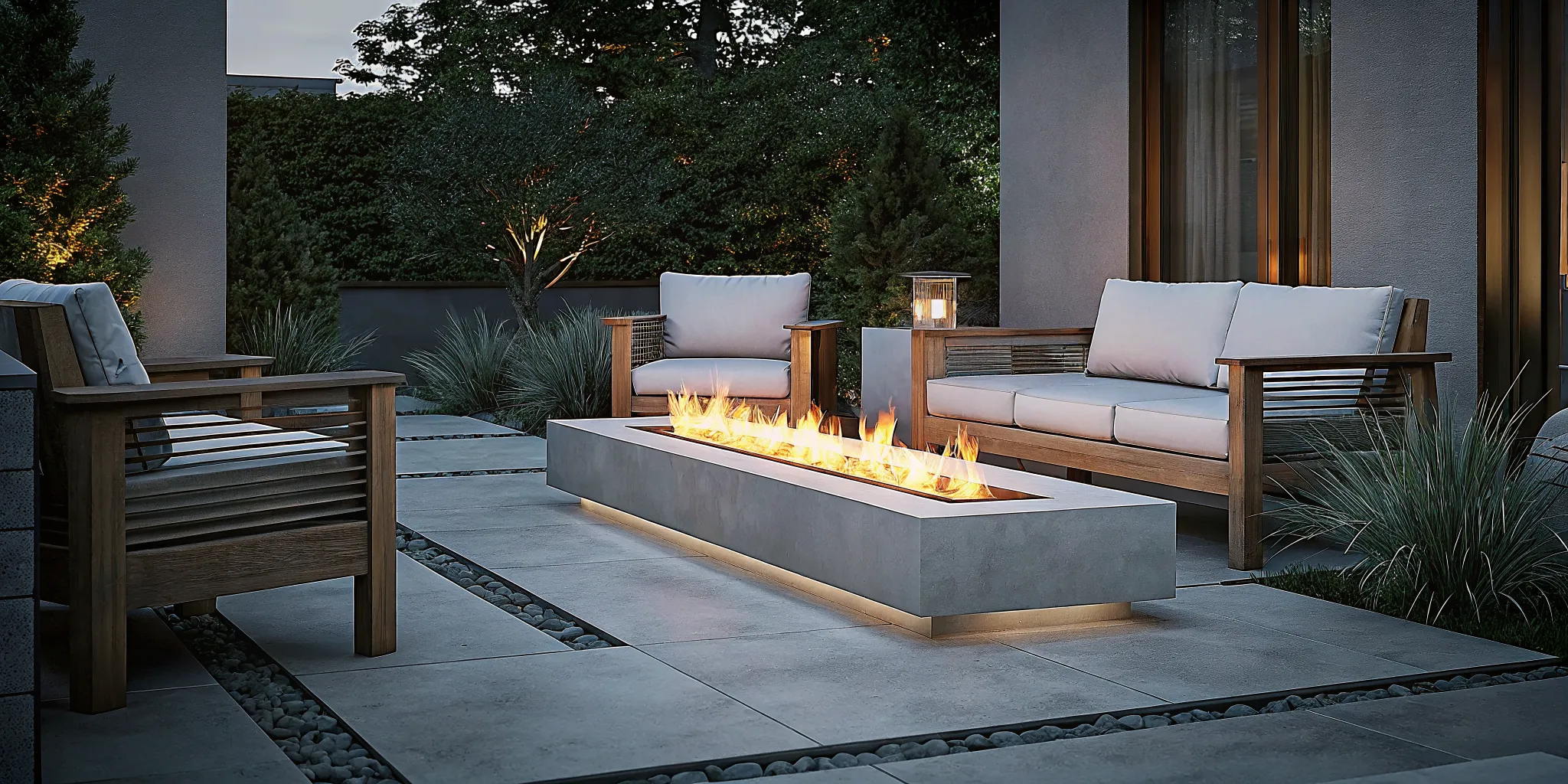
For historic estates and traditional homes in areas like Greenville, Hockessin, and Chadds Ford, a full masonry stone fireplace with a substantial chimney is the gold standard. These structures use locally sourced fieldstone or bluestone to blend with the existing landscape. The masonry stack doubles as a visual anchor that draws the eye from the house outward into the yard, creating the axial relationship between indoor and outdoor rooms that defines high-end landscape architecture. The Esposito Artisan Masonry division, led by third-generation stonemason Vince Esposito, executes these builds using traditional Italian stoneworking techniques that produce joints tight enough to withstand decades of freeze-thaw cycles common to the Mid-Atlantic climate.
Contemporary Fire Tables and Linear Burners
Modern homes call for clean lines and minimalist detailing. Linear gas burners encased in Belgard Artforms or precast concrete surrounds create a low-profile fire feature that does not obstruct views. These designs work especially well on properties with a vista, where a tall chimney would compete with the sightline. Fire tables with a 60- to 72-inch rectangular burner provide 360-degree seating access, allowing guests to face each other while staying warm. The white or buff concrete finishes popular in contemporary designs also reflect the firelight beautifully at night.
Sunken Seating Zones with Integrated Fire
For properties with existing grade changes or a desire for a more intimate setting, a sunken fire pit lounge creates a defined conversation zone that feels protected from the elements. The sunken design naturally blocks wind at the seating level, making these configurations the warmest and most comfortable option on blustery autumn evenings. Incorporating landscape lighting into the seat walls and surrounding plantings ensures the space remains inviting and navigable after dark.
How Professional Installation Affects Safety and Longevity
An outdoor fireplace is a permanent structure subject to building codes, fire safety regulations, and significant thermal stresses. Professional installation is not a luxury; it is a requirement for insurance coverage, code compliance, and structural longevity.
Code Compliance and Permitting
Most municipalities in Delaware, Pennsylvania, Maryland, and New Jersey require permits for any permanent outdoor fireplace exceeding a certain BTU threshold. Setback requirements typically mandate a minimum of 10 to 15 feet from the home and property lines. Gas fireplace installations must comply with the National Fire Protection Association NFPA 54 code, which governs fuel gas piping. DiSabatino handles all permits and inspections as part of its standard design-build process, ensuring every project meets local code requirements before the first stone is laid.
Material Selection for Extreme Temperature Cycling
The freeze-thaw cycles in the Mid-Atlantic region, combined with the extreme heat generated by a fireplace firebox, create unique material demands. Standard concrete block or soft stone can spall and crack within two to three seasons under these conditions. Professional builders use fire-rated refractory brick for the firebox interior and natural stone with tested freeze-thaw resistance for the exterior veneer. The mortar used must be heat-tolerant and flexible enough to accommodate the differential expansion between the firebox and the outer stone. DiSabatino stands behind every project with one of the most extensive warranties in the industry, covering material and workmanship defects for the life of the structure.
Frequently Asked Questions
How far from the house should an outdoor fireplace be?
Local building codes in Delaware, Pennsylvania, Maryland, and New Jersey generally require a minimum of 10 to 15 feet between an outdoor fireplace and any structure. This setback prevents radiant heat from igniting siding or roofing materials and keeps sparks from reaching combustible surfaces. A professional installer will verify the specific requirements for your municipality during the permitting process.
Do I need a permit for an outdoor fireplace?
Yes, most Mid-Atlantic jurisdictions require a building permit for any permanent outdoor fireplace, especially if the project includes a gas line connection or a chimney taller than six feet. The permit process ensures the structure meets fire safety standards and setback requirements. DiSabatino manages the full permitting process as part of its standard design-build service, so homeowners do not need to navigate municipal code offices on their own.
How long does it take to build a custom outdoor fireplace?
A custom masonry fireplace typically requires three to six weeks from breaking ground to final stone finishing. The timeline depends on the complexity of the design, the type of stone selected, and site access conditions. Hand-laid natural stone construction demands more time than prefabricated surrounds, but the result is a one-of-a-kind structure built to last multiple decades.
What is the best wood to burn in an outdoor fireplace?
Seasoned hardwoods such as oak, ash, hickory, and maple provide the highest heat output and cleanest burn. These species have a density of 40 to 50 pounds per cubic foot and produce 20 to 30 million BTUs per cord. Wood should be split and dried for at least six months to achieve the sub-20 percent moisture content recommended by the EPA for optimal burning. Soft woods such as pine and spruce create more creosote and should be avoided in permanent fireplaces.
Ready to Build Your Custom Outdoor Fireplace?
Fall schedules fill quickly. Starting your project now ensures your fireplace is complete and ready for the season when the first cool evening arrives. DiSabatino has designed and built over 1,000 custom hardscaping projects across the Delaware Valley and Brandywine Valley, with every structure supported by one of the most extensive warranties in the industry.
Call (302) 764-0408 to speak with a hardscape expert about your custom outdoor fireplace, or schedule a design consultation online. Our team will walk you through material options, discuss your vision, and provide a detailed project estimate tailored to your property.