
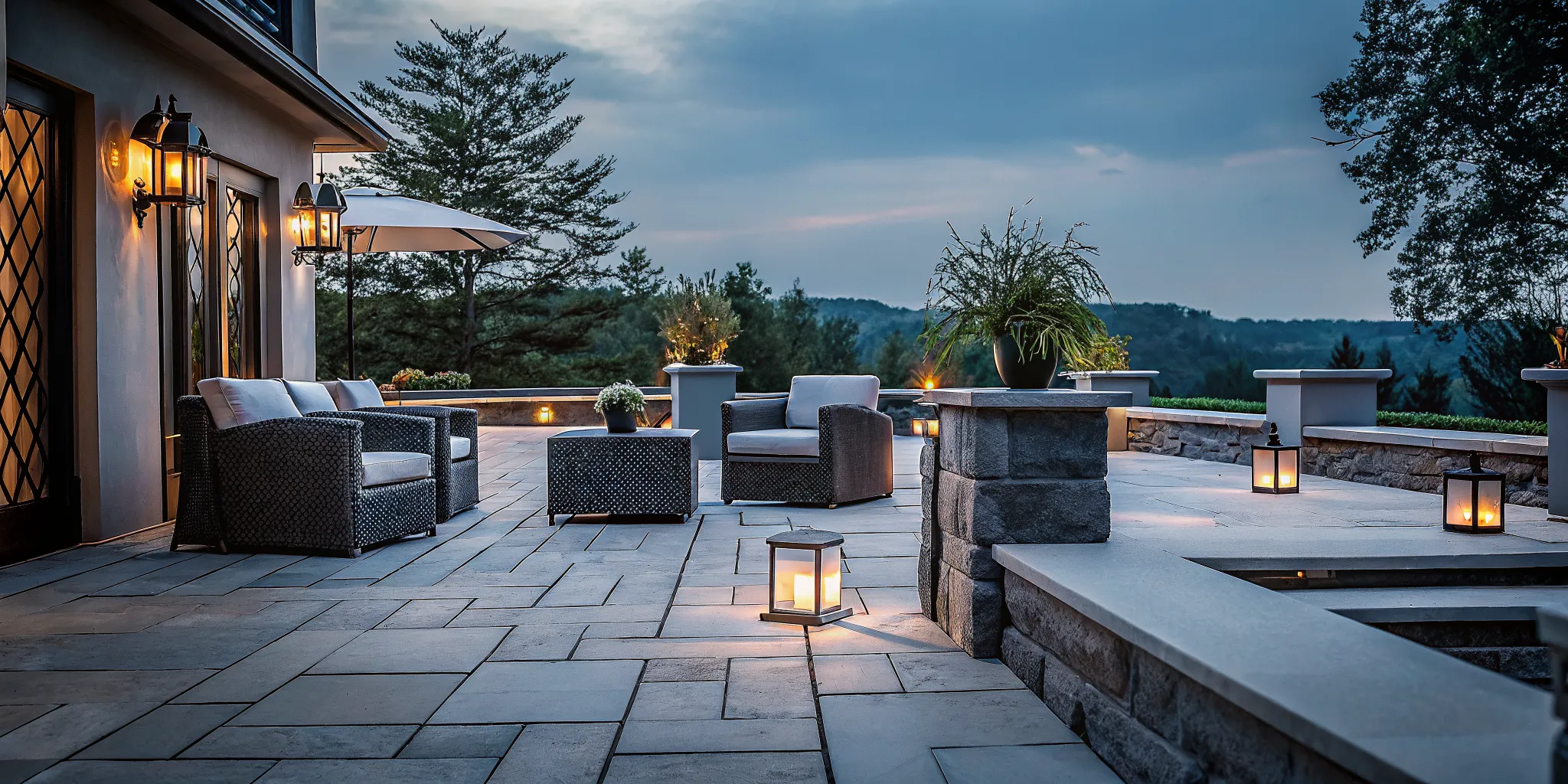
For a Delaware-area patio, the material underfoot shapes more than the view from the house. It influences how the space relates to the architecture, how it feels to walk across, and how confidently it can support years of outdoor entertaining. The right decision begins with the home's character, the intended use of the space, and the level of craftsmanship behind the installation.
Contact DiSabatino's hardscaping team for a consultation on your patio project. Call (302) 239-2900 or schedule a design appointment today.
Choosing between a natural stone patio vs pavers comes down to design intent and performance priorities. Natural stone offers a timeless look, lasting durability, and unique irregular character, while manufactured pavers provide consistent shapes, sizes, and a broad range of colors and patterns. Both can create an exceptional patio when selected and installed as part of a carefully engineered design-build plan.
That distinction matters on estate-level properties, where the patio should feel integrated rather than added on. Comparing how each material responds to weather, daily use, repairs, and long-term aging provides a more useful starting point than comparing appearance alone.
Natural Stone Patio Vs Pavers: Durability and Longevity
For a patio that will host family gatherings, outdoor dining, and years of daily circulation, durability should be evaluated at both the material and installation levels. Natural stone and concrete pavers can each perform well, but they age differently and create different maintenance considerations for a high-end property.
Natural stone is formed for lasting performance
Flagstone and granite are geologically formed materials that have developed under immense pressure over time. That inherent density gives properly selected stone excellent resistance to abrasion, weather, and heavy foot traffic. Some natural stone products exceed 15,000 PSI, making them suitable for demanding outdoor applications. Rather than relying on a manufactured surface layer, the material's strength is part of its geological composition.
With a well-designed base, appropriate drainage, and professional installation, natural stone can remain structurally sound for decades. Its surface may develop subtle variation as it weathers, but that patina generally adds character rather than making the patio look dated. The result is a surface that feels integrated with the landscape and continues to support the original design intent over time.
How pavers respond to settlement and freeze-thaw cycles
Pavers are manufactured concrete products with roots in the Dutch road-building tradition. Their consistent shapes and sizes make them efficient to install and allow individual units to be removed and replaced when repairs are necessary. That modular quality is a practical advantage, especially when access to underground utilities or future landscape changes must be considered.
However, pavers depend heavily on the stability of their base and the quality of their edge restraint. Seasonal moisture, soil movement, and repeated freeze-thaw cycles can cause areas to settle, shift, or develop uneven joints. Individual units may remain intact while the overall surface loses its original alignment. Re-leveling and joint maintenance can restore the patio, but those interventions should be anticipated as part of long-term ownership.
The strongest choice in a natural stone patio vs pavers comparison depends on the site's soil, drainage, use, and architectural character. DiSabatino's handcrafted hardscaping approach considers those conditions before material is selected, so structural performance and the finished aesthetic work together.
Explore our luxury hardscaping portfolio to see completed projects in your area.
Aesthetics and Design Flexibility: The Look of Your Patio
Material selection shapes more than the surface underfoot. It influences how a patio relates to the architecture of the home, frames the surrounding landscape, and supports the atmosphere you want to create outdoors.
Natural variation and one-of-a-kind character
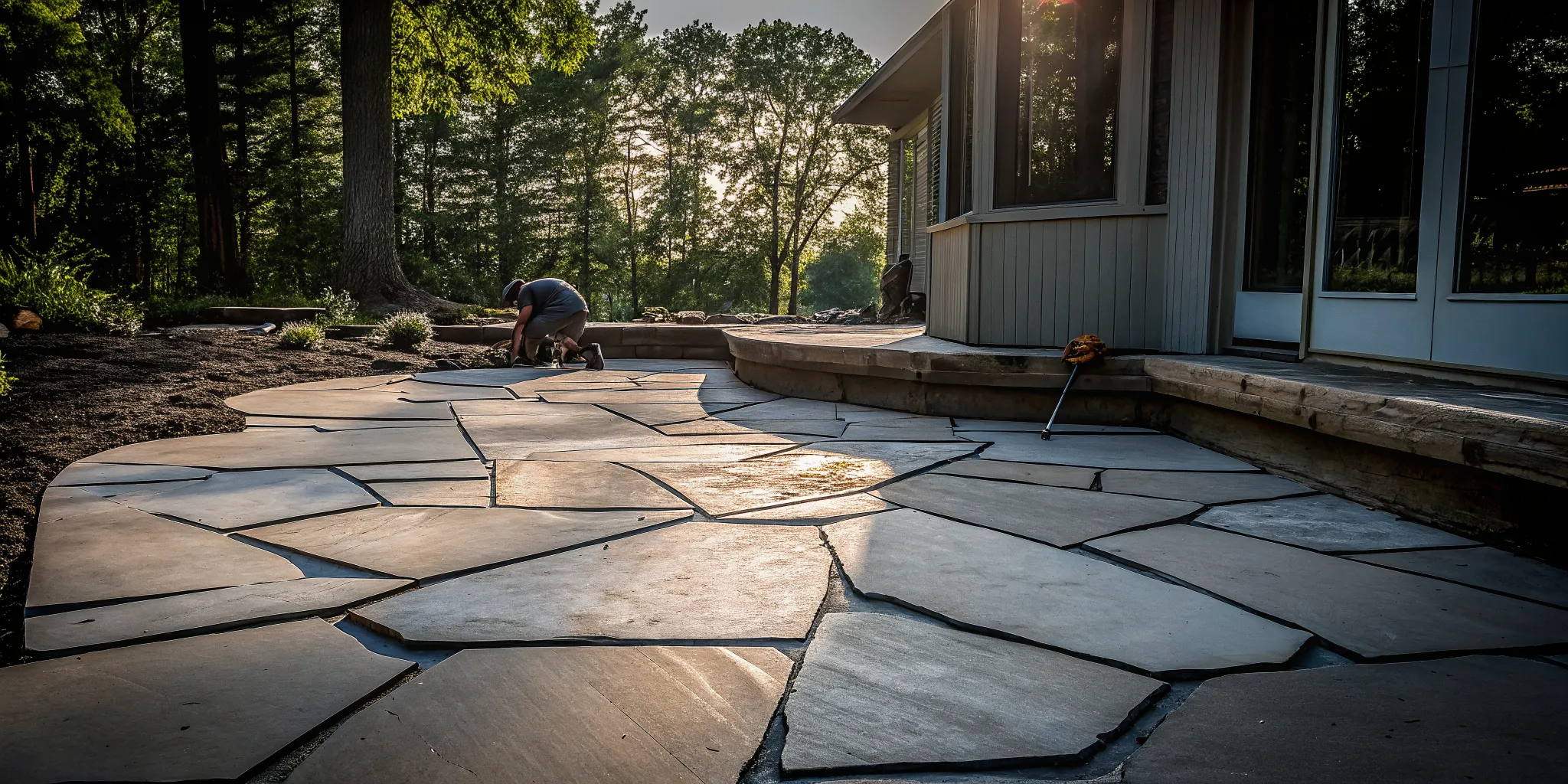
Natural stone brings an organic visual language that is difficult to reproduce. Flagstone can create an informal, layered composition with irregular edges, while bluestone offers a more refined field of blue-gray tones. Granite introduces a distinctive mineral character and a substantial presence. Within each stone type, color, veining, texture, and pattern will vary, so no two installations are exactly alike.
That variation is often the appeal for a luxury homeowner. A carefully selected stone palette can echo the colors of a home's masonry, soften the transition into mature planting. Or give an outdoor living area the sense that it belongs to the property rather than having been placed on it. Skilled installation makes the irregularity feel intentional, with joints, edge treatments, and transitions coordinated as part of the overall design.
Consistency and pattern control with pavers
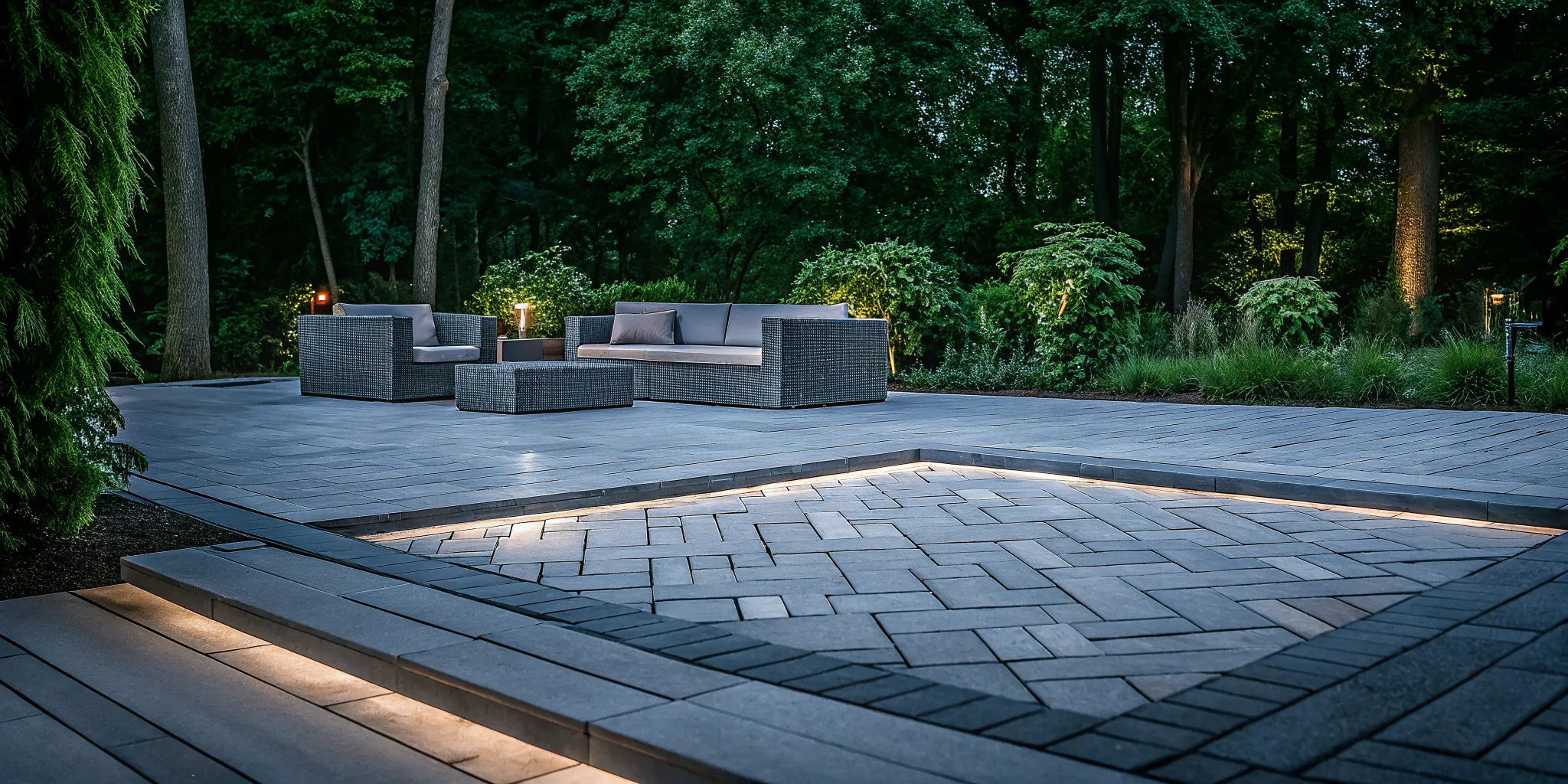
Pavers offer a different kind of flexibility. Because they are manufactured in uniform shapes and sizes, they create predictable lines and repeatable patterns. Designers can arrange them in running bond, basket-weave, herringbone, or other interlocking layouts. Then use borders, contrasting bands, or multiple formats to define dining areas, walkways, and gathering spaces.
This consistency can complement contemporary architecture or a home where crisp geometry is central to the design. It also makes it easier to establish a deliberate visual rhythm across a larger patio or connected outdoor living spaces. The result is controlled and cohesive, with fewer natural variations competing for attention.
Choosing the visual language
In the choice between natural stone patio vs pavers, the strongest option depends on the character of the home and the experience the space should provide. Natural stone is compelling when distinctive character and artisan detail are priorities. Pavers suit designs that call for precision, repeatability, and clearly defined patterns. A design-build team can evaluate both materials alongside the architecture, grading, planting, and intended use. DiSabatino brings that material decision into the larger design rather than treating it as an isolated finish.
How Do Cost and Long-Term Value Compare Between Natural Stone and Pavers?
Patio cost is best evaluated across the full life of the installation, not only by the initial proposal. Material price, site preparation, drainage, installation complexity, maintenance, and the likelihood of future repairs all influence the value of the finished space. A lower entry price can be appropriate for some projects, but it does not automatically represent the stronger long-term investment.
| Consideration | Natural stone | Concrete pavers |
|---|---|---|
| Initial investment | Typically higher because material selection, fitting, cuts, and artisan installation can require more planning and craftsmanship. | Generally more affordable at the outset, particularly when uniform shapes and sizes support an efficient installation. |
| Appearance and design value | Each piece contributes natural variation and an enduring, one-of-a-kind character. Flagstone, slate, and granite are commonly used in high-end patio projects. | Manufactured units offer consistent dimensions, colors, and patterns, creating a precise and highly coordinated appearance. |
| Replacement outlook | Durable stone can serve for many years when properly selected, installed, and supported by a sound base and drainage plan, reducing the need for routine replacement. | Individual units can be replaced when damaged, but sections may require resetting or replacement over time as movement, settling, or wear develops. |
| Ongoing care | Usually centered on appropriate cleaning, joint care, and periodic attention to drainage and settlement rather than broad material replacement. | May include re-sanding joints, resealing, resetting, and replacing sections as conditions and use require. |
| Lifecycle value | Often the stronger long-term value for homeowners prioritizing longevity, distinctive design, and minimal replacement over the life of the patio. | Offers a mid-level lifecycle investment, balancing a lower initial cost with the possibility of additional maintenance and repair expenses. |
Natural stone is valued for durability and timeless appeal, while pavers provide a versatile manufactured alternative in a wide range of shapes, sizes, and colors. These distinctions are also recognized by the University of Nebraska-Lincoln's hardscape guidance: natural stone and paver materials serve different design and performance priorities.
The most meaningful comparison accounts for the entire project, including grading, base preparation, edge restraint, and drainage. A carefully designed installation can protect either material from avoidable settlement and water-related problems. For an estate-level property, the best return may come from choosing the material that supports the architecture. Intended use, and expected lifespan of the space, even when that requires a greater initial investment. DiSabatino's design-build process brings those decisions together through coordinated planning and installation.
What Maintenance Do Natural Stone and Paver Patios Require?
Maintenance is part of the long-term design conversation, not an afterthought. Both materials can perform beautifully when installed over a properly prepared base, but they age differently and ask for different levels of attention. Natural stone is valued for its durability and timeless character. While manufactured pavers offer consistent shapes and sizes that make individual units easier to manage if repairs are ever needed.
Natural stone: simple care and evolving character
A well-installed natural stone patio generally needs routine cleaning and occasional sealing, depending on the stone selected, its finish, and how the space is used. Sweeping away leaves and organic debris helps limit staining, while prompt attention to spills protects the surface. The goal is preservation rather than constant intervention. Over time, natural stone develops a patina that can deepen its visual character and make the patio feel more integrated with the surrounding landscape. Its irregular variation is part of the appeal, so minor changes in tone are typically expected rather than treated as defects.
Pavers: more frequent joint and surface care
Pavers can be highly practical, but their joints require regular observation. Joint sand may need to be replenished, and weed prevention is important where seeds or organic matter collect between units. Periodic pressure washing can refresh the surface, although the method and pressure should be appropriate for the paver and joint system. Pavers may also show stains more readily in heavily used areas. If individual units shift because of settlement, water movement, or seasonal conditions, they can often be lifted, the base corrected, and the pavers reset. That repairability is an advantage, but it does involve more periodic maintenance planning.
Drainage protects both materials
Many maintenance problems begin with water that was not directed properly during design and installation. Patio planning should assess where water pools and address drainage needs before the surface is installed, as recommended by Washington State University Extension (source guidance). Proper slope, edge detailing, and drainage planning help reduce settlement, staining, joint erosion, and freeze-thaw stress. In a premium outdoor living project, the right material is only one part of a durable result. DiSabatino's team integrates drainage planning into every architectural design phase.
Ready to discuss your patio material options? Contact DiSabatino for a personal consultation with our design team.
How Do Delaware Freeze-Thaw Cycles Affect Each Patio Material?
Across Delaware, southeastern Pennsylvania, Maryland, and New Jersey, a patio must perform through more than summer entertaining. Moisture, humidity, heavy rain, and repeated winter freeze-thaw cycles all place stress on the surface and the structure beneath it. The most important distinction in a natural stone patio vs pavers decision is not simply the material itself. It is how well the entire installation is designed for regional conditions.
How freeze-thaw cycles affect each material
Natural stone is valued for its durability and timeless character, and properly selected stone can handle freeze-thaw exposure exceptionally well because of its natural density. Flagstone, slate, and granite are among the options commonly used in high-end patio and walkway projects. Stone still requires thoughtful selection and installation, including attention to thickness, bedding, joints, slope, and drainage. A dense material cannot compensate for water trapped beneath or between improperly installed pieces.
Concrete pavers offer a manufactured alternative with uniform shapes and sizes, giving designers considerable control over pattern and layout. They can also perform beautifully in a Mid-Atlantic climate when installed over a correctly prepared base. However, freeze-thaw movement can cause pavers to shift, settle, or open joints when excavation, compaction, edge restraint, or drainage is inadequate. These issues are often installation problems rather than an inherent failure of the paver system.
Drainage and base preparation matter most
Heavy rain and seasonal saturation make water management central to patio planning. Extension guidance recommends assessing areas where water pools and addressing drainage needs as part of hardscape design. Proper grading, a stable compacted base, suitable bedding material, and deliberate water movement help reduce the risk of settlement and frost-related movement. The same principles protect natural stone and pavers, even though each material has different installation tolerances.
DiSabatino's design-build approach keeps those decisions connected. The team evaluates the home's architecture, site conditions, grade changes, and intended use before recommending a surface. Whether the finished patio calls for natural stone or pavers, expert base preparation is essential to long-term performance. Explore DiSabatino's luxury landscape hardscaping services to see how material expertise and site planning come together for a more durable outdoor living space.
Making the Choice: How to Decide Between Natural Stone and Pavers for Your Patio
Choosing between natural stone patio vs pavers is ultimately a design decision, not simply a material purchase. The right surface should support how you use the space, complement the architecture of your home, and perform well within the conditions of your property.
Assess your priorities
Start by identifying what matters most. Natural stone offers a timeless appearance, distinctive variation, and an irregular character that can make a patio feel closely connected to its landscape. Pavers provide manufactured consistency, with uniform shapes, sizes, and colors that support precise patterns. Consider whether your preference leans toward individual expression, visual continuity, ease of future modifications, or a particular design language.
Evaluate the site
Review the existing grade, soil, sunlight, access, and water movement before selecting a surface. Drainage should be addressed during planning, particularly where the property has low areas or a history of pooling water. A material choice cannot compensate for an unsuitable base or unresolved grading issue. The patio should be designed as part of the site, not placed on top of it.
Consider your home's architecture
Look at the proportions, materials, rooflines, and detailing of the house. Flagstone, slate, and granite can reinforce a more organic or architectural composition, while pavers may offer a tailored relationship to masonry, formal gardens, or contemporary geometry. The goal is a patio that feels intentional from every sightline.
Define the complete investment
Compare more than the initial installation. Account for the base preparation, drainage, edge restraints, pattern, sealing requirements, joint maintenance, and any future repairs. A thoughtful budget considers long-term performance and how the patio fits into larger outdoor living plans, rather than evaluating material cost in isolation.
Consult a design-build team
A professional consultation brings the material decision into the context of the entire property. DiSabatino's licensed architectural designers and Esposito Artisan Masonry division can evaluate the site, develop the design, and recommend materials suited to your vision and home's character. Explore the company's handcrafted hardscaping approach to see how either natural stone or pavers can become part of a cohesive, enduring outdoor environment.
Browse our project gallery to see completed natural stone and paver patio installations across Delaware, Pennsylvania, and Maryland.
Frequently Asked Questions
Is natural stone cheaper than pavers?
Not necessarily. The final investment depends on the stone or paver selected, patio layout, site access, base preparation, installation detail, and project complexity. Natural stone may carry a higher material and installation cost because each piece has individual variation and often requires more fitting. Pavers offer manufactured consistency and a broad range of shapes, sizes, and colors. For a meaningful comparison, evaluate complete installed options rather than material prices alone.
Is natural stone good for patios?
Yes. Natural stone is a strong choice for homeowners who value durability, timeless appeal, and an individual surface with irregular character. Flagstone, slate, and granite are commonly used in high-end patio and walkway projects. The right selection depends on the desired texture, color, architectural style, expected use, and installation method. A thoughtful design can make the patio feel integrated with the home and surrounding landscape.
What is the best natural stone for a patio?
There is no single best stone for every property. Flagstone can create an organic, expressive layout, while slate and granite offer distinct colors, textures, and visual personalities. The best choice balances appearance with the home's architecture, grading, exposure, maintenance expectations, and how the space will be used. A design-build consultation can help match the material to the broader outdoor living plan.
Which patio material is better for Delaware's climate?
Both natural stone and pavers can perform well when the patio is designed and installed correctly. In Delaware, the more important questions include subgrade preparation, slope, joint treatment, edge restraint, and water management. Patio planning should address drainage needs before the surface is installed. The material that aligns with the home's architecture, site conditions, and design vision will deliver the strongest long-term result.
How long does a natural stone patio last?
A well-designed and professionally installed natural stone patio can last 25 years or more with appropriate care. The longevity depends on stone selection, base preparation, drainage, installation quality, and routine maintenance. Flagstone, granite, and bluestone are among the most durable options for Delaware-area properties.
Schedule a consultation with DiSabatino today. Call (302) 239-2900 or reach out online to begin planning your patio project.