
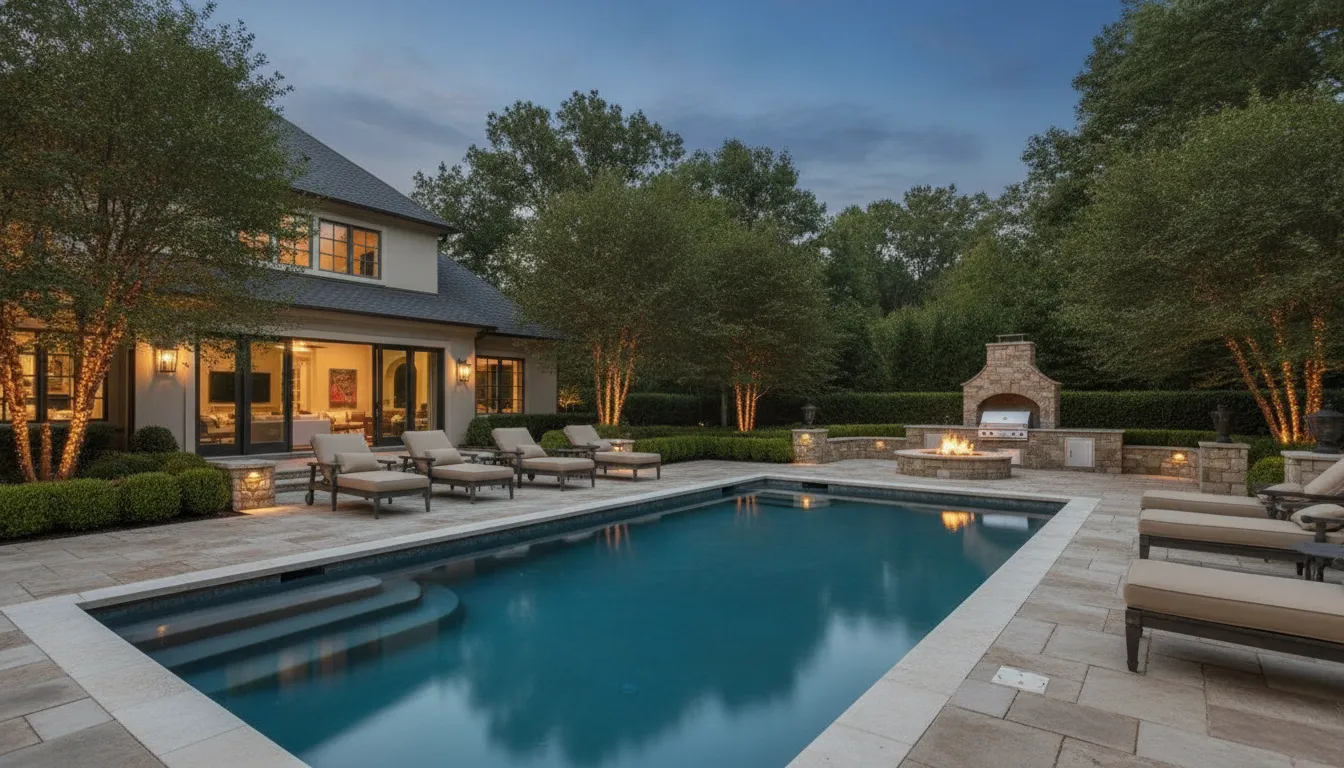
For a premium home in the Delaware Valley, an inground pool is rarely a stand-alone purchase. The finished result may include excavation, structural work, paving, planting, lighting, and spaces for dining or entertaining. That broader scope is why an early budget should account for the entire outdoor environment, not only the pool shell.
For premium homeowners, how much does an inground pool cost typically means planning for roughly $50,000 to $150,000 or more, depending on size, material, site conditions, and custom features. A fully integrated outdoor living project can exceed $150,000 when architectural design, landscaping, and hardscaping are included.
The right investment depends on how the pool needs to function, how it should connect to the home, and what the property requires before construction begins. Understanding those variables first makes it easier to compare options accurately and shape a design that feels intentional for years to come.
For Delaware Valley homeowners exploring a premium backyard, the question is not really whether a pool can be built within a number pulled from a website. It is what the complete project should achieve, from the water itself to the surrounding hardscape, lighting, and landscaping that make the space usable and inviting. DiSabatino Landscaping approaches pool construction as part of a broader design-build effort, so the estimate reflects the whole property rather than a single component. That perspective helps avoid surprises and keeps decisions aligned with the way the family actually wants to use the yard season after season.
Schedule a design consultation
What Determines How Much an Inground Pool Costs
A pool project is shaped by far more than the dimensions of the water itself. Material selection, engineering, access, finish level, and the way the pool connects to the rest of the property all influence the final investment. For premium custom projects, a realistic planning range is roughly $50,000 to $150,000 or more, depending on the scope.
Pool type and construction method
Gunite, also called shotcrete or concrete construction, gives a design-build team extensive control over shape, depth, entry details, tanning ledges, benches, and integrated spas. That flexibility makes it a strong choice for a highly tailored landscape, but the additional forming. Reinforcement, finishing, and site work can place it toward the higher end of the budget.
Fiberglass pools use a factory-manufactured shell. The available shapes and sizes are more defined, yet the streamlined installation process can reduce time on site compared with a fully formed concrete pool. Vinyl-lined pools can be appropriate in some situations, although liner selection, replacement planning, and the desired level of architectural integration should be considered carefully. DiSabatino builds both gunite and fiberglass pools, allowing the material choice to follow the design rather than forcing every property into one system. Explore custom inground pool design to see how those options fit into a larger project.
Size, shape, and depth
A larger pool requires more excavation, material, structure, water, equipment capacity, and finishing work. Shape matters as well. A simple rectangle is generally more straightforward to lay out and build than a freeform pool with multiple elevations, curved walls, specialty steps, or a connected spa. Depth changes the excavation and structural requirements, while features such as a deep jumping area or gradual beach entry can add engineering and finish complexity.
Site conditions and access
The existing property can either simplify construction or create substantial additional work. Sloped terrain, rock, groundwater, difficult soil, drainage concerns, limited equipment access, and the location of utilities may affect excavation and preparation. A narrow side yard or a backyard separated from the street can also require specialized equipment, material handling, or additional labor. These conditions are best evaluated before a design is finalized, not after construction begins.
Built-in features and the surrounding environment
Automatic covers, integrated lighting, water features, heating, sophisticated controls, and an attached spa each add design and installation requirements. The surrounding hardscape is another major factor. Premium pool projects often include terraces, retaining walls, planting, outdoor lighting, or an outdoor kitchen so the pool functions as part of a complete outdoor living environment. The most useful budget is therefore based on the entire intended experience, not a pool shell in isolation.
How Much Does an Inground Pool Cost by Pool Type?
Pool material is one of the first decisions that shapes the project budget, but it is not the only one. Size, access, excavation, decking, equipment, water features, and the surrounding outdoor living plan can move the final investment substantially. The ranges below are useful for early planning in the Delaware Valley, not substitutes for a site-specific proposal.
Gunite or concrete pools: approximately $100,000 to $180,000-plus
Gunite, a form of pneumatically applied concrete, generally occupies the highest planning range. Its value is flexibility. A concrete pool can be shaped around the architecture and grade of a property, with custom depths, integrated steps, tanning ledges, spas, vanishing edges, and other design details. That freedom is especially valuable when the pool must work with an intricate landscape or a distinctive home.
The tradeoff is a longer construction process and more intensive coordination. Excavation, steel reinforcement, plumbing, concrete application, interior finish, and curing all contribute to the schedule. A gunite pool is often the right choice when the design itself is central to the project, rather than when the priority is simply the fastest installation.
Fiberglass pools: approximately $75,000 to $130,000
Fiberglass pools use a pre-manufactured shell that is delivered to the property and set into the prepared excavation. Because the shell is fabricated before installation, the process can be faster than building a concrete pool on site. That shorter installation window may reduce disruption and help the broader landscape plan move forward sooner.
Fiberglass still offers a polished, durable foundation for a premium outdoor environment, but the available shapes and dimensions are determined by the manufacturer's designs. The best fit depends on the property, desired proportions, access for delivery, and the features you want around the pool. A fiberglass shell can be an efficient choice when the right model aligns with the site and the overall design vision.
Vinyl liner pools: approximately $50,000 to $90,000
Vinyl liner pools are often considered an entry point for inground construction because the initial material and installation costs can be lower than fiberglass or gunite. They can suit homeowners who want an inground pool while keeping the early scope more focused. However, the liner is a replaceable component, so future ownership costs and replacement timing should be part of the decision, not an afterthought.
DiSabatino focuses on gunite and fiberglass pools as part of a broader design-build approach. The team can coordinate the pool with custom inground pool design, hardscaping, planting, lighting, and outdoor living features, so the budget reflects the complete environment rather than an isolated pool shell.
Gunite, Fiberglass, or Vinyl: Which Pool Material Is Right for You?
The pool shell material influences more than the initial construction budget. It affects the design possibilities, installation sequence, long-term care, and how naturally the pool fits into the surrounding landscape. The right choice depends on the property, the desired experience, and the level of customization you want from the finished outdoor living space.
| Pool Type | Upfront Cost | Install Time | Customization | Maintenance |
|---|---|---|---|---|
| Gunite/Concrete | Highest investment range | Longer, site-built process | Maximum flexibility for shape, size, depth, and features | Ongoing surface, water chemistry, cleaning, and equipment care |
| Fiberglass | Mid-to-premium investment range | Generally faster due to the pre-manufactured shell | Available shell shapes and sizes with tailored surrounding features | Routine water chemistry, cleaning, and equipment care |
| Vinyl Liner | Varies by structure and selected finishes | Varies with excavation and site conditions | Flexible liner patterns and selected structural options | Water chemistry, cleaning, equipment care, and eventual liner replacement planning |
Why choose gunite or concrete?
Gunite, often grouped with concrete pool construction, is the premium bespoke option. Because the shell is formed on site, the design team can respond to unusual property lines. Architectural details, dramatic changes in depth, integrated spas, beach entries, benches, and other highly individual features. That flexibility usually brings a higher investment and a longer construction process. But it also makes gunite the strongest fit when the pool must be designed around the home rather than selected from a limited set of shells.
When does fiberglass make sense?
Fiberglass is an efficient pre-manufactured choice. The shell is produced before it arrives at the property, which can shorten installation compared with a site-built concrete pool when excavation, access, and site conditions are favorable. Its available shapes and dimensions still support a polished, highly designed backyard, especially when paired with carefully planned coping, patios, planting, lighting, and other hardscape elements. Fiberglass can be an excellent choice for homeowners who value a streamlined installation while maintaining a refined overall design.
Where does vinyl fit?
Vinyl liner pools can be appropriate for some properties, but the liner is a replaceable component that should be included in the long-term ownership discussion. DiSabatino builds both gunite and fiberglass pools. Allowing the conversation to focus on two durable construction approaches that can be coordinated with the broader landscape and outdoor living plan. Explore custom inground pool design to compare those options with a team that manages the project from concept through completion.
Site Preparation and Hidden Costs That Raise the Final Price
When homeowners ask how much does an inground pool cost, they are often thinking about the pool shell, interior finish, and circulation equipment. Those are important components, but they are only part of the construction plan. The final investment also reflects the conditions of the property and the work required to prepare it for a safe, durable installation.
Excavation, grading, and soil conditions
Every site has its own requirements. A straightforward excavation on a level, accessible lot may involve less preparation than a sloped backyard that needs substantial grading, retaining work, or carefully coordinated drainage. Soil conditions can also affect the sequence and complexity of construction. Rock, groundwater, unstable soil, and unexpected underground obstructions may require additional excavation, reinforcement, pumping, or engineering.
The goal is not simply to create a hole that fits the design. The pool must be properly supported, protected from water movement, and integrated with the surrounding grades. Addressing those conditions during planning is far more responsible than treating them as surprises after construction begins.
Access, demolition, and utility connections
Site access is another meaningful cost driver. A narrow side yard, steep grade, mature planting, fencing, walls, or limited staging area can make it more difficult to move equipment and remove excavated material. If an existing pool, patio, deck, or other structure occupies the proposed footprint, demolition and disposal must be included in the scope as well.
Utility work can extend beyond the pool equipment pad. A complete plan may require electrical service for pumps, lighting, and controls, along with plumbing runs, gas service for heating, or drainage improvements. The distance from existing utilities to the pool location, the condition of current service, and the selected equipment all influence the installation requirements. Planning these connections early helps protect both the design and the budget.
Permits and a coordinated project plan
Permits, inspections, code requirements, and site-specific approvals are part of a professionally managed pool project. They are not optional line items, and their timing can affect the construction schedule. A detailed preconstruction review should identify these requirements before excavation begins.
Working with one design-build team brings these decisions into a single conversation. DiSabatino can coordinate the pool, grading, utilities, landscape transitions, and surrounding outdoor living elements rather than leaving homeowners to reconcile separate proposals. Reviewing our pool installation process shows how that coordination supports clearer expectations from concept through completion. The result is a more predictable budget, fewer handoff gaps, and a finished backyard designed as one considered environment.
What Premium Features Shape Your Total Investment?
The pool basin is only one part of a high-end outdoor environment. Features selected for comfort, atmosphere, convenience, and long-term performance can materially change the investment. But they also determine how naturally the space supports the way your family lives outdoors.
Comfort features that extend the season
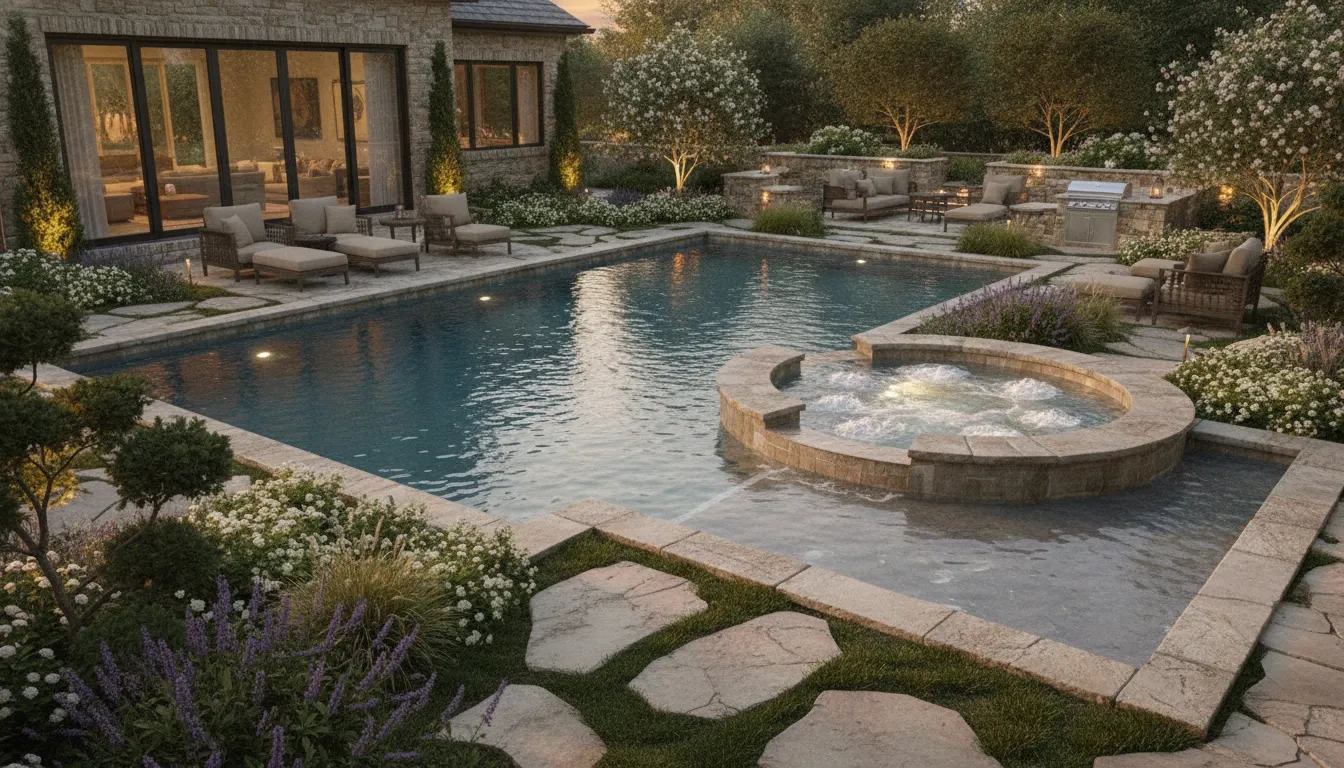
A spa, integrated hot tub, or jetted bench adds a separate experience within the pool area. It can create a place for therapeutic soaking, evening conversation, or shoulder-season use without requiring a larger swimming area. The cost depends on the feature's size, plumbing, controls, heating requirements, and relationship to the main pool. Designing these elements together is generally more cohesive than adding them later as disconnected equipment.
Water features shape the character of the setting as well. A subtle spillway, raised bond beam, sheer descent, or naturalistic cascade can introduce movement and sound, while a more architectural feature may reinforce the lines of the home. Each requires thoughtful coordination of structure, plumbing, circulation, and access for maintenance.
Automation, lighting, and efficiency
Advanced automation can coordinate water temperature, pumps, sanitization, lighting, and feature controls from a central interface. This convenience is particularly valuable when the pool, spa, and outdoor living areas operate as one system. Properly sized and maintained filtration also supports water clarity and energy efficiency, as noted by the Centers for Disease Control and Prevention.
An automatic cover is another investment that can improve daily ownership. The EPA's pool water-efficiency guidance identifies covers as a way to reduce evaporation and water waste. Automatic systems can also add an important safety layer when closed, although they do not replace compliant barriers and supervision. Underwater, step, perimeter, and architectural outdoor lighting further improve evening visibility and give the landscape a deliberate nighttime presence.
Integrated outdoor living
In the Delaware Valley, premium pools are rarely planned as stand-alone installations. Patios, retaining elements, planting areas, fireplaces, and gathering zones determine how people move between the house and water. A connected luxury hardscaping plan can solve grade changes and create durable transitions, while an outdoor kitchen turns the pool area into a destination for full meals and entertaining.
These additions raise the total investment because they involve more materials, utilities, engineering, and skilled installation. They also create a more complete result. A design-build team can coordinate the pool, hardscape, lighting, and outdoor kitchen from the beginning. Reducing visual compromises and helping each premium feature earn its place in the overall plan.
How to Budget for an Inground Pool in the Delaware Valley
A thoughtful pool budget begins before excavation. In the Delaware Valley, a premium pool is often part of a larger outdoor environment, so the most useful question is not simply what the shell costs. It is how the pool, surrounding hardscape, landscape, utilities, safety features, and long-term care will work together. A design-build process helps you make those decisions in the right order and keeps one accountable team focused on the complete investment.
Use this checklist to establish a realistic scope and compare proposals on more than an initial construction number.
- Define the experience and the scope. Start with how your household wants to use the property. Will the pool support quiet evenings, entertaining, exercise, family recreation, or a combination of those purposes? Note the desired size, depth, shape, seating areas, spa features, access points, and relationship to the home. This conversation should also identify the broader project boundary. If the finished vision includes a terrace, retaining walls, a fire feature, an outdoor kitchen. Or planting that screens the pool from neighbors, include those elements from the beginning rather than treating them as later additions.
- Choose the pool type that fits the design. Gunite, or concrete, supports highly customized shapes, dimensions, and depths. Fiberglass uses a pre-manufactured shell and may offer a more streamlined installation path. Neither choice is automatically the right financial decision. The best fit depends on the site, the architecture, the design goals, the installation conditions, and the level of customization you want. DiSabatino focuses on both gunite and fiberglass pools, allowing the material decision to follow the design instead of forcing the design to follow a limited package. Explore custom inground pool design as you evaluate those options.
- Plan the complete outdoor living space. A pool rarely feels finished without a considered transition into the rest of the yard. Budget for the surfaces people will walk and gather on, grading between the pool and house, planting, privacy, shade, lighting, and places to lounge. Hardscaping, landscaping, and features such as an outdoor kitchen can materially change the total investment. But they also determine whether the space functions as one cohesive extension of the home. An integrated luxury hardscaping plan is more useful than adding disconnected improvements after construction.
- Account for site preparation and utilities. Ask how excavation, soil conditions, drainage, rock, access for equipment, grading, permits, electrical work, plumbing, gas, and pool equipment will affect the proposal. Existing structures, tight property lines, elevation changes, and long utility runs can require additional design and construction work. A site-specific review should identify these conditions early. Make sure the proposal explains allowances and exclusions, rather than leaving important site variables buried in a vague contingency.
- Request a detailed design-build proposal and discuss the full investment. A meaningful proposal should connect the design intent to the construction scope, materials, schedule, allowances, site work, equipment, safety components, and projected ongoing responsibilities. Premium custom pool projects that include professional architectural design and integrated landscaping often exceed $150,000 in total investment, particularly when they create a complete outdoor living environment. That figure is a planning reference, not a substitute for a site-specific proposal. Review each line with the team so you understand what is included, what remains optional, and what decisions could affect the final outcome.
Finally, budget for ownership as well as construction. Water chemistry, cleaning, and equipment upkeep are ongoing responsibilities for pool owners, as the CDC's pool maintenance guidance explains. Properly sized and maintained filtration also supports water clarity and energy efficiency, according to the CDC. Covers and high-efficiency pumps can help manage water use and long-term operating costs, as outlined by the EPA WaterSense program. Discussing those systems during design makes the budget more complete and the finished pool easier to manage.
Call (302) 764-0408 to schedule your design consultation
Frequently Asked Questions
How much does it cost to put in an inground pool?
For a premium Delaware Valley project, the installation price depends on pool type, dimensions, excavation, access, permits, equipment, decking, and finish selections. A custom pool should be budgeted as part of a larger outdoor-living plan rather than as a standalone shell. Gunite generally supports the greatest design flexibility, while fiberglass can offer a more streamlined installation. A design-build consultation is the most reliable way to establish a site-specific range.
Can I get an inground pool for $30,000?
A $30,000 budget is unlikely to cover a fully finished. Professionally designed inground pool in the Delaware Valley once excavation, utilities, equipment, safety features, and surrounding hardscape are included. Very limited packages may exclude important site and construction costs. Ask for a complete scope that identifies what is included before comparing proposals.
Can I get an inground pool for $20,000?
That budget is generally not realistic for a permanent inground installation with professional engineering, excavation, filtration, electrical work, and required safety measures. A lower initial quote may represent only the pool structure, leaving substantial work outside the advertised price. Premium homeowners should evaluate the complete project investment, including the spaces and systems that make the pool practical to use.
What is the cheapest inground pool to put in?
Vinyl-lined pools are often positioned as the lower-cost inground option, but the right choice depends on long-term priorities, site conditions, maintenance, and the desired design. Fiberglass may provide an efficient installation, while gunite is often preferred for highly customized shapes and integrated features. DiSabatino focuses on gunite and fiberglass pools and can help match the material to your property, design goals, and outdoor-living plans.
Ready to Plan Your Custom Pool?
A project-specific consultation can help align your pool design, site conditions, and surrounding outdoor living features with a realistic investment plan. DiSabatino Landscaping brings the design-build perspective needed to consider the complete setting, not just the pool shell.
Working with a single accountable team means the pool, hardscaping, planting. And lighting are coordinated from concept through completion, so the budget you discuss reflects the whole finished space. Whether you are drawn to a highly customized gunite pool or a streamlined fiberglass installation. The team can help you define the scope that fits your property and lifestyle. Schedule a custom pool design consultation by calling (302) 764-0408 to discuss your Delaware Valley project and next steps, or reach out through the contact page.