
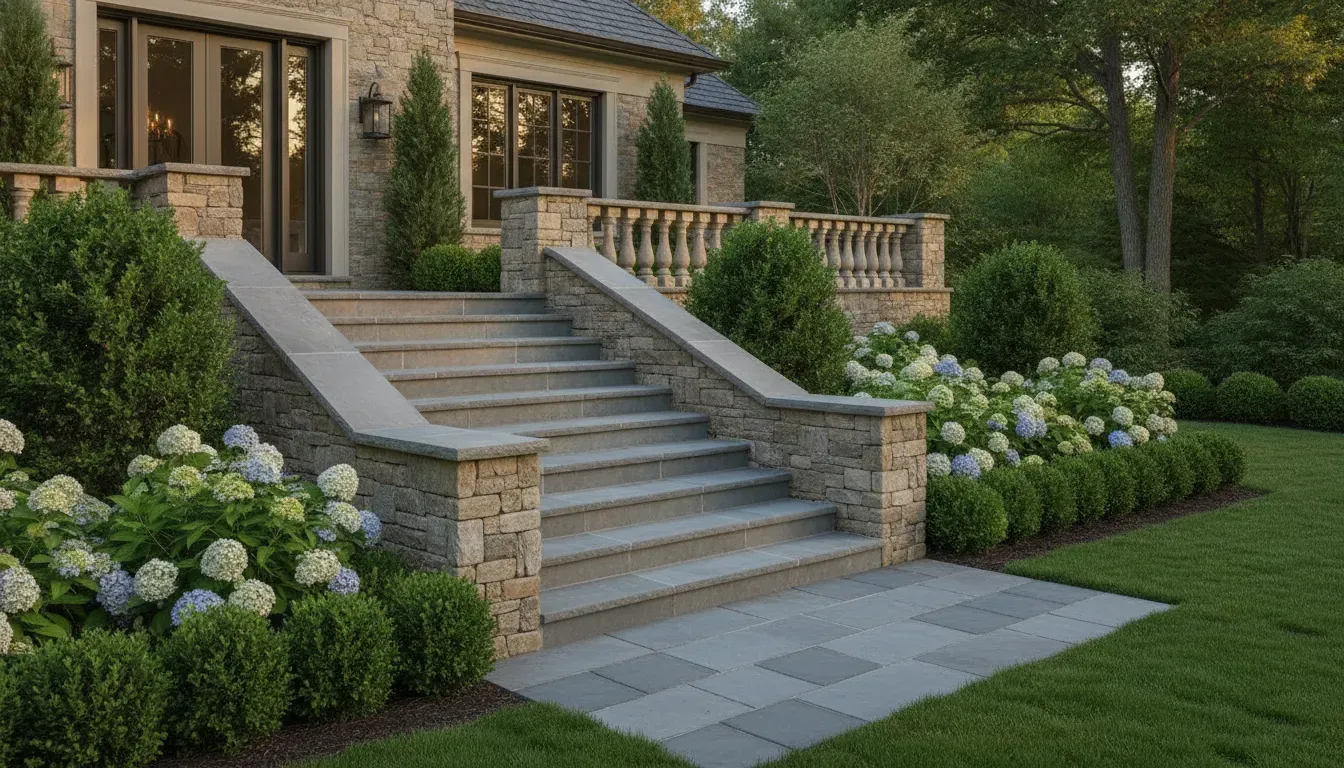
Choosing the best stone for outdoor steps means balancing more than color. The material needs to suit the home's architecture, provide dependable traction in changing weather, handle freeze-thaw exposure, and connect naturally with the patio, walkways, and planting around it. In the Delaware Valley, a thoughtful selection also accounts for grading, drainage, and the way the stone will be finished and detailed.
Explore DiSabatino's handcrafted hardscaping for a coordinated stone-step design.
What should you look for in stone outdoor steps?
The best stone for outdoor steps is an exterior-rated material with enough strength for the site, a textured finish that supports traction, and a color and pattern that belong with the surrounding architecture. The right choice also depends on the tread size, stair geometry, drainage plan, exposure, and how the steps meet adjacent patios or retaining walls.
Before comparing materials, evaluate the complete setting:
- Durability: Can the stone handle repeated foot traffic, seasonal moisture, and winter temperature changes?
- Traction: Will the selected finish remain comfortable and secure when the surface is wet?
- Water management: Can water move away from the treads, risers, walls, and adjacent paving?
- Appearance: Does the color, grain, edge, and texture complement the house and landscape?
- Fabrication: Can the supplier and installer provide consistent tread dimensions, edges, and transitions?
- Integration: Will the steps look intentional with the patio, pathway, retaining wall, and plantings?
A stone that looks beautiful in a sample may not be the best fit once slope, shade, runoff, and the desired tread profile are considered. Material selection should happen alongside the site and design review, not as an isolated purchase.
Which stone is best for outdoor steps?
For many residential landscapes, bluestone is a versatile starting point because it offers a refined blue-gray palette, substantial tread options, and finishes that can be selected for the setting. Granite is another strong choice where exceptional hardness and a more formal or granular appearance suit the home. Limestone, sandstone, slate, and irregular flagstone can also work when the specific stone, finish, thickness, and drainage design are appropriate.
| Stone or format | Strengths | Best design fit | Important check |
|---|---|---|---|
| Bluestone | Versatile blue-gray color, clean lines, and a range of available textures | Formal entries, patios, walkways, and connected outdoor living spaces | Confirm the exterior finish, thickness, edge detail, and winter suitability |
| Granite | Very hard, substantial, and available in refined or textured appearances | High-traffic entries, architectural homes, and crisp contemporary details | Select a finish with appropriate wet traction rather than a slick polished surface |
| Limestone | Quiet colors and a softer visual character that can complement masonry | Traditional homes, garden stairs, and understated transitions | Specify a dense exterior-rated variety suited to the site's exposure |
| Sandstone | Natural variation and texture that can feel relaxed and garden-like | Informal paths, naturalistic landscapes, and blended stonework | Review porosity, surface texture, thickness, and freeze-thaw performance |
| Flagstone | Irregular or large-format slabs that create a more organic composition | Rustic gardens, naturalistic paths, and less formal step transitions | Flagstone describes a format, so identify the actual stone and structural detail |
This comparison is a design starting point, not a substitute for reviewing the actual product samples and site conditions. Stone names can describe broad families, and performance varies by quarry, grade, finish, thickness, and fabrication.
Is bluestone a good choice for outdoor steps?
Bluestone is often a strong choice for outdoor steps because its blue-gray color works with brick, natural stone, wood, and painted trim. Its relatively consistent shapes can support measured treads and clean riser lines, while natural cleft or textured finishes can bring more visual depth than a perfectly smooth surface. It is especially effective when the steps continue a bluestone patio or walkway.
The finish matters as much as the color. A homeowner may prefer a more uniform thermal texture for a tailored design or a natural surface for a less formal landscape. The selection should be reviewed in wet and dry conditions, with the intended lighting and surrounding materials in mind. Edge profiles also influence both the appearance and the way water leaves the tread.
When does granite make sense for exterior stairs?
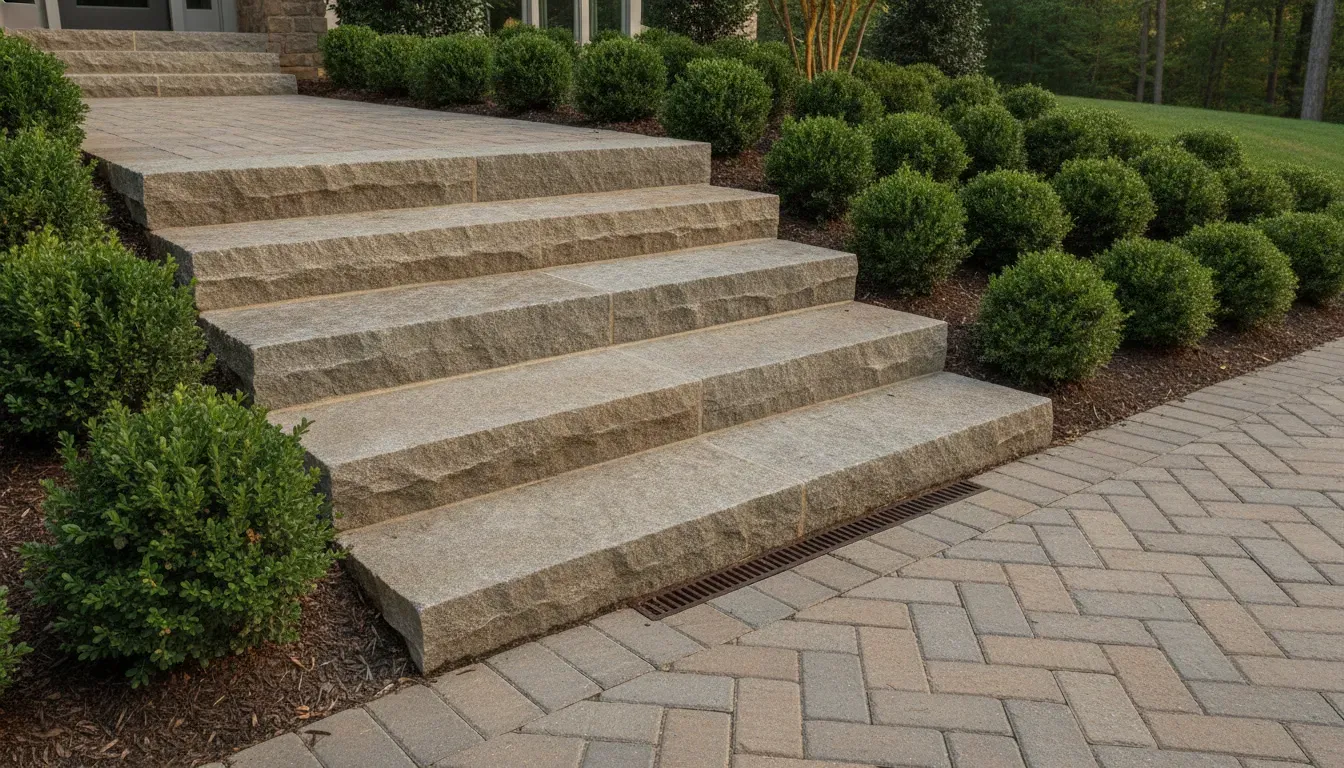
Granite can make sense for exterior stairs where the design calls for a highly durable, substantial material with a crisp architectural presence. It can suit formal front entries, high-traffic approaches, and projects that pair stone steps with granite caps or other precise masonry details. Its granular appearance ranges from quiet and refined to visually dramatic, depending on the selection.
Do not assume every granite finish has the same traction. Polished surfaces are generally better suited to decorative applications than exposed walking surfaces. A qualified design and installation team can compare textured finishes, tread depth, nosing, lighting, and drainage so the final stair feels both durable and comfortable to use.
How do limestone, sandstone, and slate compare?
Limestone, sandstone, and slate can each create a distinctive outdoor stair, but they require more specific product selection than a broad material label suggests. Limestone can provide calm, architectural color. Sandstone can bring warmer tones and a natural texture. Slate can add layered color and a strong visual character. For all three, the exterior grade, surface behavior, thickness, and local exposure deserve careful review.
- Limestone: Consider it when the home's masonry and landscape call for a quiet, consistent palette. Confirm that the selected variety is appropriate for exterior use and seasonal exposure.
- Sandstone: Consider it when natural variation and a garden-oriented appearance are priorities. Review absorption and surface durability, especially on shaded or wet steps.
- Slate: Consider it when layered color and a more distinctive cleft texture support the design. Confirm that the selected product will remain stable and suitable for repeated foot traffic.
These materials are not interchangeable simply because they are all natural stone. The best decision comes from viewing full-size samples, checking the finish underfoot, and coordinating the choice with the architect or landscape designer responsible for the entire approach.
See how DiSabatino integrates steps, patios, retaining walls, landscaping, and outdoor living.
How do grading and drainage affect stone steps?
Grading and drainage are central to the performance of outdoor steps. Water that remains on treads, collects behind risers, or moves toward a retaining wall can create problems regardless of the stone selected. The design should consider where runoff starts, how it travels across each tread, and where it is safely released at the bottom and sides of the stair.
A site review may account for:
- The slope above the stair and the amount of water that reaches it
- Transitions between stone treads, landings, patios, and walkways
- Drainage near the base of retaining walls or raised planting areas
- Downspouts, irrigation, roof runoff, and compacted soil nearby
- Shade and seasonal conditions that can slow drying or increase icing risk
- How edge details and joint layouts help direct water away from the walking surface
This is also why a step project should not be planned from a catalog image alone. The same stone may perform differently on a sunny, open entry than on a shaded stair cut into a sloped garden. Grading, substructure, jointing, and drainage details need to be developed with the material choice.
How can stone steps connect to patios and retaining walls?
Well-designed steps feel like part of the landscape rather than an object placed on top of it. A patio can repeat the tread stone in a landing or border. A retaining wall can share the same color family while using a different scale or texture. Plantings can soften the side walls without narrowing the walking path. These relationships are especially important on a sloped property where the stair is both a circulation route and a major visual element.
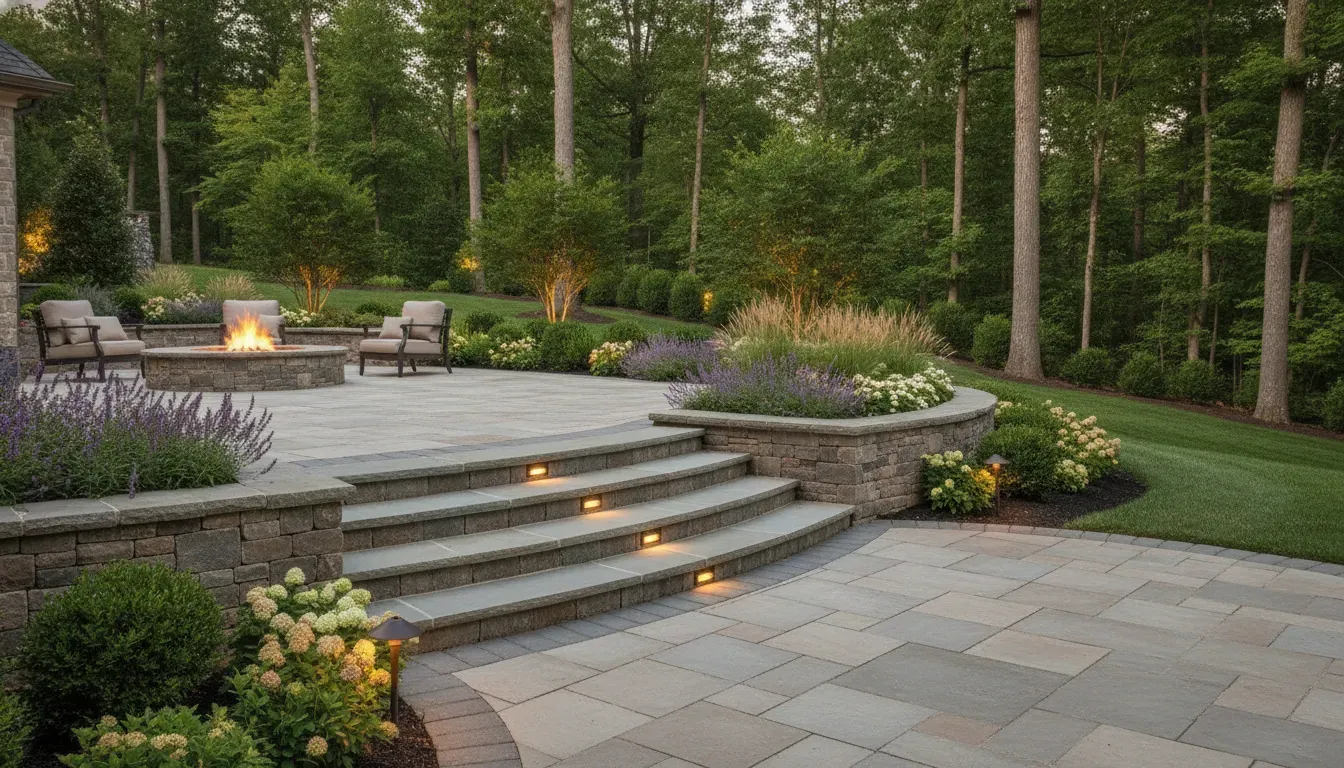
Coordinate these elements early enough to resolve the transitions. The design team can study tread proportions, wall caps, landing sizes, lighting, plant clearances, and the path beyond the steps before construction begins. DiSabatino's handcrafted hardscaping services include natural stone patios, walkways, and retaining-wall solutions that can be planned as part of a larger outdoor environment.
What questions should you ask before choosing step stone?
A focused material review helps homeowners make a confident decision without reducing the choice to a color swatch. Ask the design and installation team:
- Which exact stone, grade, thickness, and finish is being proposed?
- How will the surface behave when wet, shaded, or exposed to winter weather?
- How will the treads connect to the existing patio, walkway, wall, or entry?
- Where will water go during heavy rain, and how will the stair dry?
- What edge profile, joint layout, and tread dimensions support the design?
- How will lighting improve visibility without creating glare on the stone?
- Which portions of the design require a landscape architect, mason, engineer, or permitting review?
These questions shift the conversation from choosing a popular stone to choosing an appropriate system. They also help reveal whether the proposed material can be fabricated and installed consistently across the entire project.
Best stone for outdoor steps FAQ
What is the best stone for outdoor steps in a cold climate?
There is no single best stone for every cold-climate site. Bluestone and granite are common starting points, but the selected product, finish, thickness, drainage, and installation details all affect performance. Ask for an exterior-rated material suited to local freeze-thaw exposure and review the actual sample before finalizing the design.
Are textured stone steps safer than smooth steps?
Texture can support traction, especially when a surface is wet, but texture alone does not make a stair safe. Tread depth, consistent riser heights, drainage, lighting, maintenance, and the specific stone finish all matter. Avoid assuming that a polished or very smooth surface is appropriate for exposed outdoor treads.
Is flagstone suitable for outdoor steps?
Flagstone can be suitable when the actual stone, thickness, support, edge treatment, and stair design are appropriate. The word flagstone describes a broad format rather than one specific material. Confirm whether the proposed slabs are intended for repeated foot traffic and exterior step conditions.
Should outdoor steps match the patio?
They do not have to match exactly, but they should relate intentionally. Repeating a stone color, edge detail, joint rhythm, or complementary texture can connect steps to the patio. A contrasting material can also work when the transition is designed clearly and the surrounding walls and plantings support it.
How do I choose stone steps for a sloped yard?
Begin with a site assessment that studies the slope, water flow, access, existing hardscape, and desired route through the landscape. Then compare stone samples alongside the patio and retaining-wall materials. A design-build team can coordinate the stair geometry, drainage, masonry, plantings, and lighting as one plan.