
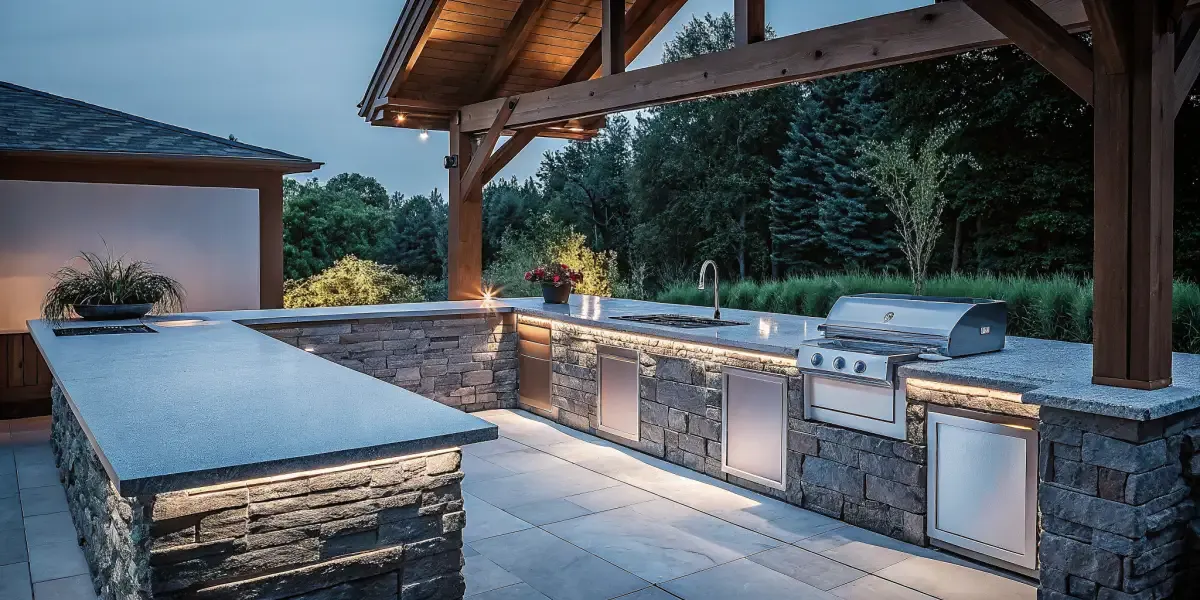
The best outdoor kitchen ideas do more than move a grill onto the patio. They create an elegant extension of the home, organized around how you cook, entertain, and enjoy the landscape through the Delaware Valley's changing seasons.
Explore a custom outdoor kitchen designed and built by DiSabatino.
Building a space that performs through humid summers, heavy rain, and freeze-thaw cycles requires coordinated decisions about layout, utilities, masonry, appliances, lighting, and overhead protection. The following outdoor kitchen ideas explain how those choices come together in a refined, cohesive outdoor living environment.
Outdoor kitchen ideas that fit Delaware Valley living
For Delaware Valley homes, the most successful outdoor kitchens combine an efficient cooking layout with durable masonry, outdoor-rated appliances, managed drainage, and carefully placed shade. Planning the kitchen as part of the wider landscape creates a more comfortable, visually cohesive space that can support entertaining across multiple seasons.
Planning a space for your home starts with how you live. In the Delaware Valley, your outdoor kitchen ideas should match the local weather. These spaces need to handle cold winters and hot summers. A good design looks at the view, the wind, and the path of the sun.
Designing for local weather patterns
A covered kitchen helps you use the space all year. You can add custom outdoor kitchen designs with pergolas to give shade. Adding ceiling fans keeps air moving on humid days. This setup protects your tools and gives you a dry place to cook when it rains.
A durable assembly depends on more than attractive finishes; the structure, substrate, drainage, and masonry detailing must work together through repeated seasonal changes. Natural stone and granite counters stay tough through many seasons. For safety, keep heavy tools on low shelves to avoid falls. Proper storage is key for kitchen safety and food health in any setting.
Efficient layouts for seamless workflow
Most outdoor spaces use an L-shape, U-shape, or island layout. The right shape helps you move between the grill and the prep table. You should place the kitchen near your indoor door for easy trips. This makes designing your outdoor kitchen space much simpler for big parties.
Think about how people move through the yard. Your grill should not block the main path. Keep the cooking area away from where kids play. A smart layout makes sure the smoke from the grill does not blow toward your guests.
Premium materials and integrated features
Using natural stone floors adds a high-end look that lasts. You can match the stone to your patio or pool deck. This creates a smooth look across the whole yard. Adding items like pizza ovens or fire pits makes the area a central hub for family time.
Outdoor-rated stainless steel appliances and cabinetry offer dependable corrosion resistance while maintaining the crisp, tailored appearance expected in a luxury entertaining space. They stay bright and clean even in our wet air. You should also match your new kitchen to the style of your home. A well-built space brings value to your home for many years.
Which outdoor kitchen layout works best?
The best layout depends on available space, the number of cooks, and how guests move through the terrace. Straight and L-shaped kitchens suit compact sites, while U-shaped and island plans create generous work zones and social seating for larger outdoor living environments.
Picking the right plan is the first step when you look for outdoor kitchen ideas. Your layout should help you move well between the grill, the prep spot, and where you eat. A good setup keeps your tools close and makes it easy to host guests. It also keeps the cooking zone safe and clear of foot traffic.
Small space and straight plans
A straight kitchen is the simplest choice for a small deck or patio. It puts all your cooking gear in one line against a wall. This plan takes up little room but still gives you space to cook and prep. It works well if you want a basic grill station with some counter space on the side. You can even tuck it into a corner to save more yard space.
For a bit more room, an L-shape layout is a top choice. This plan uses two walls to create a corner. It gives you more counter space and makes it easier to set up a work zone. You can put the grill on one side and a sink or prep spot on the other. This keeps the chef from feeling boxed in while they work.
Layouts for large groups
If you have a large patio, a U-shape kitchen gives you the most counter space. This plan has three sides and creates a full room feel outside. It is great for homeowners who want a full set of gear like pizza ovens or wine fridges. It also allows for more people to help with the cooking without getting in the way. This layout is the best for a chef's kitchen in the fresh air.
An island layout is another great way to add fun to your yard. You can place a separate island bar near your main grill area. This creates a clear spot for guests to sit and talk while you cook. It also helps with the flow of people in your yard so the cooking zone does not get too crowded. Islands work well for large groups where guests want to stay near the action.
Safe and smart design
Safety is as key as how the kitchen looks. You should store the items you use most at a height that is easy to reach. This helps you avoid strain and keeps things safe while you cook. Keeping your kitchen clean and well-planned can even help you stay healthy. The CDC notes that bad food storage and prep lead to millions of cases of food illness each year. Using stone or tile for your floors also helps prevent slips.
A smart layout also looks at the weather in the Delaware Valley. You might want to add a roof or a pergola with fans to keep the area cool. When designing your outdoor kitchen space, think about how the wind and sun will hit your patio. This helps you pick the best spot for your grill and seating. A good plan will last for years and make your yard a top spot for your friends and family.
| Layout Type | Best Use Case | Space Needs | Guest Seating |
|---|---|---|---|
| Straight | Small decks or patios | Very Low | None at counter |
| L-Shape | Corner zones | Medium | Room for 2-3 stools |
| U-Shape | Full outdoor kitchens | High | Great for bar seating |
| Island | Open yard spaces | Medium | Ideal for hosting |
| Galley | Narrow areas | Medium | Limited space |
Build the right appliance package around the grill
A refined appliance package begins with how the household actually cooks and entertains. The grill may anchor the kitchen, but refrigeration, a sink, burners, ventilation, storage, and task lighting determine whether the finished space can support complete meals without constant trips indoors.
Your outdoor kitchen should match your life. Most people start with a top grill as the main piece. It is the heart of the room, but it is not the only tool you need. A full set of tools makes the space work for real meals. Good designing your outdoor kitchen space starts with picking parts that fit your habits. Do not buy items just to check a box. Instead, pick tools that make your life easy when you host friends.
Cooking tools and heat sources
There are many outdoor kitchen ideas for how to cook. A built-in gas grill is a top choice. It is fast to heat and easy to clean. You may also want other ways to cook. Side burners are great for boiling water or heating sides. This keeps you outside so you do not miss the party. Some people love the taste of wood or coal. Adding a smoker or a pizza oven gives you more ways to cook. These tools make a fun time for your guests. They also help you try new recipes that are hard to make inside.
Think about air flow when you plan your layout. Vents help clear smoke and heat from the space. This is a key step if your kitchen is under a roof. Poor air can change how you feel in the space. The CDC notes that design and air flow can change how people use a room. Good vents keep the air clean so you can cook in comfort for a long time.
Cold storage and food safety
Keeping food fresh is a top goal for any cook. You must keep meat and dairy cold until it is time to use them. This is a big part of kitchen safety. Bad food storage leads to many cases of illness each year. The CDC says that about 48 million people get sick from food each year in the U.S. A good outdoor fridge keeps your food safe and close. It also saves you from walking back and forth to your house.
You can also add other units to your plan. Ice makers are great for cold drinks on hot days. Wine coolers keep your best bottles at the right heat. If you like to host big groups, a kegerator is a fun pick. These units must be made for outdoor use to last. They should handle rain and local weather shifts. This makes sure they stay in good shape for years to come.
Prep space and clean up
A smart layout helps you work with less stress. You need plenty of counter space to prep food. Stone or granite are good choices because they last a long time. You should also think about where you put your tools. Keep heavy items in low spots to make them safe to lift. Store things you use most often at a height that is easy to reach. This makes the kitchen easy for all to use.
A sink is another key part of custom outdoor kitchen designs. It lets you wash your hands and clean tools without leaving the deck. You also need a place for trash. Built-in bins keep the area neat and help block pests. Lastly, do not forget about light. Good lights over your grill let you cook safely after the sun goes down. These small steps turn a simple grill into a full chef's space.
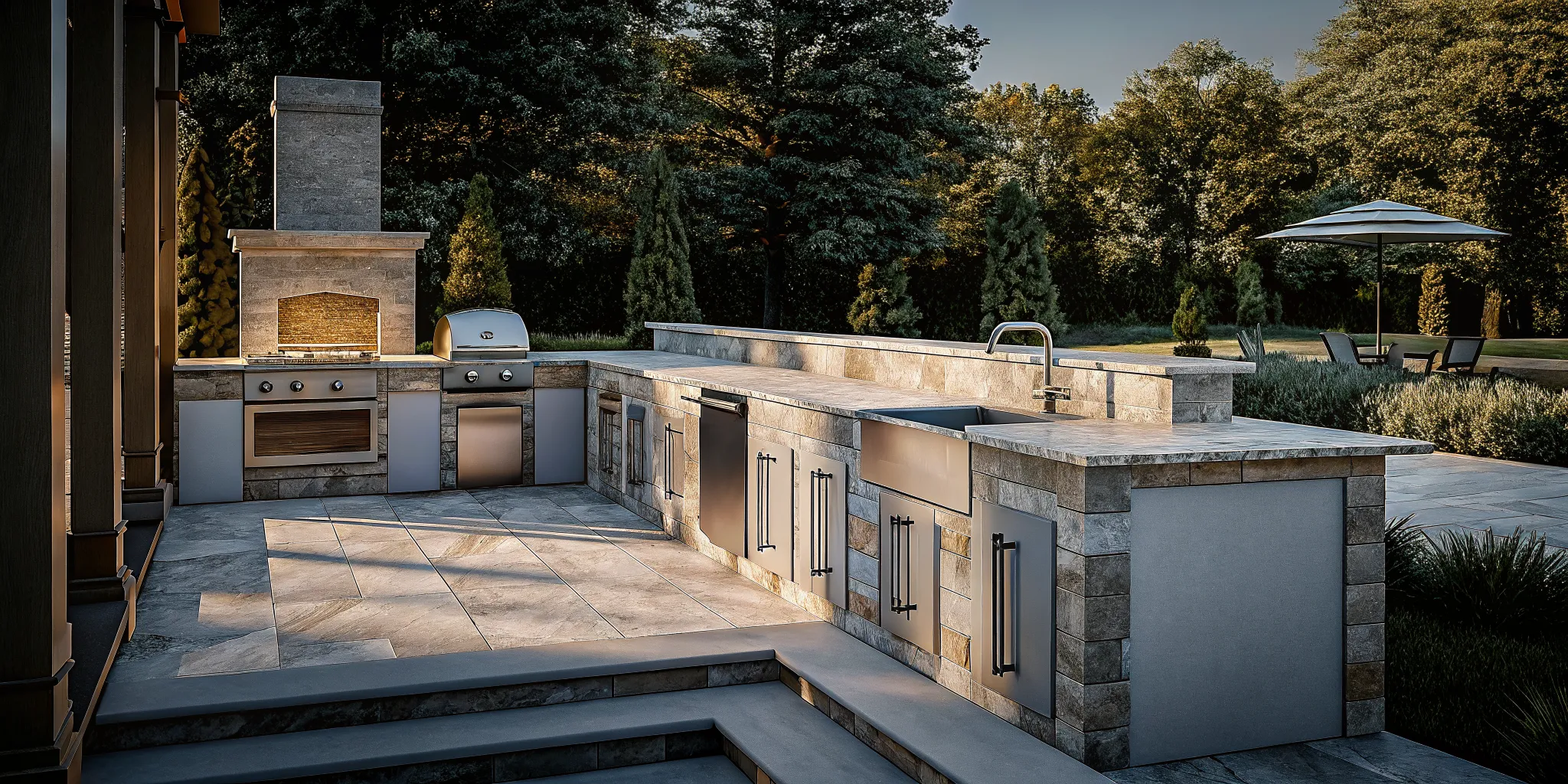
Should you add a pizza oven?
A pizza oven is a compelling choice for homeowners who enjoy interactive entertaining and live-fire cooking. It works best when heat clearances, fuel storage, smoke movement, prep space, and guest circulation are resolved early, allowing the oven to become an architectural focal point rather than an afterthought.
A pizza oven is more than a tool for cooking. It often becomes a focal point that draws people together in your yard. When you look at custom outdoor kitchen designs, an oven adds a unique social touch. It creates a space where guests can watch their food cook in a live fire.
Finding the best spot
Placement is the first step in your plan. You need enough room for people to move safely while the oven is hot. It is best to put the oven where it can act as a hub for your guests. A good layout helps with flow between your prep zone and the dining area. You should also think about how smoke will move so it does not blow into your house.
Safety is a big part of choosing a site. Poor food handling causes about 48 million cases of illness each year, according to the Centers for Disease Control and Prevention. Having a clean, flat space near your oven for prep work is vital. This helps you keep raw and cooked items separate. Your designing your outdoor kitchen space plan should include heat-proof surfaces.
Fuel and prep space
You can choose wood or gas for your oven. Wood gives a classic smoky taste and a bright flame that looks great at night. Gas is faster to start and easy to keep at a steady heat. Both types need a large prep space nearby. You will need room to roll out dough, add toppings, and set down hot pans.
Storage is also key for a smooth workflow. You should store the items you use most at heights that are easy to reach. Put heavy tools or wood logs in lower spots to keep the area safe. Using stone or metal for your counters ensures they can handle high heat and weather. These choices help your space look good and last for many years.
Choose materials for beauty and four-season durability
Delaware Valley outdoor kitchens need materials selected for moisture, heat, sunlight, and freeze-thaw cycles. Dense stone counters, properly detailed masonry, slip-resistant paving, and outdoor-rated stainless steel create a durable foundation while allowing the kitchen to complement the home's architecture and surrounding landscape.
Building a luxury cooking space in the Delaware Valley means you must plan for wide weather shifts. Your outdoor kitchen ideas should start with items that can handle hot sun, heavy rain, and the freeze-thaw cycles of winter. Picking the right parts ensures your kitchen looks great and lasts for many years without constant work.
Resistant countertops and stone
The best work surfaces for our region are dense and non-porous. Granite is a top pick because it resists heat and does not fade in the sun. For a long life, choose stone or sealed concrete that can withstand the elements. These durable countertops help prevent cracks when the ground shifts during seasonal changes. Using natural stone for floors and walls also adds a timeless look that blends well with the land.
Safe and sturdy flooring
Your kitchen floor needs to be safe for guests and strong enough for heavy gear. It is vital to use slip-resistant materials to prevent falls, especially near wet prep areas. According to the Centers for Disease Control and Prevention, improper food handling and storage lead to millions of cases of illness each year. So a clean and level floor is a key part of a safe design. Many homeowners choose pavers or natural stone floors to create a solid base that stays level and drains well after a storm.
Steel and custom gear
When you pick your tools, stainless steel is the best choice for a local outdoor kitchen. It resists rust and keeps its shine even through wet seasons. High-quality outdoor appliances and grills are built to handle our local climate. To keep your gear in top shape, use seasonal covers and plan for yearly care. You might also add a pergola with a fan to provide shade and keep the air moving, which makes cooking more fun on hot days.
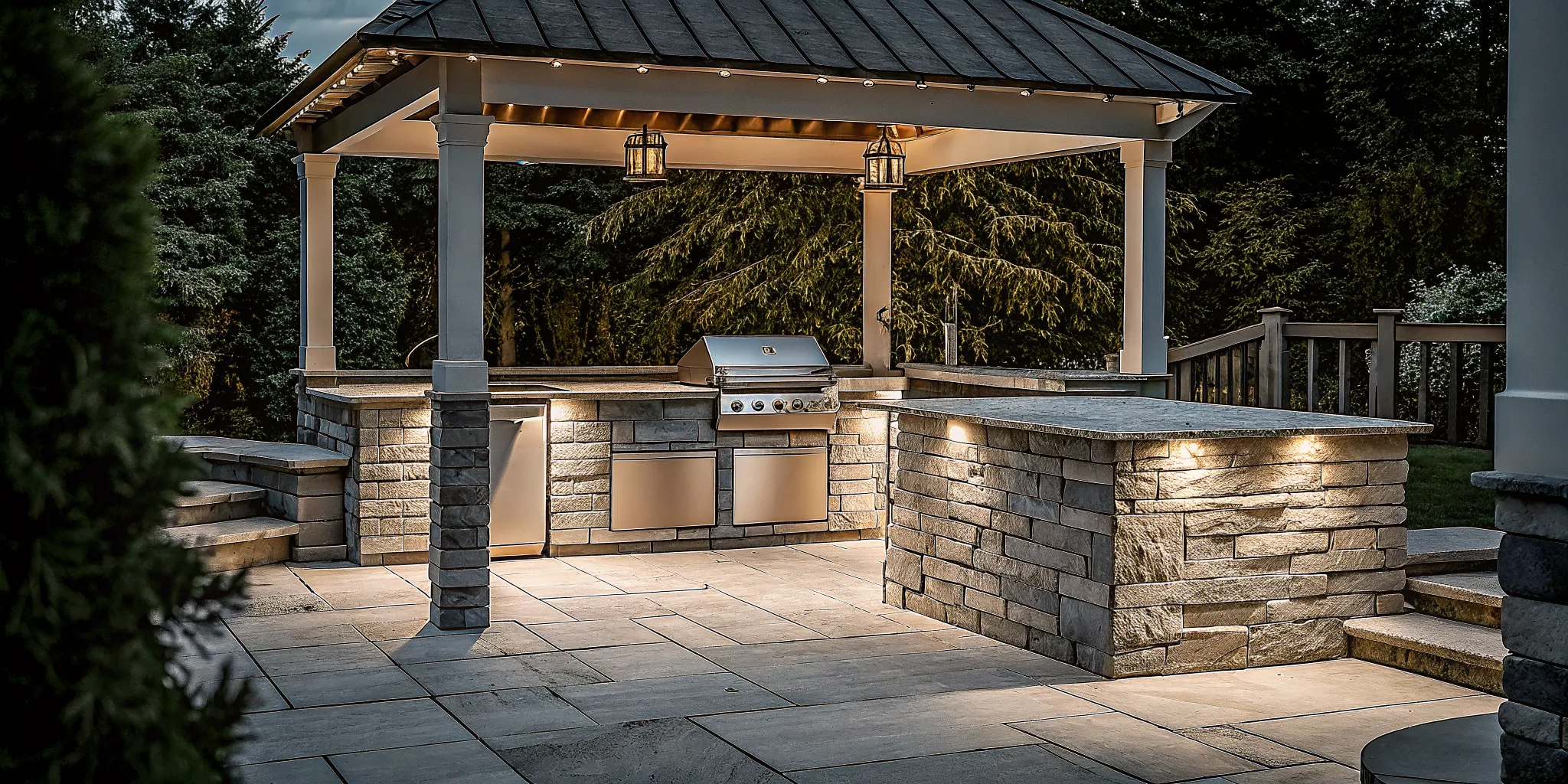
Covered or open-air: which design is right?
Covered kitchens offer greater weather protection and support integrated lighting, fans, and heaters. Open-air kitchens preserve views and natural ventilation. A hybrid plan often delivers the strongest balance by sheltering the cooking zone while keeping dining and lounge areas connected to the sky and garden.
Deciding between a roof or an open sky is a big part of your plan. The weather in the Delaware Valley changes a lot through the year. You should think about how often you want to use the space.
Some people love the sun, but others want shade and dry feet. This choice will shape how you go about designing your outdoor kitchen space. Each path has its own perks for your home.
Why cover your kitchen?
A roof keeps you dry when it rains. It also shields your grill and fridge from the hot sun and heavy snow. You can add fans to a pergola to stay cool in July.
A covered spot feels like a cozy room outside. This helps your space last longer by protecting it from the ice. It is a smart way to keep your kitchen looking new for many years.
Covered spaces also let you use more types of gear. You can hang a TV or use high-end lights without fear of water damage. This makes the kitchen a hub for the whole family.
You can cook a full meal while the kids watch a game nearby. Using real stone for the floors and wood for the roof adds a rich feel. This blend of parts makes the space look great and work well.
- Ceiling fans: Improve air movement during humid summer gatherings.
- Integrated heaters: Extend comfortable use into cooler months.
- Layered lighting: Combine safe task illumination with a warm evening atmosphere.
- Outdoor-rated cabinetry: Protect serving pieces and cooking tools from the elements.
The perks of an open design
An open kitchen lets you see the stars while you cook. These designs often cost less and fit well in small yards. You get the best airflow when there is no roof in the way.
This is good for safety when you use a large grill or a smoker. Good air flow helps clear out smoke and gases that come from cooking. In fact, proper air flow in a kitchen is a key part of a healthy design.
This keeps the air clean for you and your guests. Open kitchens are also great for seeing the rest of your yard. You can look at your pool or garden while you flip burgers.
Without walls or a roof, the space feels large and free. You will need to pick tough stone like granite for your counters. These stones can stand up to the sun and rain without fading.
Best of both worlds
Many people pick a mix of both styles for their yard. You might put a roof over the stove but leave the dining area open. Some roofs use slats that you can open or close with a remote.
This lets you pick shade or sun at any time of day. You can also add heat lamps to stay warm in the fall and winter months. These features help your kitchen stay useful all year.
These outdoor kitchen ideas make the space useful in all seasons. Working with a pro helps you think about things like land slope and water runoff.
This ensures your kitchen stays dry and safe for a long time. Mixing these ideas helps you get the most value for your home. You will have a spot that works for a quick lunch or a big party.
How do you plan an outdoor kitchen?
Planning starts with a site and lifestyle assessment, then coordinates the layout, utilities, drainage, materials, appliances, lighting, and surrounding landscape as one design. Resolving these systems before construction reduces compromises and helps the finished kitchen feel like a natural extension of the home.
Planning a high-end cooking space starts with a clear goal for how you will use it. It is not just about picking a grill. You must find custom outdoor kitchen designs that fit your yard. A good plan makes sure the kitchen works well while staying safe for your loved ones. This is vital. The Centers for Disease Control and Prevention notes that about 48 million people get sick from food each year.
Find the best spot
The first big choice is where to put the kitchen. Most owners keep it close to the back door. This makes it easy to go to the indoor pantry. But you also need to check the site for wind and sun. You do not want smoke blowing at your guests while you cook. This is a key part of finding the best outdoor kitchen ideas for your home. Good designing your outdoor kitchen space means looking at how the sun hits the patio. This helps you decide if you need a roof to keep the area cool.
Plan for work and safety
A smart setup is the key to a stress-free meal. You should have enough room to prep, cook, and clean. Do not let the space feel cramped. A good design keeps cold drinks away from the hot grill. This means kids will not get in the way while you cook. Proper air flow is also a must to keep things fresh. When you plan the flow, aim for a work zone between the sink, grill, and fridge. This makes moving around easy for everyone.
- Set your goals. Decide if you want a simple grill or a full chef's suite with a pizza oven. Think about how many people you plan to host for dinner.
- Pick a layout. Choose an L-shape, U-shape, or island based on your patio size. Each shape has its own perks for storage and flow.
- Plan for power and water. Map out where your gas, water, and power lines will go. It is much easier to run these lines before you lay down the stone floors.
- Choose tough parts. Use stone and steel that can stand up to the local weather. Granite is a top choice for counters because it lasts a long time and cleans up fast.
- Add lights and shade. Put lights over the grill and prep spots so you can see at night. A pergola with a fan helps keep the air moving on hot days.
- Get the right permits. Check with your town to see what rules you must follow. A pro team can help you handle this part of the job.
Pick the right parts
Your outdoor kitchen needs to be tough. It must handle rain, snow, and sun. Many people choose natural stone for the base and floors. It looks great and lasts for a long time. For counters, granite and sealed concrete are best. These choices do not fade or crack easily. You should also look for gear made of high-grade steel. These items won't rust when the weather turns bad. Picking the right goods now saves you from costly repairs later on. A well-built kitchen acts as a hub for your whole family. It makes your backyard a place where everyone wants to be.
Frequently Asked Questions
These answers address the practical questions homeowners often ask before investing in an outdoor kitchen, including winter care, utility requirements, pool-deck integration, maintenance, and the design decisions that influence overall project scope.
How do I maintain an outdoor kitchen during Delaware Valley winters?
Keeping your outdoor kitchen in good shape takes a few simple steps. You should shut off the water lines and drain the pipes to stop freezing. Use high-quality covers for your grill and appliances to protect them from snow and ice. According to experts at DiSabatino, regular care and using seasonal covers are key for protecting your gear and making sure it lasts for many years.
Do outdoor kitchens require their own utility lines?
Yes, most custom outdoor kitchens need planned utility lines for gas, water, and power. You will likely need a gas line for the grill, a water line for the sink, and power for lights or a fridge. This work often involves digging and permits. The team at DiSabatino notes that planning these connections early is a vital part of the design process to ensure your kitchen works well.
Can I combine an outdoor kitchen with my existing pool deck?
You can easily add a new kitchen to your current pool or patio area. A design-build approach allows the kitchen to match the style of your home and landscape. This creates a smooth flow between the cooking area and the pool. DiSabatino uses an integrated design method to combine kitchens with features like seat walls and fire pits. This helps make your backyard look like one unified space for your family and guests.
How do I keep an outdoor kitchen clean and safe?
Food safety is very important when you cook outside. You should store heavy items in low cabinets and keep tools you use often at heights that are easy to reach. According to the CDC, poor food storage and prep lead to millions of cases of illness every year. Keeping your counters clean and having enough space to work helps you avoid these risks and enjoy your meals safely.
What factors affect the cost of an outdoor kitchen?
The total cost depends on the size of the kitchen and the materials you choose. Using natural stone and high-end appliances will increase the price. You must also think about the cost of running gas and water lines to the space. According to Lowes, setting a budget early in the planning phase is key for a good project. This helps you focus on the features you want most.
Ready to start your outdoor kitchen project?
Waiting to build your outdoor kitchen means missing out on the next season of fresh air and good meals with loved ones. Putting off the work can lead to long wait times and higher costs for parts later on. You do not want to spend the next warm night stuck inside when you could be cooking under the stars. Start your design now to beat the rush for spring and summer builds so you can enjoy your new space as soon as you can. Setting this up today makes sure that your project is ready for use when the sun stays out longer. You will get a custom plan from our outdoor kitchen team that fits your home just right and adds real value to your life for many years to come. Do not let this year pass by without making your backyard the place to be.
Ready to begin? Call (302) 764-0408 to schedule a design consultation.