
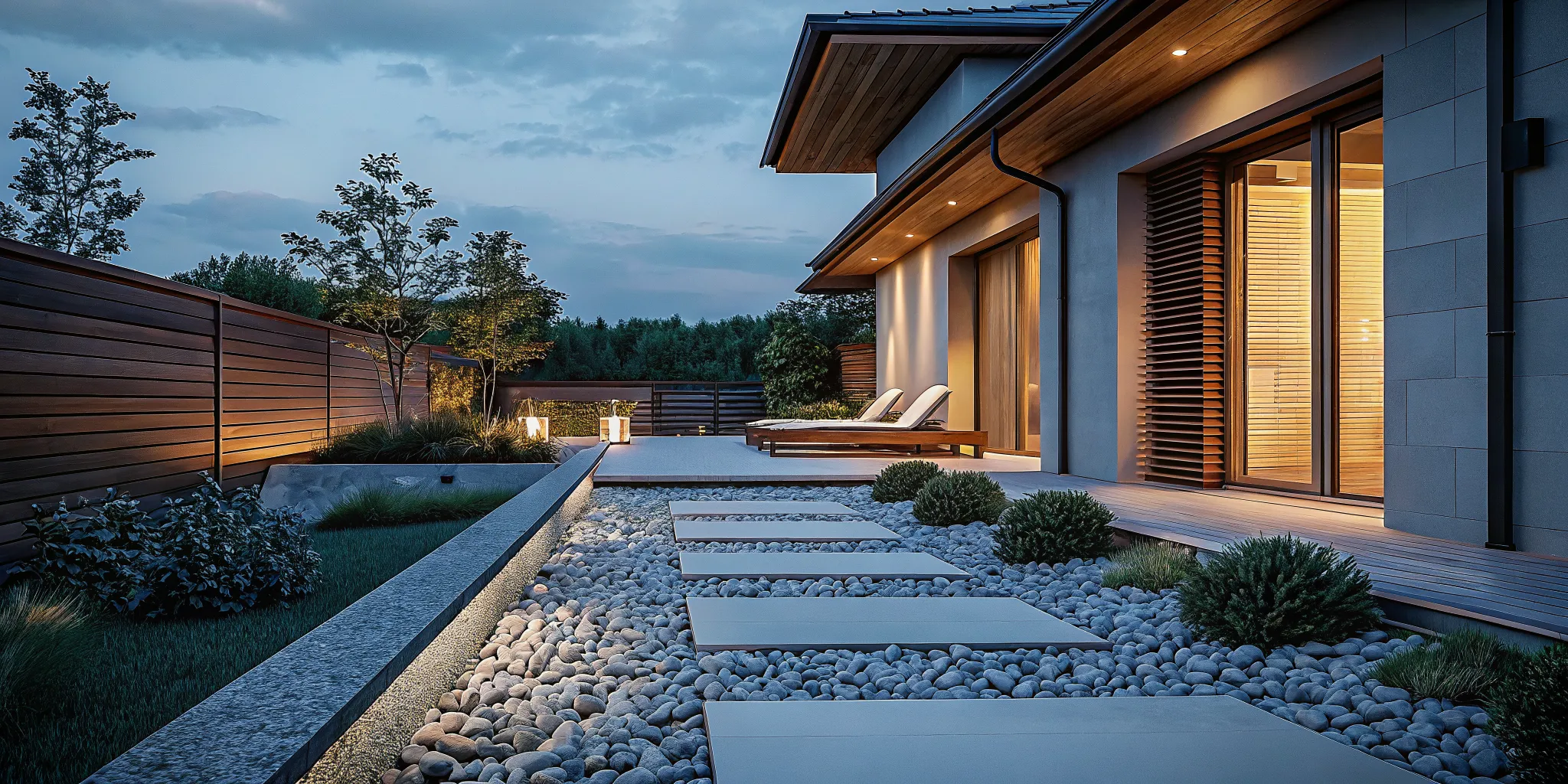
Yard drainage solutions cover a range of built systems and landscape changes built to move extra rain water away from a home's base and landscape. Good care often involves a mix of surface grading for proper runoff and buried systems like French drains to catch water before it pools. Homeowners may also use pretty features such as rain gardens, which the Environmental Protection Agency says are low areas that collect and soak up rain. By solving both the look and the use of water flow, these fixes stop soil loss, protect costly plants, and keep the strength of the site. Using an expert drainage plan ensures that your outdoor living spaces stay dry and useful even after the worst storms in the Delaware Valley.
The Impact of Poor Yard Drainage on Your Property
When heavy rain hits the Delaware Valley, water can quickly become a threat to your property. Poor yard drainage is not just a nuisance; it can cause lasting harm to your luxury home and landscape. For homeowners in Wilmington and Southeast PA, seeing water sit on the lawn is a sign that your property needs a fix. If you do not correct drainage issues early, the cost to repair the damage often far exceeds the price of a proper system.
Protecting your landscape investment
Luxury landscaping adds value to your home, but it is fragile when water pools in the wrong spots. Standing water in a yard can kill landscaping by drowning plant roots and causing grass to rot. It turns a lush green lawn into a muddy, swampy mess that you cannot enjoy. When water has nowhere to go, it sits on the surface and blocks air from reaching the soil. Over time, this kills even the hardiest plants and trees, leaving you with bare spots and dead growth.
Water that does not flow away can also wash away mulch and erode rich soil. This creates deep ruts and uneven ground that ruins the look of your outdoor space. In our region, soil can become heavy and packed down when it stays wet for too long. This makes it hard for new plants to grow. Without professional yard drainage solutions, your high-end plants and trees are at risk every time a big storm passes through.
Preventing foundation and structural damage
The biggest threat from bad drainage is the harm it does to your home's foundation. Proper yard drainage lowers the risk of water damage to a home's foundation by preventing pooling near the house. When water sits against your walls, it can seep into cracks or cause the soil to shift. This movement puts stress on the concrete and can lead to costly basement leaks or house failure. Keeping water away from the house is the best way to keep your home stable and dry.
Stormwater runoff from hard surfaces like roofs and patios can also carry waste into local waterways. According to the Environmental Protection Agency, managing this runoff on your own property helps reduce these risks. When water runs off your driveway or roof too fast, it picks up oil, dirt, and lawn chemicals. If your drainage system is not set up to handle this flow, it can flood your basement. It may also wash out your flower beds while polluting the nearby area.
Health hazards and property use
Wet yards are also a breeding ground for pests. Stagnant water attracts mosquitoes and other bugs that can make spending time outside bad. These pests can carry diseases, making your yard less safe for your family and pets. Beyond bugs, a soggy lawn stays muddy for days after the rain stops. This prevents you from using your outdoor kitchen or patio, and it makes it easy to track mud into your clean home.
Poor drainage also leads to mold and mildew growth around the outside of your home. These fungi thrive in damp areas and can damage your siding or stone work. In the winter, standing water turns into ice, which creates slip hazards on your paths and driveways. By fixing these issues now, you ensure your property stays safe, clean, and beautiful all year long.
Yard Grading and Soil Reshaping Solutions
The Science of Proper Slope
Fixing the slope of your lawn is the first step in yard drainage solutions. Many homes in the Delaware Valley face issues because the ground has sunk over time. This sinking often creates low spots where water pools after a heavy rain. To fix this, teams use soil to change the shape of the land. The goal is to make a path for water to flow away from your house. Our crew looks at each property to find the best way to move the water.
Expert teams aim for a set pitch to ensure water moves fast. Trade rules say your yard should have a slope of one inch per foot for every flat run. This angle is steep enough to stop water from soaking into the ground near your walls. Our professional grading and drainage services focus on this exact mark. By doing this, we stop water from sitting where it can do the most harm to your grass and trees. We ensure your lawn stays firm and dry even during the wet spring months.
Protecting Siding and Home Bases
Grading is not just about the lawn. It is also about keeping your home dry and safe. When we move the soil, we must watch the height of the ground near your walls. A common mistake is piling dirt too high against the house. This can lead to rot, pests, and mold growth inside your walls. Keeping the soil at the right level is vital for the health of your home.
You must keep a gap between the dirt and the outside of your home. Experts suggest a minimum of four inches between the ground slope and the bottom of your siding. This space acts as a shield against wetness. It ensures that rain hits the ground and rolls away before it can seep into your crawl space or basement. Keeping this gap is a key part of long term care for your property. It saves your foundation from costly cracks and leaks.
Using Swales to Manage Runoff
Changing the soil often means building swales. A swale is a shallow, wide ditch lined with grass or rocks. It acts like a natural slide for rain. Swales are helpful because they catch water from large areas and move it to a safe spot. This stops big puddles from forming in the middle of your yard. We often use decorative stone to make these swales look like dry creek beds.
Managing water on your lot is also good for the local area. When rain hits hard paved spots, it can pick up dirt and trash. The EPA states that runoff from these spots can carry waste into local streams. By using swales and proper grading, you help filter this water before it leaves your land. This plan keeps your landscape great while saving the local water supply. It is a smart way to protect your investment and the world around you.
French Drains: The Engineered Sub-Surface Solution
Surface water is often easy to spot, but water that stays under the ground can be just as harmful. High-end homes in the Delaware Valley often face soggy lawns and soft soil due to poor sub-surface flow. A French drain acts as an underground channel to solve this. It uses a gravel-filled trench with a perforated pipe to intercept water before it reaches your home's foundation.
How French Drains Capture Water
The goal of a French drain is to give water a path of least resistance. Water flows into a gravel-filled trench and enters a pipe with small holes. This system helps manage yard drainage by using a gravel-filled trench with a perforated pipe to redirect sub-surface water. For large properties, this is one of the most reliable Luxury Landscaping & Hardscaping choices to keep soil stable. You can learn more about how rain gardens manage water, but French drains remain the standard for foundation protection.
To ensure the system works well for years, it must be set up with care. Poorly built drains can clog with silt or sand. This is why professional teams use high-quality fabric to line the trench. This fabric keeps soil out of the gravel and pipe while letting water pass through freely. Proper planning ensures the water flows to a safe exit point, such as a storm drain or a dry well.
Step-By-Step Installation Process
Building a high-performing drain needs precise work and local knowledge. Our team follows a strict process to ensure your yard stays dry. Here is how we install a professional-grade French drain system:
- Trench Excavation: We dig a trench along the low points of your yard. The trench must slope downward to ensure water moves toward the exit.
- Filter Fabric Lining: We line the trench with heavy-duty filter fabric. This step is vital to prevent soil from clogging the gravel over time.
- Gravel and Pipe Placement: A layer of clean gravel is added, followed by a perforated pipe. We then fill the rest of the trench with more gravel.
- System Testing: We check the slope to confirm water flows fast. We also make sure the pipe is clear of any debris before we close it.
- Surface Restoration: The fabric is folded over the gravel, and topsoil or sod is added. This makes the drain nearly invisible in your landscape.
- Outlet Installation: We use pop-up emitters at the end of the line. These release the water safely onto a lawn or into a storm system.
The Role of Outlets and Emitters
The point where water leaves the system is key for success. If water pools at the exit, it can back up and cause the system to fail. Pop-up emitters can be used as an outlet for underground drainage pipes to safely release water away from sensitive areas. They stay closed when dry to keep out pests and grass. When the pipe fills with water, the pressure lifts the lid to let the water out. This protects your landscape from erosion while keeping the system clean.
Decorative Drainage: Dry Creek Beds and Bioswales
Yard drainage solutions do not have to look like a construction site. You can use natural features to guide water through your land in a way that looks great. High-end landscaping uses these tools to manage water while adding style to your yard. These systems handle heavy rain and keep your lawn from turning into a swamp.
Natural Beauty with Dry Creek Beds
A dry creek bed is a path of stones that looks like a natural stream. These dry creek beds mimic natural channels to move water away from your home. When it rains, the water flows through the rocks instead of washing away your soil. This helps you manage water runoff without using ugly pipes on the surface.
We build these beds with a mix of river rocks and smaller stones. This design slows down the water so it does not cause damage. In dry weather, the stones act as a beautiful feature in your yard. It is a smart way to solve a problem while making your home look better.
Rain Gardens and Bioretention Systems
A rain garden is a low area in your yard that collects water from your roof or drive. According to the EPA, these gardens let the water soak into the ground slowly. This stops the water from pooling in spots where you do not want it. You can plant them with native flowers and shrubs that love wet soil.
Some homes need more than just a simple garden. These complex systems are often called bioretention systems. They use special soil and drainage parts to handle large amounts of rain. These setups are great for homes that have big paved areas. They protect your land and help the local area at the same time.
The Role of Bioswales
Bioswales are like rain gardens but shaped like a long path. They are built to move water while filtering out dirt and trash. This process cleans the water before it reaches the local drains. These systems use deep-rooted plants to hold the soil in place and soak up extra moisture.
We design bioswales to fit the slope of your land. This ensures that water flows in the right way without creating muddy spots. Using these natural drainage tools adds value to your home. They provide a long-term fix that works with nature instead of against it.
Comparing Yard Drainage Solutions for Delaware Valley Homes
Managing stormwater runoff on a luxury estate is not merely a utility requirement; it is a fundamental safeguard for your landscape investment. Across the Delaware Valley—from New Castle County to the PA Main Line communities—discerning homeowners must navigate diverse terrains, high water tables, and sudden precipitation events. To protect mature plantings, prevent turf saturation, and maintain architectural integrity, implementing a sophisticated drainage architecture is essential. Selecting the optimal methodology requires a precise understanding of how distinct solutions interact with both surface water and sub-surface hydrology.
Engineering Excellence: Tailored Sub-surface and Surface Drainage
For estates experiencing chronic saturation or erosion, a single commodity fix is rarely sufficient. Instead, a bespoke combination of engineered drainage solutions is required to match the site's unique topographical profile. Sub-surface water management frequently relies on French drains, which help manage yard drainage by using a gravel-filled trench with a perforated pipe to redirect sub-surface water. This subterranean approach is virtually invisible from the surface, ensuring your estate's manicured turf and formal gardens remain undisturbed as part of a high-end Luxury Landscaping & Hardscaping strategy.
Conversely, when addressing localized pooling or immediate surface runoff near structural foundations, surface-level interventions are necessary. Catch basins are useful in yard drainage for capturing surface water before it creates larger issues. For hardscaped expanses such as custom driveways, pool decks, and dining terraces, channel drains are highly effective for managing surface water runoff across patios and driveways. Finally, for homeowners seeking an organic aesthetic that integrates seamlessly with a woodland landscape, dry creek beds offer a decorative yard drainage solution that mimics natural drainage channels.
A Comparative Analysis of Drainage Methodologies
A comprehensive water management strategy often combines several of these systems into a unified, high-performance network. To assist you in visualizing how these solutions integrate into your estate design, the following table outlines their key mechanisms and optimal applications:
| Solution | Primary Mechanism | Best Use Case | Aesthetic Prominence |
|---|---|---|---|
| French Drains | Perforated piping buried in a gravel-filled trench to intercept and divert subterranean water. | Alleviating saturated lawns, protecting foundations, and intercepting high water tables. | Subterranean (completely concealed beneath turf or decorative stone). |
| Catch Basins | Grated collection boxes that capture heavy surface runoff and funnel it into underground solid pipes. | Low-lying turf depressions, downspout outlets, and localized pooling zones. | Minimal (recessed grates flush with turf or hardscaping). |
| Hardscape Channel Drains | Linear grated troughs designed to intercept sheet flow across flat, impervious surfaces. | Patios, courtyard entries, pool surrounds, and wide driveway thresholds. | Sleek and integrated (available in decorative metals or architectural stone grates). |
| Dry Creek Beds | An engineered, stone-lined swale that guides excess surface water while allowing natural infiltration. | Erosion control on sloped terrain and managing high-volume seasonal runoff. | High (designed as a prominent, naturalistic stone water feature). |
A Consultative Approach to Estate Water Management
Determining the ideal drainage architecture for your property is a highly customized process. Rather than relying on standard retail products or temporary measures, a premium estate demands professional site-grading analysis and hydraulic engineering. An expertly designed drainage network is seamlessly integrated during the initial architectural landscaping phase, ensuring your home's foundation is protected, outdoor living spaces remain dry, and your horticultural investment thrives for decades to come. To begin tailoring a drainage solution for your estate, explore Our Process and schedule a professional consultation.
Preventative Maintenance to Maintain Free-Flowing Drainage
An exquisitely designed landscape is a significant investment that requires sophisticated, proactive care to preserve its beauty and structural integrity. A critical component of this stewardship is maintaining the systems that manage water flow across your estate. Regular maintenance of your drainage infrastructure ensures that rainwater is channeled seamlessly, preventing costly water damage to fine architectural features and manicured grounds.
The Foundation of Protection: Gutter and Downspout Care
The first line of defense against water accumulation is your home’s roofline drainage system. Gutters and downspouts should be checked regularly to ensure they are properly directing water away from the home. Blockages from seasonal debris can cause water to overflow, cascading down exterior walls and eroding the delicate landscaping below. For premium properties, our specialists recommend a rigorous inspection schedule, especially after major storms, to ensure that gutters remain clear and downspout joints are perfectly sealed and aligned to protect your foundation.
Sophisticated Redirection: Downspout Disconnection and On-Site Management
To enhance environmental harmony and reduce the burden on municipal infrastructure, many luxury homeowners opt for downspout disconnection. This process involves disconnecting the downspout from a standard drain pipe or paved area, and redirecting the water to flow into a rain barrel or to a lawn or garden where it can safely soak into the ground. By managing stormwater on-site, you actively mitigate a critical environmental issue: stormwater runoff from impervious surfaces can carry pollutants into local waterways, and on-site management practices help reduce this impact. However, this technique requires precise planning. Downspout disconnection may not be appropriate for all locations and must carefully consider local regulations and the potential for property damage. Our design-build team ensures that water is only directed to areas with optimal soil composition and grading, preventing backflow or pooling near your home's foundation.
Preserving Bioretention Systems and Rain Gardens
When downspouts are redirected into sophisticated bioretention areas or engineered rain gardens, regular preservation is essential. Bioretention maintenance involves monitoring soil filtration rates, removing sediment accumulation at inflow points, and replenishing specialized soil mixtures designed to absorb and filter runoff. Ensuring that these eco-friendly drainage systems remain free of debris preserves their functionality and maintains the pristine aesthetic of your estate's outdoor living areas. Through systematic, professional care, your custom drainage solutions will continue to perform flawlessly, protecting your home for decades to come.
Frequently Asked Questions About Yard Drainage
What are the best yard drainage solutions for standing water?
The optimal solution depends on your property’s topography. For estate lawns, professionally engineered French drains, custom catch basins, or strategic grading are highly effective. At DiSabatino, we integrate bespoke drainage into our luxury landscaping and hardscaping designs to protect your investment.
How do French drains work for yard drainage?
A French drain features a sloped, gravel-filled trench containing a perforated pipe. It sub-surface redirects water away from high-value hardscaping and foundations. When designed by experienced professionals, it operates invisibly, safeguarding your estate's foundation and pristine turf.
When should you use catch basins for yard drainage?
Catch basins are ideal for capturing surface runoff in low-lying areas or under downspouts before pooling. These basins collect water and channel it into underground piping, protecting driveways and custom outdoor living structures from water damage.
What are the benefits of channel drains for yard drainage?
Channel drains are sleek, linear systems designed to capture sheet flow along flat surfaces like pool decks, driveways, and patios. They prevent water from encroaching on outdoor living areas, ensuring hardscaping remains pristine and safe for entertaining.
How do I fix yard drainage with no slope?
Flat-terrain drainage issues require advanced engineering. Solutions include installing sump pumps, dry wells, subsurface drainage cells, or creating subtle grading changes. We customize these systems to manage runoff without compromising your landscape's aesthetic harmony.
What are decorative yard drainage solutions?
Premium drainage can enhance your landscape's beauty. Custom stone-lined runoffs, decorative metal grates, and artisan rain gardens elevate functional water management into a sophisticated design feature, blending seamless engineering with high-end aesthetic appeal.
Are dry creek beds effective yard drainage solutions?
Yes, when meticulously designed. Dry creek beds utilize natural river stone to channel stormwater runoff while mimicking a natural stream. They provide an elegant, organic water management solution that enhances your property's visual appeal while preventing soil erosion.
How do pop-up emitters work as part of a drainage system?
Pop-up emitters are installed at the discharge end of underground pipes. Hydrostatic pressure rises during heavy rain, popping the lid open to release water safely. Once water subsides, the emitter closes flat, remaining flush with your pristine turf.
Protect Your Delaware Valley Home with Custom Yard Drainage Solutions
Water accumulation can quietly compromise your home’s foundation and erode your meticulously designed landscape. At DiSabatino Landscaping, we provide sophisticated, custom-engineered systems designed to protect the value and beauty of your property. Our seasoned experts evaluate your estate’s unique terrain to design comprehensive systems that seamlessly redirect stormwater runoff away from critical areas.
Investing in our professional grading and drainage services ensures your outdoor living spaces remain pristine, dry, and secure year-round. From discreet French drains and custom catch basins to strategic land contouring, our team integrates water management directly into your landscape architecture. Do not wait for the next heavy storm to address pooling water and soil erosion.
Contact DiSabatino Landscaping today at (302) 764-0408 to schedule a personalized, consultative yard drainage consultation with our design-build specialists.