
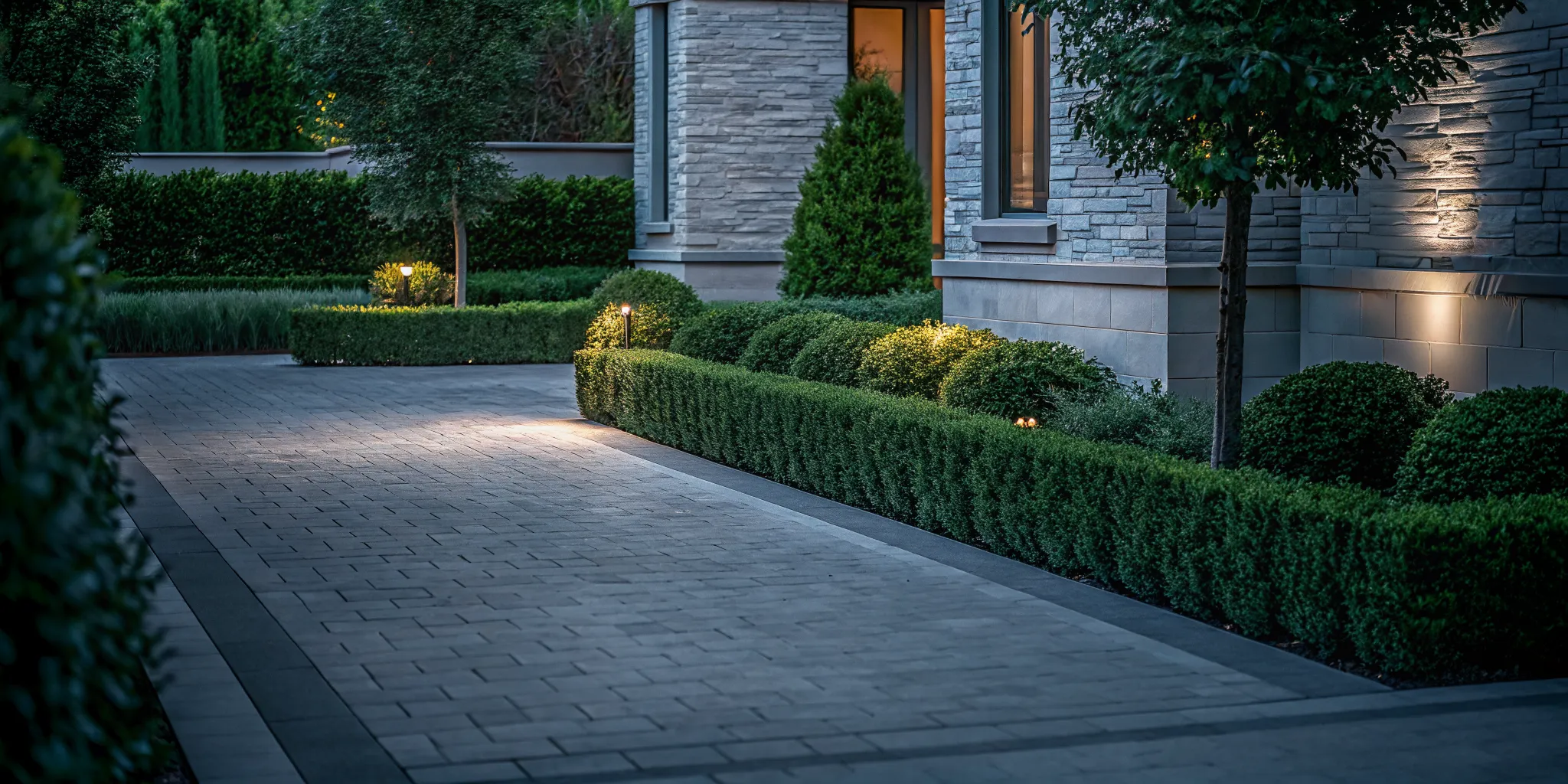
A driveway does more than connect your home to the street. In communities throughout Delaware, southeastern Pennsylvania, Maryland, and New Jersey. It establishes the first impression of the property and must perform through freeze-thaw cycles, vehicle traffic, and changing drainage conditions.
The typical paver driveway cost ranges from $10 to $70 per square foot, while a two-car driveway commonly totals $6,000 to $18,000, depending on the paver material, site conditions, labor, and layout. These planning ranges are compiled from industry cost data reported by Northeast Pavers, but a premium installation requires a project-specific assessment.
The right budget begins with more than a material price. Understanding how design choices, excavation, grading, drainage, access. And installation craftsmanship shape the final investment will help you compare proposals thoughtfully and plan a driveway that complements your landscape and home.
What Factors Affect the Cost of a Paver Driveway?
A paver driveway is a site-specific project, so a useful estimate accounts for more than the price of the pavers. Across the market, installation commonly ranges from $10 to $70 per square foot, while a two-car driveway may total roughly $6,000 to $18,000. Those broad figures reflect differences in material, labor, layout, and preparation, not an inconsistency in the work. In the Delaware Valley, the final proposal should also reflect local labor conditions, access, drainage requirements, and the level of detailing expected for the property.
Size, layout, and pattern
Square footage is the starting point. A longer approach, wider parking area, or turnaround adds material, excavation, base aggregate, edge restraint, and installation time. Shape matters as well. A straightforward rectangular driveway is typically more efficient to install than a curved or segmented layout with several transitions.
Pattern complexity can change both labor and waste. Running bond and other simple patterns require less cutting, while borders, contrasting bands, fan layouts, circles, and intricate geometric designs demand more measuring and fitting. Angi reports paver driveway pricing of approximately $10 to $30 per square foot depending on material. Size, and complexity, with custom patterns averaging about $20 to $35 per square foot. Angi's paver driveway cost data provides useful national context, but a local site review remains essential.
Material selection
The paver type establishes a significant portion of the budget. Concrete pavers generally offer a broader range of styles at a lower starting point, while brick, cobblestone, and natural stone can carry higher material and installation costs. Permeable systems may also require a specialized base design. These choices affect the driveway's color, texture, maintenance profile, and relationship to the home's architecture. So material selection should be evaluated as part of the overall exterior design rather than as a standalone unit price.
Excavation, base preparation, and site conditions
A durable installation depends on what happens below the visible surface. Removing an existing driveway, excavating unstable soil, correcting grade, importing and compacting base material, and addressing drainage can add substantial work. Sloped sites, poor soils, tree roots, narrow access, retaining conditions, and difficult connections to existing walks or roads may require additional labor or engineering coordination.
Labor is another major variable. Angi lists installation labor at approximately $50 to $80 per hour. A qualified local contractor will account for these hours alongside disposal, equipment, delivery, permits where applicable, and the finish details needed to integrate the driveway with the landscape. Comparing proposals by total scope, preparation standards, and design quality gives a clearer picture of value than comparing a single per-square-foot number.
Paver Driveway Cost by Material Type: What You Need to Know
Material selection shapes both the initial investment and the long-term character of a driveway. The ranges below provide a useful planning framework, but the final proposal will also reflect the driveway's size, site conditions, layout, and installation details. Each option can support a refined design when it is properly scaled to the architecture and landscape.
| Material | Typical cost per square foot | Expected lifespan | Design considerations |
|---|---|---|---|
| Concrete pavers | $10-$25 | 30-40 years | Versatile shapes, colors, and patterns make concrete a flexible foundation for a tailored design. |
| Brick pavers | $10-$45 | 30-40 years | Brick brings a traditional, architectural character that can complement older homes and formal landscapes. |
| Cobblestone | $18-$50 | 50+ years | Its enduring texture and substantial appearance can create a distinctive estate-style arrival experience. |
| Natural stone | $25-$70 | 50+ years | Natural variation gives each installation a one-of-a-kind appearance, with premium material costs to match. |
| Permeable pavers | $12-$70 | 30-40 years | A specialized system that can support stormwater management while maintaining a carefully designed surface. |
Cost and lifespan ranges are based on the published material comparison used for this guide.
The right choice is not necessarily the material with the lowest starting price. Consider how the surface will relate to your home's exterior, how much visual distinction you want, and whether longevity or water management is a priority. A thoughtful consultation with a team experienced in handcrafted hardscaping can align material performance with the overall design of your property.
Paver Driveways vs. Asphalt and Concrete: Which Delivers Better Long-Term Value?
Asphalt and poured concrete can reduce the initial investment, but the lowest installation price does not always produce the best value over the life of a driveway. Sta-Built Construction places asphalt at approximately $3 to $7 per square foot, with a typical service life of 15 to 20 years. Concrete generally costs about $5 to $10 per square foot and lasts roughly 15 to 25 years.
Pavers typically require a larger upfront budget. Depending on the material, design, and installation conditions, paver driveway cost can range from $10 to $70 per square foot. Concrete pavers alone commonly fall between $10 and $25 per square foot and may last 30 to 40 years, while cobblestone and natural stone can exceed 50 years. Those figures make pavers a premium long-term investment rather than a commodity paving choice. The ranges for asphalt and concrete are reported by Sta-Built Construction; paver material and lifespan ranges are documented in the cost research for this guide.
Maintenance and repair favor modular construction
Asphalt commonly needs periodic sealing and can develop cracks, fading, and surface wear as it ages. Concrete offers a clean, durable surface, but cracking can be difficult to correct invisibly. When a slab fails, repairs may leave a visible patch or require replacement of a larger section.
Pavers offer a different maintenance advantage. Because the surface is assembled from individual units, a damaged or settled paver can usually be lifted. The underlying base corrected, and the same paver or a matching replacement installed. This targeted approach avoids removing an entire slab and makes future repairs more manageable. Proper base preparation and professional installation remain essential, especially in a climate with seasonal freeze-thaw cycles.
Design value is part of the return
Asphalt provides a restrained, uniform appearance, and concrete can be finished in several ways. Pavers offer broader design flexibility through color, texture, pattern, border details, and material selection. A thoughtfully designed driveway can reinforce the architecture of the home, create a more intentional arrival experience, and contribute to curb appeal and perceived property value.
For homeowners in Greenville, Hockessin, West Chester, Chadds Ford, or the Main Line, the right comparison is not simply price per square foot. It is upfront cost weighed against replacement cycles, repair flexibility, visual character, and how well the driveway supports the broader landscape plan. Explore DiSabatino's luxury landscape and hardscaping services when the driveway needs to function as part of a complete exterior design.
Additional Costs That Affect Your Paver Driveway Budget
The pavers are only one part of a complete driveway installation. The final paver driveway cost also reflects the preparation, structural layers, drainage decisions, and finishing details that help the surface perform well for years. Material type, labor, site preparation, and driveway size or layout are among the primary cost factors identified in driveway cost research (source guidance on paver driveway cost factors).
Site preparation and excavation
A new driveway may require removal of an existing asphalt, concrete, or gravel surface, excavation to the proper depth, disposal of old material, grading, and subgrade correction. These steps are especially important when the site has drainage challenges, an irregular shape, or soil that cannot adequately support the finished pavement. Site preparation is a significant component of driveway construction because it establishes the foundation for long-term durability (site preparation and driveway construction guidance).
Base material, edging, and drainage
Under the visible pavers, contractors install compacted base material such as crushed stone or a properly graded gravel base. The quantity depends on soil conditions, traffic expectations, and drainage requirements. Edge restraints and joint materials keep the pattern stable and help limit shifting at the driveway perimeter. Depending on the property, the design may also include grading adjustments or drainage features to direct water away from the home and protect adjacent landscaping.
Labor, finishing, and approvals
Labor is another meaningful component. Angi reports typical paver driveway labor rates of approximately $50 to $80 per hour, although the total depends on access, layout, excavation, and installation complexity (Angi paver driveway cost data). Sealing, cleanup, permit fees, and the removal of an old driveway can also affect the project total. These are not hidden costs. They are quality investments that support a stable, attractive, and responsibly installed result.
A professional design-build team coordinates these details under one contract, from excavation and base preparation through drainage, edging, and final installation. DiSabatino's professional masonry installation approach gives homeowners one accountable partner for the work, rather than separate contractors managing disconnected parts of the project.
Why a Paver Driveway Is a Smart Investment for Your Delaware Home
The higher upfront paver driveway cost reflects more than the surface material. It includes the design, excavation, base preparation, drainage planning, and precise installation that allow the driveway to perform for decades. For homeowners in Greenville, Hockessin, West Chester, Chadds Ford, and the Main Line, that construction quality matters through every Delaware Valley winter.
Longevity is one of the clearest advantages. Cobblestone and natural stone pavers can last more than 50 years when professionally installed, while concrete and brick pavers commonly deliver 30 to 40 years of service. Review the published cost and lifespan ranges when comparing materials, but evaluate those figures alongside the design life of the entire installation.
Repair without a full replacement
Pavers also offer a practical advantage when damage occurs. If one unit is stained, cracked, or displaced, an experienced installer can usually remove and replace the affected paver without tearing out the entire driveway. That localized repair approach can preserve the surrounding pattern and reduce the disruption of future maintenance.
Performance through freeze-thaw cycles
A properly constructed aggregate base helps distribute vehicle loads and manage moisture beneath the surface. That foundation is especially important when Delaware Valley temperatures move repeatedly above and below freezing. Rather than relying on a thin finish layer, a thoughtful installation addresses the conditions below the driveway, where movement and trapped water can contribute to cracking and settlement.
Curb appeal that supports long-term value
A paver driveway contributes to the first impression of the property. Natural variation, refined borders, and a layout coordinated with the architecture can make the arrival experience feel intentional, while complementing outdoor living and landscape improvements. The result is not simply a place to park. It is a durable design element that can strengthen curb appeal and help the home present at its best when you eventually sell.
DiSabatino approaches each driveway as part of a broader property plan. Explore our handcrafted hardscaping services, then review our process to understand how site conditions, material selection, and long-term goals shape the recommendation.
Frequently Asked Questions
Is a paver driveway cheaper than concrete?
Usually, no. Pavers generally require a larger initial investment than a standard poured-concrete driveway because the project includes individual units, a prepared base, precise installation, and joint finishing. Concrete pavers alone are commonly priced at $10 to $25 per square foot. While a broader driveway comparison places concrete at approximately $5 to $10 per square foot before project-specific conditions are considered. See the published paver cost range and comparison estimates when reviewing proposals.
How much does it cost to pave a 2,000-square-foot driveway?
A 2,000-square-foot driveway could cost roughly $20,000 to $140,000 at the broad installed range of $10 to $70 per square foot. That range is intentionally wide because material selection, excavation, drainage, grading, access, edge restraints, and the driveway's layout can change the final scope substantially. A site-specific design and construction review is more useful than multiplying a single national average by the square footage.
How much does a 20-by-20 paver driveway cost?
A 20-by-20-foot area covers 400 square feet. Using the same $10 to $70 per square foot range, the paving portion could fall between approximately $4,000 and $28,000. This calculation does not establish a complete project price. Removing an existing surface, correcting the subgrade, managing water, adding borders, and coordinating difficult access may add meaningful costs.
Is a paver driveway worth the investment?
For homeowners prioritizing design flexibility, repairability, and long-term curb appeal, pavers can be a strong investment. Material choice affects longevity: concrete and brick pavers are commonly estimated at 30 to 40 years, while cobblestone and natural stone may last more than 50 years. Permeable systems can also help manage runoff by allowing water to infiltrate the ground, as described by the U.S. Environmental Protection Agency. The right decision depends on your property's drainage, architecture, maintenance expectations, and overall design plan.
Ready to Plan Your Paver Driveway?
A thoughtful design consultation can help you evaluate material options, site considerations, and a driveway plan that complements your Delaware-area home. To schedule a design consultation, call DiSabatino at (302) 764-0408 and talk with our team about your project.