
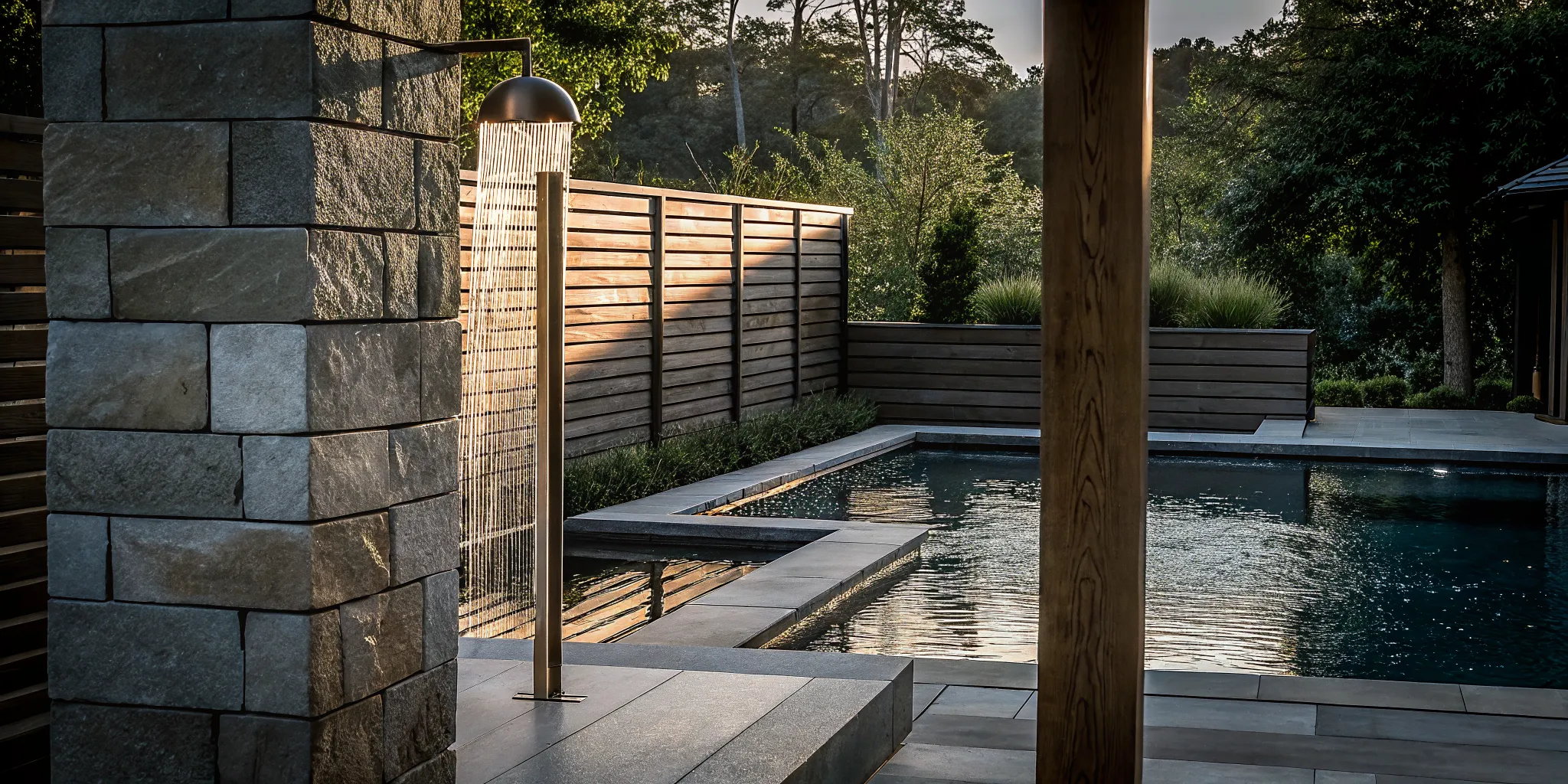
The most successful backyard upgrades do more than add visual appeal. They make time outdoors feel easier, more comfortable, and more connected to the way your household lives. A thoughtfully designed shower near the pool, pool house, or garden can serve as a practical transition point while reinforcing the architecture and materials of the entire landscape.
The best outdoor shower ideas combine privacy, durable materials, custom fixtures, and reliable drainage with the larger design of the property. When planned by an integrated design-build team, the shower can complement custom pool construction, hardscaping, and the home itself rather than feeling like an afterthought.
Book a design consultation for your outdoor shower today and start with a plan that fits the way you actually live outdoors.
For homeowners in Delaware, Pennsylvania, New Jersey, and Maryland, the right solution also accounts for seasonal conditions and daily use. Its value becomes especially clear beside a pool, where a well-placed shower improves the rhythm of arrival, swimming, and returning indoors.
Why a Poolside Outdoor Shower Elevates Your Outdoor Living Space
The most successful outdoor living spaces make everyday routines feel effortless. A thoughtfully placed shower near the pool does exactly that, creating a practical transition between water, activity, and the rest of the property without interrupting the experience.
Convenience after the pool, beach, or garden
After swimming, a quick rinse removes chlorine, sunscreen, and grass before anyone heads indoors. It also gives guests a comfortable place to freshen up between activities, reducing traffic through the home and protecting interior floors from wet footprints. When the shower is integrated into the surrounding hardscape, it feels less like an afterthought and more like a natural extension of the pool environment.
This is one reason an outdoor shower belongs in the early planning conversation alongside other custom pool features. Its location can be coordinated with circulation paths, planting, privacy screening, drainage, and the architectural character of the home. As part of a broader custom pool construction plan, the plumbing and finish details can be resolved before they become difficult or visually disruptive to add.
A refreshing reset after exercise
An outdoor shower can also serve as a useful post-workout cool-down. In a study of cooling after routine exercise in hot conditions, researchers found that a cold-water shower improved thermal comfort immediately after activity. Participants reported a thermal comfort sensation of "very comfortable" after the cold-water shower compared with "just comfortable" while seated, as reported in the published study.
The same research concluded that cold-water showering could help reduce cardiac stress after routine exercise in a hot environment. That does not make an outdoor shower a medical treatment. But it does support a clear daily benefit: a well-designed rinse can help an active homeowner cool down and feel more comfortable before returning to the house or continuing the afternoon outdoors.
Utility that feels intentionally designed
Convenience becomes more valuable when it is paired with a considered setting. A durable enclosure, comfortable fixtures, and a carefully planned approach can turn a simple rinse into a private, relaxing moment. The goal is not to add another isolated feature. It is to create a seamless amenity that supports pool days, workouts, entertaining, and the natural rhythm of life outdoors.
Outdoor Shower Design Styles and Ideas for the Mid-Atlantic Luxury Landscape
The strongest outdoor shower ideas feel considered from every angle. They complement the architecture, support the way the property is used, and hold up through changing Mid-Atlantic seasons. A shower can be a quiet garden feature, a polished poolside amenity, or an architectural extension of a pool house. The right configuration establishes the practical framework before materials, screening, and fixtures refine the experience.
To narrow the options, consider what matters most on your property. The most common design priorities are privacy, durable materials, premium fixtures, and seasonal versatility. Depending on your setting, a recent project might emphasize one of these directions over the others.
- A coastal-inspired design pairs weathered wood and pale stone with restrained hardware.
- A modern approach uses crisp geometry, large-format stone, concrete, and stainless steel.
- A rustic garden aesthetic leans on natural wood, warm stone, and layered planting.
- A pool house or pavilion setting favors integrated architecture and consistent materials.
Wall-mounted or freestanding?
Wall-mounted showers use an existing exterior wall, which can create a visually integrated solution near a pool house, garage, or rear elevation. Freestanding showers allow greater placement freedom and can become a sculptural destination within a garden or beside a pool terrace. Both are established outdoor shower types, but their performance depends on thoughtful siting, drainage, privacy, and access to plumbing.
| Consideration | Wall-mounted | Freestanding |
|---|---|---|
| Placement | Uses an existing exterior wall and works well beside a pool house or service area. | Can be positioned within a garden, beside a pool terrace, or wherever the landscape plan supports it. |
| Privacy | May benefit from a wall, planting, screen, or carefully oriented enclosure. | Requires a deliberately designed enclosure, planting strategy, or architectural screen. |
| Plumbing | Can align efficiently with plumbing within or adjacent to the host structure. | Requires coordinated underground service routes and careful drainage planning. |
| Flexibility | More closely tied to the building's location and construction. | Offers broader design freedom during landscape planning. |
| Best for | Streamlined pool-house transitions and architecture-led designs. | Garden focal points, independent pool areas, and custom landscape compositions. |
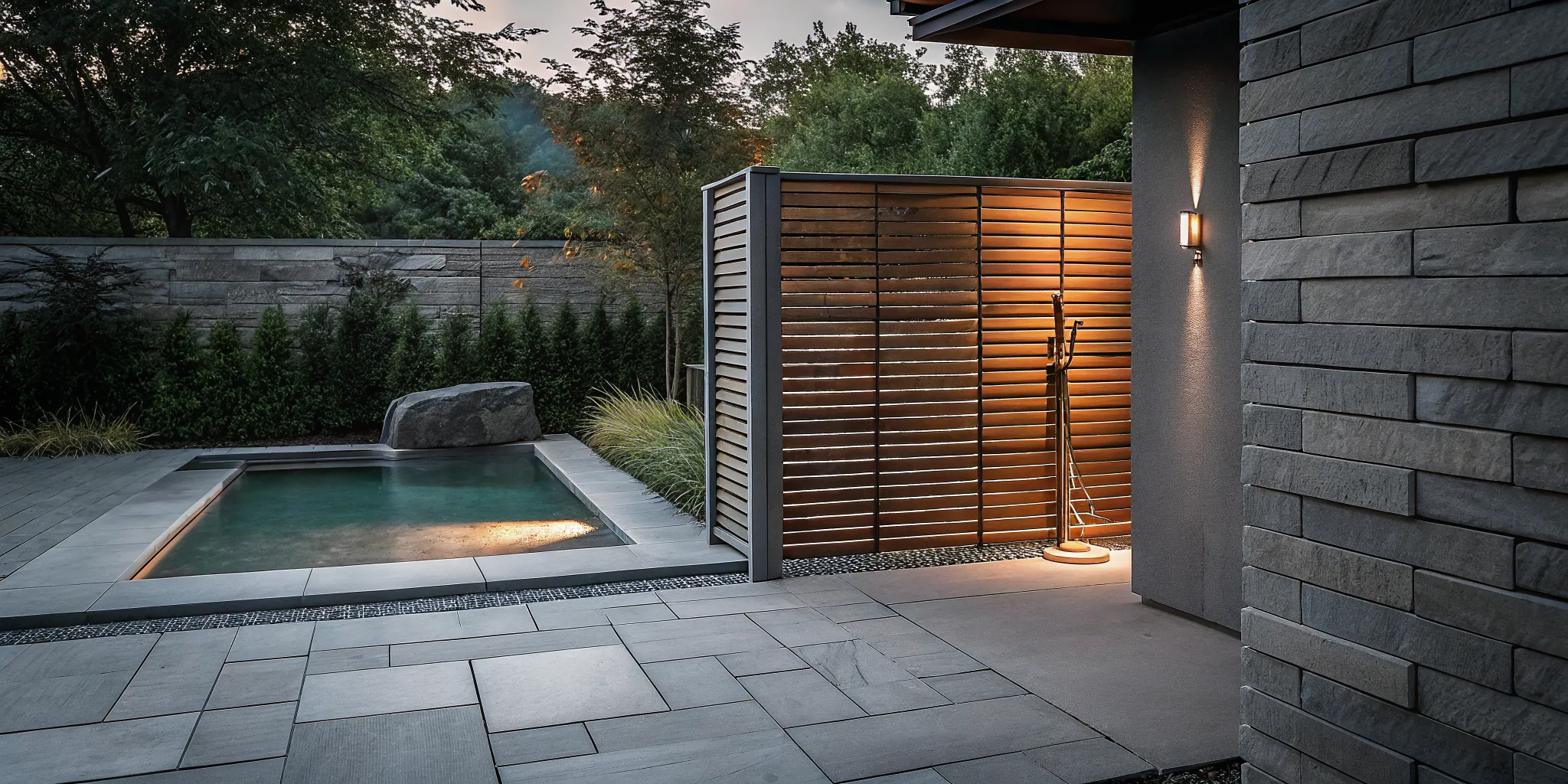
For a coastal landscape, weathered wood, pale stone, and restrained hardware can reinforce the connection to the shore without becoming thematic. A modern design may use crisp geometry, large-format stone, concrete, and stainless steel. Rustic wood and stone create a more grounded, garden-oriented experience, while a tropical or courtyard-inspired shower can nestle into layered planting and textured masonry. Landscape references commonly distinguish rustic wood and stone, modern concrete and stainless steel, tropical garden, and courtyard settings (design-style reference).
Whether the shower is discreetly integrated or intentionally expressive, it should be planned as part of the property's luxury landscape and hardscaping. That coordinated approach allows the enclosure, paving, planting, lighting, and adjacent outdoor living spaces to read as one composed environment.
Get a custom outdoor shower plan matched to your pool, pool house, and landscape.
Privacy Screening and Premium Fixtures That Make an Outdoor Shower Feel Bespoke
Privacy is what turns an outdoor shower from a useful poolside amenity into a considered extension of the landscape. The enclosure should feel protected without feeling closed in, with materials and planting selected to complement the architecture, pool terrace, and surrounding garden.
Choose screening that belongs to the landscape
Cedar lattice creates a warm, filtered enclosure with room for sunlight and air movement. Its natural grain works especially well beside timber accents, planted borders, and traditional architecture. For a more architectural expression, stacked stone walls can echo the coping, retaining walls, or paving used elsewhere on the property. The result is a shower that appears to have been designed with the hardscape, rather than added after it.
Frosted glass offers another approach when the goal is privacy with a lighter visual footprint. It can define the shower zone while preserving daylight and a clean, contemporary profile. Lush planting can soften any of these structures. Layered evergreens, ornamental grasses, and carefully placed shrubs create screening that feels organic, although planting should be selected for durability, maintenance requirements, and its relationship to water spray.
Material choice can also reinforce the overall design direction. Outdoor shower enclosures commonly use natural cedar or thick PVC for durability, while broader style references range from rustic wood and stone to modern concrete and stainless steel. These examples are useful starting points, but the strongest solution is one that responds to the specific materials already present on the property.
Use fixtures to shape the experience
Premium fixtures make the shower more comfortable and more precise to use. A thermostatic faucet helps maintain a consistent water temperature, which is particularly valuable when the shower is used by several people in succession. A rainfall head creates a relaxed, immersive flow, while a handheld wand adds control for rinsing sandy feet, washing down the enclosure, or helping children use the space.
Fixture finish matters as much as function. Brushed metal can complement contemporary stonework, while a warmer finish may sit more naturally with cedar and traditional masonry. Drainage, control placement, and the transition from shower floor to surrounding paving should be resolved as part of the same plan. A flush, well-detailed connection makes the shower feel intentional and reduces visual interruptions across the terrace.
DiSabatino can coordinate the enclosure, paving, planting, and water-focused details through its luxury landscape and hardscaping services. For homeowners extending a poolside retreat into a larger entertaining environment, the relationship between the shower and a pool house can guide privacy, circulation, materials, and evening use from the beginning.
How Do You Plan, Plumb, and Winterize an Outdoor Shower?
The best outdoor shower begins with infrastructure that feels invisible when the space is complete. Placement, drainage, water lines, and seasonal protection should be resolved alongside the pool, patio, planting, and architectural elements, rather than treated as a late addition.
Site the shower for privacy, convenience, and clean circulation
A poolside location can make rinsing off practical, but the shower does not need to sit directly beside the water. Consider the path from the pool, spa, changing area, garden, or beach-entry zone, then position the enclosure so wet feet do not cross the main entertaining area. Views from neighboring properties, prevailing wind, sun exposure, and access for future maintenance also matter.
For a more complete outdoor living arrangement, the shower can be coordinated with a pavilion or accessory structure. DiSabatino's pool houses and pavilions provide a natural framework for connecting changing space, storage, shade, and exterior bathing without making the shower feel visually detached from the rest of the property.
Drainage and water supply deserve equal attention
Water should be directed away from foundations, retaining walls, adjacent finished surfaces, and areas where runoff could erode planting beds. A properly designed base may use a graded hardscape surface, a drain, or another site-appropriate solution, depending on soil conditions and the broader drainage plan. The goal is a dry, durable transition between the shower and the surrounding landscape.
Water supply lines should be planned with the same care as the visible fixtures. A design-build team can coordinate hot and cold water, shutoff access, pipe routing, fixture placement, and connections with the home's existing systems. Local permitting or inspection requirements may apply to plumbing, drainage, electrical, or structural work, so confirm the applicable requirements with the local jurisdiction before construction begins.
Winterization protects a seasonal installation
Mid-Atlantic winters require a deliberate winterization plan. Before freezing temperatures arrive, exposed lines may need to be isolated and drained, exterior valves secured, and fixtures protected according to the system design. The exact procedure depends on the plumbing layout and whether any portion of the installation is enclosed or heated. Reopening the shower in spring should include checking connections, drainage, and fixture performance before regular use.
Evening use can be extended with thoughtfully placed outdoor lighting that supports safe circulation without overpowering the landscape. When one full-service design-build team manages plumbing, drainage, hardscape coordination, lighting, and architecture, the result is more cohesive and easier to maintain through every season.
Call DiSabatino to plan your outdoor shower with a full-service design-build team.
Frequently Asked Questions
What is the best material to use for an outdoor shower?
Cedar, PVC, tile, and stone are practical options, but the best choice depends on the setting and level of finish. Cedar brings warmth and a natural look, while stone and tile create a more architectural enclosure. PVC can be useful in select applications where durability and low maintenance are priorities. Coordinate the enclosure, fixtures, drainage, and surrounding hardscape so the shower feels integrated rather than added on.
How do you choose the right location for an outdoor shower?
Start with the shower's relationship to the pool, pool house, changing area, and primary outdoor entertaining spaces. The location should provide a convenient path, meaningful privacy, reliable drainage, and practical access to plumbing. A design-build review can also account for sightlines, prevailing exposure, maintenance access, and how the shower will function during different seasons.
Do outdoor showers need a permit?
Permit requirements can vary by municipality and by the scope of the installation. A shower connected to permanent water or drainage may involve plumbing, electrical, site, or building considerations, especially when it is part of a pool house or larger renovation. Confirm local requirements before construction, and have the design team coordinate the necessary details rather than treating the shower as a standalone fixture.
Are outdoor shower enclosures worth the investment?
For a poolside or pool house setting, a well-designed enclosure can make the shower more comfortable, private, and visually consistent with the property. Privacy screening also helps define the space and can support a more intentional outdoor-living plan. The strongest results come from matching the enclosure material, fixture style, lighting, and paving to the surrounding landscape architecture.
Ready to Design Your Outdoor Shower?
A thoughtful outdoor shower can bring the pool, pool house, and surrounding landscape together as one cohesive outdoor living experience. DiSabatino can help you evaluate the setting, materials, privacy, and practical details as part of a considered design-build plan. To book a design consultation, call DiSabatino at (302) 764-0408.