---
title: How Long Do Home Additions Take to Build in Delaware County, PA | DiSabatino Inc
description: Planning a home addition in Delaware County, PA? Learn how long the process takes and what to expect at each stage, from planning through construction.
image: https://disabatinoinc.com/hubfs/Imported_Blog_Media/Bright%20sunroom%20with%20sofas%2c%20ceiling%20fan%2c%20TV%2c%20and%20large%20windows%20in%20Delaware%20County%2c%20PA-1.jpg
---
[reception@disabatinoinc.com](mailto:reception@disabatinoinc.com)
[(302) 764-0408](tel:3027640408)
---
[](https://disabatinoinc.com)
- [About](https://disabatinoinc.com/about-us/)
- [Our Process](https://disabatinoinc.com/about-us/what-to-expect)
- [Our Family](https://disabatinoinc.com/about-us/our-family)
- [The DiSabatino Difference in Delaware County, PA](https://disabatinoinc.com/about-us/the-disabatino-difference)
- [Careers](https://disabatinoinc.com/about-us/employment-opportunities/)
- [Outdoor Living](https://disabatinoinc.com/services/luxury-landscape-hardscaping/outdoor-living)
- [Outdoor Structures](https://disabatinoinc.com/outdoor-structures)
- [Outdoor Kitchens](https://disabatinoinc.com/services/luxury-landscape-hardscaping/outdoor-living/outdoor-kitchens-and-pizza-ovens)
- [Outdoor Lighting](https://disabatinoinc.com/services/illuminations-by-disabatino/)
- [Landscaping](https://disabatinoinc.com/services/luxury-landscape-hardscaping)
- [Hardscaping](https://disabatinoinc.com/services/luxury-landscape-hardscaping/handcrafted-hardscaping)
- [Artisan Masonry](https://disabatinoinc.com/services/esposito-artisan-masonry)
- [Water Features](https://disabatinoinc.com/services/luxury-landscape-hardscaping/water-features)
- [Fire Features](https://disabatinoinc.com/services/luxury-landscape-hardscaping/outdoor-living/outdoor-fireplaces-fire-pits)
- [Grading & Drainage](https://disabatinoinc.com/services/luxury-landscape-hardscaping/grading-drainage)
- [Premium Property Maintenance](https://disabatinoinc.com/services/luxury-landscape-hardscaping/premium-property-maintenance)
- [Custom Pools](https://disabatinoinc.com/services/custom-pools/)
- [Pool Houses](https://disabatinoinc.com/services/disabatino-design-build/pavilions-and-pool-houses)
- [Design-Build](https://disabatinoinc.com/services/disabatino-design-build)
- [Architectural Design](https://disabatinoinc.com/services/architectural-design)
- [Exterior Remodeling](https://disabatinoinc.com/services/disabatino-design-build/exterior-remodeling-windows-doors-siding-roofing)
- [Interior Renovations](https://disabatinoinc.com/services/disabatino-design-build/interior-renovations)
- [Kitchen Remodel](https://disabatinoinc.com/services/disabatino-design-build/interior-renovations/kitchens)
- [Bathroom Remodel](https://disabatinoinc.com/services/disabatino-design-build/interior-renovations/bathrooms/)
- [Basements Remodel](https://disabatinoinc.com/services/disabatino-design-build/interior-renovations/basements)
- [Laundry & Mudrooms Remodel](https://disabatinoinc.com/services/disabatino-design-build/interior-renovations/laundry-mudrooms)
- [Portfolio](https://disabatinoinc.com/portfolio)
- [Resort Backyards](https://disabatinoinc.com/portfolio/resort-backyards)
- [Landscaping](https://disabatinoinc.com/portfolio/landscaping)
- [Hardscaping](https://disabatinoinc.com/portfolio/hardscaping)
- [Custom Pools](https://disabatinoinc.com/portfolio/custom-pools)
- [Masonry](https://disabatinoinc.com/portfolio/artisan-masonry)
- [Custom Carpentry](https://disabatinoinc.com/portfolio/custom-carpentry)
- [Outdoor Lighting](https://disabatinoinc.com/portfolio/outdoor-lighting)
- [Outdoor Kitchens](https://disabatinoinc.com/portfolio/outdoor-kitchen)
- [Fire Features](https://disabatinoinc.com/portfolio/outdoor-fireplaces-fire-pits)
- [Water Features](https://disabatinoinc.com/portfolio/water-features)
- Resources
- [Blog](https://disabatinoinc.com/blog)
- [Reviews](https://disabatinoinc.com/testimonials)
- [Google Reviews](https://disabatinoinc.com/testimonials/google-reviews/)
- [BBB Reviews](https://disabatinoinc.com/testimonials/bbb-reviews/)
- [Contact](https://disabatinoinc.com/contact/)
- [Referral Program](https://disabatinoinc.com/referral-program)
- [Financing](https://disabatinoinc.com/contact/financing/)
[reception@disabatinoinc.com](mailto:reception@disabatinoinc.com)
[(302) 764-0408](tel:3027640408)
[CALL NOW! (302) 764-0408](tel:3027640408)
- March 12, 2026
# How Long Do Home Additions Take to Build in Delaware County, PA
Share:
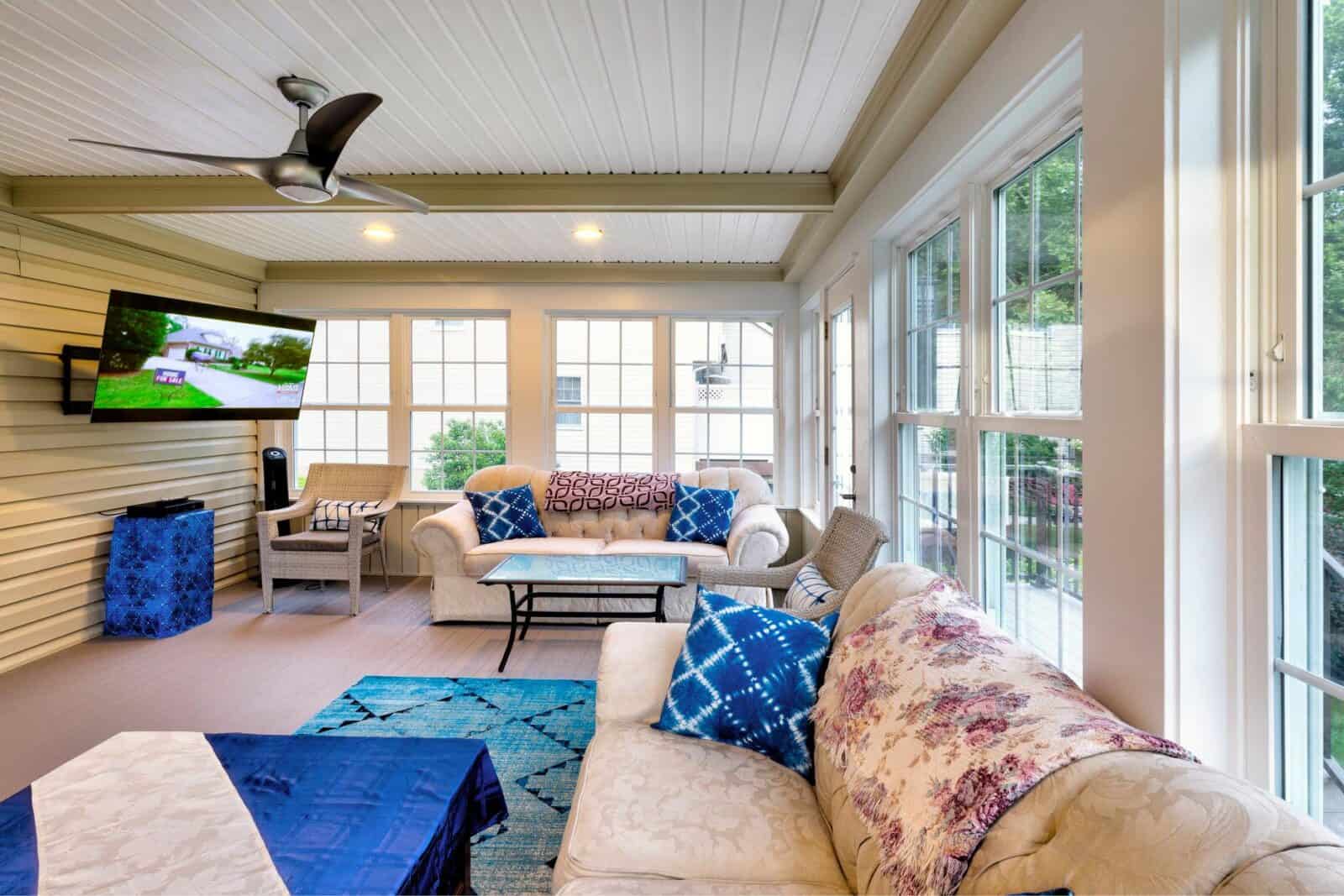
Homeowners considering a home addition often ask one key question early in the process: how long will it take?
While every project is different, the timeline for a home addition in Delaware County, PA is influenced by several predictable factors, from planning and permitting to construction sequencing and seasonal conditions.
Understanding the process and what happens at each stage helps set realistic expectations and reduces uncertainty. Below, we break down the typical phases of a home addition and explain what affects the overall timeline.
To help you understand what impacts the timeline and what to expect at each stage, we’ve outlined the key phases of a home addition project below.
- [Pre-Design and Planning](https://disabatinoinc.com/blog/how-long-do-home-additions-take-to-build-in-delaware-county-pa#pre-design)
- [Design Development](https://disabatinoinc.com/blog/how-long-do-home-additions-take-to-build-in-delaware-county-pa#Design)
- [Permitting and Township Approvals](https://disabatinoinc.com/blog/how-long-do-home-additions-take-to-build-in-delaware-county-pa#permitting)
- [Construction Phase](https://disabatinoinc.com/blog/how-long-do-home-additions-take-to-build-in-delaware-county-pa#construction)
- [Factors That Can Affect the Timeline](https://disabatinoinc.com/blog/how-long-do-home-additions-take-to-build-in-delaware-county-pa#factors)
- [Frequently Asked Questions](https://disabatinoinc.com/blog/how-long-do-home-additions-take-to-build-in-delaware-county-pa#faqs)
# Pre-Design and Planning
Before drawings are created or permits are submitted, the project begins with planning. This phase focuses on understanding how the addition will be used, how it connects to the existing home, and what constraints may exist on the property.
During this stage, homeowners meet with a [design build](https://disabatinoinc.com/services/disabatino-design-build) team to discuss goals, priorities, site conditions, zoning requirements, and long-term needs. Measurements are taken, feasibility is evaluated, and early decisions are made that shape the rest of the project.
Typical timeframe: 2–4 weeks
# Design Development
Once the project scope is established, the design phase begins. This includes architectural drawings, layout refinement, structural planning, and coordination with interior and exterior design elements. For additions, special care is taken to ensure the new space feels cohesive with the existing home.
Design development often includes revisions as homeowners review layouts, materials, and functionality. This collaborative process is essential for creating an addition that works well both today and long term.
Typical timeframe: 4–8 weeks
# 
# Permitting and Township Approvals
In Delaware County, PA, most home additions require zoning approvals and building permits. The review timeline varies by township and depends on project complexity, zoning compliance, and submission completeness.
Some projects may require zoning variances or additional reviews, which can extend this phase. A design-build firm familiar with local townships can help navigate this process efficiently and reduce delays.
Typical timeframe: 4–10 weeks
# Construction Phase
Construction begins once permits are approved and materials are coordinated. The timeline depends on the size and type of addition, such as a family room, primary suite, second-story addition, or expanded kitchen area.
This phase includes site preparation, foundation work, framing, roofing, mechanical systems, insulation, interior finishes, and final inspections. Because additions tie into an existing home, sequencing and coordination are especially important to minimize disruption.
Typical timeframe: 3–6 months
# Factors That Can Affect the Timeline
Several factors can influence how long a home addition takes, and most projects experience a mix of a few along the way. The size and complexity of the addition play a role, as does how long township reviews and approvals take. Weather, material availability, and any design refinements made during construction can also affect the schedule. In some cases, existing conditions inside the home are uncovered once work begins, which may require additional coordination.
With clear communication, thoughtful planning, and an experienced design-build team guiding the process, these variables are managed proactively so the project continues moving forward with confidence.
# 
# Frequently Asked Questions
#### Do all home additions in Delaware County require permits?
Most home additions require building permits, and many also require zoning approval. The specific requirements depend on the township, property zoning, and scope of work. Working with a local design-build firm helps ensure all necessary approvals are addressed correctly.
#### Can I live in my home during a home addition project?
In many cases, homeowners remain in their homes during construction. The feasibility depends on the size and location of the addition and how it ties into existing living spaces. Your project team can help plan construction phases to minimize disruption.
#### Does the time of year affect how long a home addition takes?
Yes, seasonal conditions can influence certain phases of construction, especially exterior work. That said, many stages of a home addition can proceed year-round with proper planning.
#### How early should I start planning a home addition?
It is wise to begin planning several months before you hope to start construction. This allows adequate time for design development, permitting, and coordination. Early planning leads to smoother execution and fewer delays.
# Closing Thoughts
So, how long do home additions take to build in Delaware County, PA? In most cases, homeowners can expect the full process, from early planning through construction, to take several months. Smaller or less complex additions may move more quickly, while larger or more involved projects often extend closer to six months or longer, especially when permitting and detailed design are involved.
A well-planned home addition is a multi-phase process that takes time, coordination, and expertise. When each stage is approached thoughtfully, the result is a seamless extension of your home that supports how you live.
If you are considering a home addition in Delaware County, PA, [contact us to schedule a consultation](https://disabatinoinc.com/contact/). Connecting with an experienced design-build team early is the best way to set realistic expectations and get started with confidence.
Article details:
Published by: Maura Slovin
Last modified: March 12, 2026
Share:
#### Continue learning:
[entertainment centers](https://disabatinoinc.com/blog/tag/entertainment-centers)
September 30, 2026
#### [Historic Home Renovation: Preserve Character, Live Well](https://disabatinoinc.com/blog/historic-home-renovation)
[entertainment centers](https://disabatinoinc.com/blog/tag/entertainment-centers)
September 29, 2026
#### [Bathroom Remodel Cost: A Premium Planning Guide](https://disabatinoinc.com/blog/bathroom-remodel-cost)
[custom made fire pits](https://disabatinoinc.com/blog/tag/custom-made-fire-pits)
September 29, 2026
#### [Fire Pit Installation: A Delaware Valley Planning Guide](https://disabatinoinc.com/blog/fire-pit-installation)
[8 Great Additional Features to Upgrade an Outdoor](https://disabatinoinc.com/blog/tag/8-great-additional-features-to-upgrade-an-outdoor-)
September 25, 2026
#### [How Much Does a Custom Deck Cost? A Planning Guide](https://disabatinoinc.com/blog/how-much-does-a-custom-deck-cost)
- [(302) 764-0408](tel:3027640408)
- [reception@disabatinoinc.com](mailto:reception@disabatinoinc.com)
- [471 B and O Lane, Wilmington, DE 19804](https://g.page/DiSabatinoLandscaping?share)
© 2025 DiSabatino Landscaping.
All Rights Reserved
- [About Us](https://disabatinoinc.com/about-us/)
- [Our Services](https://disabatinoinc.com/services)
- [Testimonials](https://disabatinoinc.com/testimonials)
- [Portfolio](https://disabatinoinc.com/portfolio)
- [Blog](https://disabatinoinc.com/blog)
- [Contact Us](https://disabatinoinc.com/contact/)
- [Sitemap](https://disabatinoinc.com/sitemap)
- [Terms & Conditions](https://disabatinoinc.com/terms-conditions/)
- [Privacy Policy](https://disabatinoinc.com/privacy-policy/)
```json
{
"@context" : "https://schema.org",
"@type" : "BlogPosting",
"author" : {
"@type" : "Person",
"name" : "Maura Slovin",
"url" : "https://disabatinoinc.com/blog/author/maura-slovin"
},
"dateModified" : "2026-03-12T15:45:00.437Z",
"datePublished" : "2026-03-12T15:45:00.000Z",
"headline" : "How Long Do Home Additions Take to Build in Delaware County, PA | DiSabatino Inc",
"image" : [ "https://disabatinoinc.com/hubfs/Imported_Blog_Media/Bright%20sunroom%20with%20sofas%2c%20ceiling%20fan%2c%20TV%2c%20and%20large%20windows%20in%20Delaware%20County%2c%20PA-1.jpg" ],
"mainEntityOfPage" : {
"@id" : "https://disabatinoinc.com/blog/how-long-do-home-additions-take-to-build-in-delaware-county-pa",
"@type" : "WebPage"
},
"publisher" : {
"@type" : "Organization",
"logo" : {
"@type" : "ImageObject",
"url" : "https://disabatinoinc.com/hubfs/DiSabatino%20Logo-1.jpeg"
},
"name" : "DiSabatino Landscaping"
}
}
```
```json
{
"@context" : "https://schema.org",
"@type" : "FAQPage",
"mainEntity" : [ {
"@type" : "Question",
"acceptedAnswer" : {
"@type" : "Answer",
"text" : "Most home additions in Delaware County, PA require building permits, and many also require zoning approval. The exact requirements depend on your township, your property’s zoning, and the scope of work. A local design build team can help confirm what applies to your project and prepare the right documentation so reviews move as smoothly as possible."
},
"name" : "Do all home additions in Delaware County require permits?"
}, {
"@type" : "Question",
"acceptedAnswer" : {
"@type" : "Answer",
"text" : "In many cases, homeowners can stay in the home while the addition is being built. It depends on where the addition connects to the house, how much work is happening in key areas like kitchens or bathrooms, and what utilities may be temporarily affected. Your team can plan phases and access points to reduce disruption and keep day-to-day life manageable."
},
"name" : "Can I live in my home during a home addition project?"
}, {
"@type" : "Question",
"acceptedAnswer" : {
"@type" : "Answer",
"text" : "Seasonality can affect certain parts of a home addition, especially exterior work like foundations, framing, roofing, and site conditions. Weather can slow down specific steps, but many phases continue year-round with proper planning and sequencing. Ordering materials early and coordinating inspections can also help keep things moving during busier seasons."
},
"name" : "Does the time of year affect how long a home addition takes?"
}, {
"@type" : "Question",
"acceptedAnswer" : {
"@type" : "Answer",
"text" : "It is smart to start planning several months before you want construction to begin. That time is used for early planning, design development, selections, and the permitting and township approval process. Starting earlier usually leads to clearer decisions, fewer surprises, and a smoother experience once construction starts."
},
"name" : "How early should I start planning a home addition in Delaware County, PA?"
} ]
}
```