
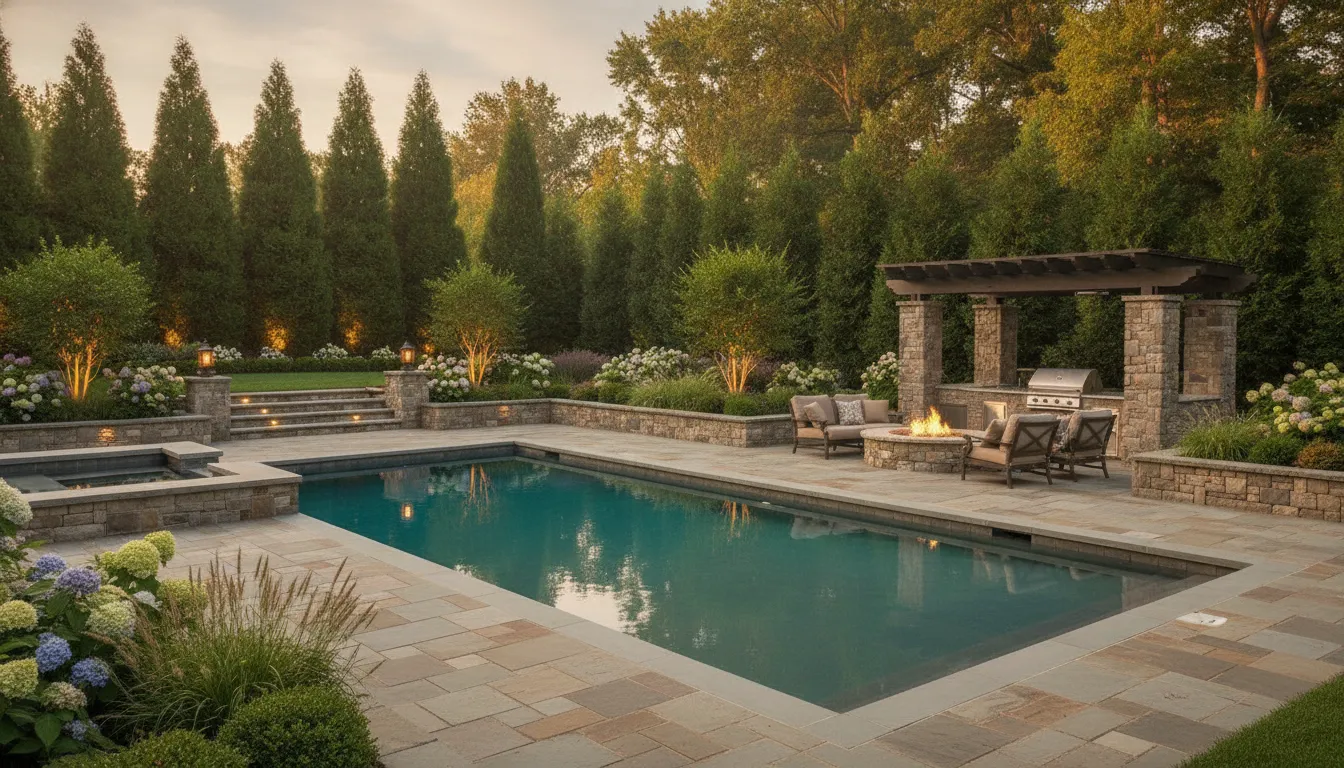
For a Delaware Valley homeowner, choosing a custom pool builder is less about selecting a shell. It is about finding a team that can translate your property, architecture, and lifestyle into one coordinated plan. The right partner should discuss site conditions, design development, and permitting. They should also discuss construction, scheduling, and the final walkthrough. They should address more than installation alone.
Schedule a design conversation or call (302) 764-0408 to discuss your project.
A strong custom gunite pool builder brings specialized pool and excavation expertise, a documented design-build process. Clear project accountability, and the ability to coordinate the pool with surrounding hardscape, landscaping, lighting, and outdoor living features.
That broader perspective matters in communities from Wilmington and Greenville to Chadds Ford, West Chester. Villanova, and Bryn Mawr, where a pool often becomes the centerpiece of a larger exterior transformation. Start by examining the qualifications and process behind the proposal, then consider how well the builder can manage the conditions and details unique to your property.
What should you look for in a custom gunite pool builder?
A custom gunite pool is a coordinated construction project, not simply the installation of a pool shell. The right builder should explain how the team evaluates your property, develops the design, coordinates permits, schedules the work, manages construction, and completes the final walkthrough. Those steps show how the project will be handled from the first conversation through completion.
Start by asking about credentials that relate directly to pool construction and the conditions of your property. For example, DiSabatino's pool division, Pronto Pools, includes PHTA-certified pool builders and excavation specialists. That combination is relevant because a thoughtful evaluation must account for both pool expertise and the physical work required to prepare the site.
Site and soil experience should be part of the initial discussion. Ask what the builder needs to understand about your property before recommending a layout, including the relationship between the pool, existing grades, access, and surrounding improvements. A builder should explain how those findings influence the design and construction plan. The team should not present a predetermined concept before assessing the property.
Design depth is another important differentiator. Look for a team that can discuss how the pool will relate to the architecture of your home and the way you intend to use the outdoor space. If you are considering a more involved project, ask how the builder coordinates the pool with the surrounding landscape and hardscape. Review the company's custom pool design-build services to understand the scope of capabilities available for that conversation.
Before selecting a builder, request clear answers in these areas:
- Credentials: Which certifications and specialized qualifications does the pool team hold?
- Site expertise: How will the team evaluate soil, grading, access, and other property conditions?
- Process: Who handles design development, permitting coordination, scheduling, construction, and the final walkthrough?
- Construction quality: What materials, installation practices, and quality-control steps are included in the proposal?
- References: Can the builder share relevant completed projects and references for work of comparable complexity?
- Coordination: How will pool work align with decking, landscaping, lighting, or other outdoor improvements?
Communication matters throughout each of these stages. A premium builder should make responsibilities understandable, document the scope, and give you a reliable way to discuss decisions as the project develops. References and portfolio examples can help you evaluate the finished work. The builder's answers about process, accountability, and coordination reveal how the experience is likely to feel while the work is underway.
Why do site assessment and gunite expertise matter?
A custom pool is shaped by the property as much as by the design concept. Before discussing finishes or water features, a qualified team should understand the site, the surrounding landscape, and the approvals that may affect where the pool can go. This early work helps homeowners evaluate whether a proposed design is realistic for the property and whether the builder is prepared to coordinate the details that follow.
Gunite expertise matters because the pool shell is only one part of a larger design-build decision. Pronto Pools, DiSabatino's pool division, provides custom gunite and fiberglass pool installations. That experience can be especially relevant when a project includes distinctive features such as a vanishing edge or integrated water features. The right conversation is not simply about choosing a pool type. It is about asking how the builder will translate the design into a coordinated plan for the site.
What should be reviewed before design is finalized?
Site conditions can influence the project's scope and investment. DiSabatino notes that a custom gunite pool's investment varies by design and site conditions, so a meaningful proposal should follow an informed assessment rather than a universal figure. Ask what the team has reviewed, what remains to be verified, and which conditions could affect the final plan. A thoughtful assessment may lead to a different pool location, a revised feature package, or a clearer sequence for related outdoor improvements.
Permits and property constraints also deserve attention early. Raleigh's residential pool guidance, for example, states that in-ground pools require building and electrical permits. Plumbing permits may also be required when a connection is made to the home's water supply. The guidance addresses restrictions involving public sewer or drainage easements and septic or wastewater systems. These are examples from Raleigh, not universal Delaware Valley rules. Requirements vary by municipality, so homeowners should ask the builder to identify the applicable local authorities, approvals, easements, utilities, drainage concerns, and septic conditions for their property. Raleigh's pool permit guidance illustrates why those questions should not be postponed.
How does this help you compare builders?
Use the assessment meeting to look for clarity, not just enthusiasm. A strong custom gunite pool builder should be able to explain how the proposed pool relates to the home, grades, access, surrounding hardscape, and intended use. They should also distinguish confirmed site information from items that still require investigation. That level of transparency gives you a more useful basis for comparing proposals and deciding whether the design reflects both your goals and your property.
How should the design process and portfolio be evaluated?
A polished pool image can attract attention, but it cannot answer the questions that matter during a complex residential project. Evaluate how the builder moves from an initial conversation to a documented plan, and whether the portfolio helps you understand the thinking behind the finished work.
Does the process make decisions visible?
Ask what happens after the first consultation. A strong process should clarify how the team conducts a site assessment, develops the concept. Prepares detailed planning and a proposal, coordinates permits and approvals, manages construction, and completes the final walkthrough. DiSabatino describes this sequence in its design-build process. The value is not the number of steps alone. It is knowing when major decisions are made, who owns them, and how changes are documented.
Useful questions include: How will the initial concept reflect the way your household uses the property? Which drawings or selections will you review before construction begins? How are changes to scope, materials, or equipment recorded? Who explains the proposal and helps reconcile design goals with site constraints? Clear answers can reveal whether the builder is prepared to guide the project or simply present a finished price.
What should a portfolio reveal?
Look beyond dramatic photography. Does the portfolio show a range of finished-project capabilities, including the relationship between the pool, surrounding grade, hardscape, planting, and outdoor living areas? Can the builder discuss why a particular layout, edge treatment, or material palette suited the property? A portfolio should give you enough context to evaluate design judgment, not just visual appeal.
DiSabatino reports more than 30 years of Delaware Valley experience and presents a high-end residential portfolio. Review its custom pool project portfolio, then ask to see examples that resemble your priorities, property type, and desired level of coordination. Do not assume that a photographed result guarantees the same outcome for your site. Instead, use it to start a more specific conversation about concept development, documentation, craftsmanship, and references.
Are equipment decisions part of the design conversation?
They should be. Ask when the team discusses heating, controls, maintenance access, and the long-term operation of the pool. The U.S. Department of Energy notes that pool-heater manufacturers have been subject to federal energy-conservation standards since 1990, so equipment should not be treated as an afterthought. Request clear documentation of the selected system and its role in the overall plan.
Finally, ask how the project concludes. A final walkthrough should give you an opportunity to review the completed work, understand the installed systems, and identify any remaining questions. That closing conversation, supported by clear records and appropriate references, is often more informative than a gallery of images alone.
What should a premium pool proposal include?
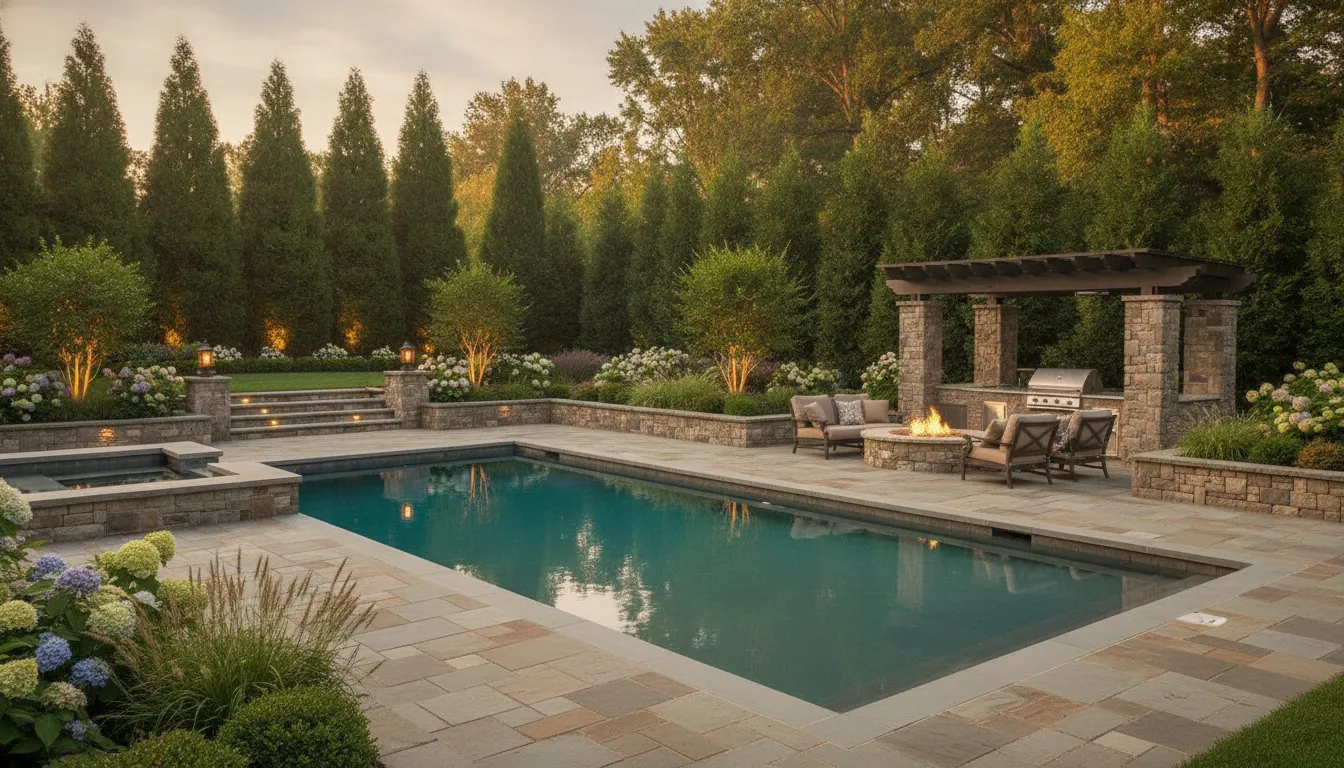
A premium pool proposal should explain more than the pool itself. It should show how the design, materials, surrounding landscape, outdoor living features, and project management will work together. That broader view matters when a homeowner is planning a complete backyard transformation rather than treating the pool as an isolated installation.
Start by looking for clear responsibility.
A dedicated project manager and single point of contact can keep communication organized when multiple specialized divisions contribute to the work. Ask who will coordinate the pool, hardscape, planting, lighting, and any architectural or outdoor-living elements, and how decisions will be documented as the design develops.
Scope, materials, and coordination
The scope should identify the major components being considered and the relationships between them. A coordinated outdoor-living plan may integrate a pool with patios, kitchens, fireplaces, lighting, and landscaping. The proposal should make those connections visible so the homeowner can evaluate the complete design, not just a pool shape and equipment list.
Pool-surround planning deserves particular attention. Deck materials, planting, and the transition between the pool and the landscape influence how the finished space looks, feels, and functions. Review pool surround landscaping as part of the evaluation, especially if the project includes retaining elements, planting areas, patios, or changes in grade.
Materials should also be described with enough clarity to support an informed decision. Premium materials and established vendor relationships may be part of the builder's approach, with manufacturer warranties included where applicable. Rather than accepting a general statement about quality, ask which products are proposed, where they will be used, and what manufacturer documentation applies. Do not assume every component carries the same coverage.
Outdoor-living features and next steps
If entertaining is part of the plan, the proposal should show how amenities relate to circulation and daily use. A pool project can include a complementary outdoor kitchen, but its location, utilities, seating relationship. And connection to the patio should be considered during design rather than added as an afterthought. Explore custom outdoor kitchen planning alongside the pool concept.
Finally, look for a proposal that explains the path from design decisions to implementation. It should leave you with a clear understanding of what is included and which elements still require development. You should know who will answer questions and how the coordinated team will move the project forward. That level of clarity helps a homeowner compare proposals on design fit, accountability, and completeness instead of reducing a complex investment to a single number.
How do permits, safety, and long-term care fit into selection?
A thoughtful pool selection process continues beyond the design and construction agreement. Before you choose a builder, ask how the team will explain local permitting, coordinate required reviews, plan safety features, and prepare you to care for the finished pool. Requirements vary by municipality and by site, so a responsible builder should identify what needs to be verified rather than present one jurisdiction's rules as universal.
Ask who owns the permitting conversation
Permits, inspections, fencing, electrical work, drainage, and other approvals may involve different authorities. Your builder should explain which requirements apply to your property, what information is needed, and how approvals fit into the project sequence. Confirm the handoff in writing, including who submits documents, who schedules inspections, and who answers questions if local officials request changes.
The CDC's Model Aquatic Health Code is guidance for public health agencies, not a universal residential code. It can provide useful context, but it does not replace verification with the authorities and professionals responsible for your project. Ask your builder to discuss the requirements that apply to your location and proposed pool. Read the CDC code guidance for context.
Build safety into the plan
Safety should be part of site planning, not an afterthought. The CDC recommends a four-sided fence at least four feet high that fully encloses the pool and separates it from the house, with self-closing and self-latching gates. Children need close and constant supervision around water even if they have had swimming lessons, and drowning can happen in seconds and may be silent. See the CDC's water safety guidance when discussing the layout with your builder.
- Ask how the proposed enclosure, gates, and access points will work with the house and landscape.
- Confirm which safety elements are included in the proposal and which are owner responsibilities.
- Discuss equipment access and visibility without compromising the intended outdoor design.
- Request a clear walkthrough of operating procedures before the project is handed over.
Evaluate the maintenance handoff
Long-term care depends on consistent water testing and proper chemical handling. The CDC notes that disinfection and pH are the first defenses against germs that cause swimming-related illnesses. It recommends checking disinfectant and pH levels at least twice daily, and more often during heavy use. Pool chemical injuries lead to about 4,500 U.S. emergency-department visits each year, which makes storage, testing, and handling instructions important parts of the handoff. Review the CDC's pool health and safety guidance alongside the builder's equipment-specific instructions.
A strong proposal should make the transition practical: document equipment, explain routine care, identify service contacts, and clarify what is covered after completion. The right custom gunite pool builder will help you understand the responsibilities that begin when construction ends. This preparation helps the pool remain safe, usable, and aligned with the way your household lives. Ask how the team will document water-quality routines, equipment care, and service contacts.
A practical decision framework for Delaware Valley homeowners
Choosing a pool builder is easier when you evaluate the relationship, process, and technical fit in a deliberate order. For a gunite project, the right questions should go beyond whether a company can install a pool shell. They should help you determine whether the builder can understand your site, develop the design, manage the work, and coordinate the finished outdoor environment.
| Evaluation area | Question to ask |
|---|---|
| Gunite expertise | Who leads the pool and excavation work, and what relevant credentials can they document? |
| Design-build fit | How will the pool connect to the home's architecture, landscape, hardscape, and outdoor living plans? |
| Project accountability | Who owns communication, permitting coordination, scheduling, and the final walkthrough? |
- Confirm the builder fits your location and project type. Start by asking whether the company regularly serves your part of the Delaware Valley and takes on projects with the level of design coordination you expect. DiSabatino's core territory includes New Castle County, Delaware; Delaware and Chester Counties, Pennsylvania; and the Main Line, with select projects in New Jersey and Maryland. That service-area distinction matters because a builder should be familiar with the expectations and conditions of the communities it serves, while being candid about where it works.
- Ask who will be responsible for the gunite work and site expertise. Request clear information about credentials, excavation experience, site and soil evaluation, and the people overseeing construction. A credible conversation should address how the team approaches your property, not just show attractive finished photography. DiSabatino's pool division, Pronto Pools, includes PHTA-certified pool builders and excavation specialists, and provides custom gunite and fiberglass installations. These details give you a starting point for a more useful technical discussion.
- Review the design process before comparing proposals. Ask what happens between the first consultation and construction, who develops the design, how revisions are handled, and when project decisions become part of the proposal. A premium builder should be able to explain its approach to design depth, permitting, project management, construction quality, warranties, references, and coordination with surrounding improvements. If the process is vague, the proposal may not answer the questions that matter most later.
- Judge experience by relevant evidence, not years alone. Look for a portfolio that reflects the scale, finish quality, and design complexity you want. DiSabatino brings more than 30 years of Delaware Valley experience and maintains a high-end residential portfolio. Review projects for the quality of the complete setting and ask which capabilities were handled by the builder. This helps distinguish gunite-specific expertise from generic builder claims.
- Decide whether the design-build relationship feels accountable. Finally, consider communication, coordination, and fit. The evaluation criteria should include how the team manages multiple decisions and keeps the project aligned with your priorities. This gunite-specific framework is intentionally different from a general pool builder comparison: it focuses on whether the builder can deliver a premium, integrated project with clear ownership from planning through completion.
Schedule a custom pool design conversation or call (302) 764-0408 to discuss whether your property and goals are a fit.
Frequently Asked Questions
What should I ask a custom gunite pool builder before signing?
Ask how the team will assess your property, develop the design, coordinate permits, manage construction, and handle the final walkthrough. Clarify who owns communication, which divisions are involved, what is included in the proposal, and how changes are documented. A strong process should make site conditions, scheduling, materials, responsibilities, and next steps clear before construction begins.
What are the downsides of a gunite pool?
A gunite pool is a highly customized project, so it requires thoughtful planning and coordination. Site conditions, access, drainage, utilities, easements, and the surrounding landscape can affect the scope and investment. Ask the builder to explain these conditions early and to show how the design, construction plan, and outdoor living elements work together.
How much does a custom gunite pool cost?
There is no responsible universal figure. Investment varies with the design, site conditions, access, finishes, water features, surrounding hardscape, landscaping, and other outdoor living components. Request a detailed proposal that separates allowances and project elements, then compare the scope and process rather than choosing solely on an initial number.
How can I tell whether a pool builder is a good fit for my property?
Review relevant completed projects, ask about experience with properties similar to yours, and evaluate the depth of the design and construction process. Confirm that the team can coordinate the pool with patios, planting, lighting, kitchens, or other improvements when needed. The best fit is a builder whose expertise, communication style, and project approach match the complexity of your plans.
Ready to plan your custom pool?
A well-planned gunite pool should feel connected to the way you use your property, from the pool setting to surrounding outdoor living spaces. A design conversation can help clarify your goals, site considerations, and the level of coordination your project requires. To explore a thoughtful next step, schedule a design conversation with the DiSabatino team.